
Showing posts with label Legislation. Show all posts
Showing posts with label Legislation. Show all posts
Legal & Regulatory Issues of Speed Cameras

The deployment and operation of speed cameras is not only a technological and logistical matter but also a complex legal and regulatory issue. Governments around the world have established laws, frameworks, and approval processes that dictate how automated enforcement systems may be used on public roads. These rules balance public safety goals with fairness, transparency, and compliance with established legal standards. Understanding the legal and regulatory issues behind speed cameras provides drivers, policymakers, and enforcement agencies with clarity on how these devices fit into the broader framework of traffic law and road safety.
Current Legislation Governing Speed Cameras
Why Are Car Makers Allowed to Make Cars That Travel Over 100 MPH?
If you’ve ever looked at your car’s speedometer, you may have noticed that it often goes well beyond the legal speed limits in the United States. Most highways cap out at 65–85 mph, yet even modest family sedans can reach speeds above 120 mph. Sports cars and high-performance vehicles can exceed 200 mph. This raises a common question: why are car manufacturers allowed to make vehicles capable of traveling over 100 mph when drivers are never legally permitted to do so?
Safety Standards vs. Legal Speed Limits
The first distinction is that speed capability and legal speed limits are not the same thing. Manufacturers are required to meet federal safety standards set by the National Highway Traffic Safety Administration (NHTSA), but these standards do not impose a maximum top speed requirement. Instead, they focus on crash safety, emissions, braking systems, and other regulatory factors.
Laws about how fast you can drive are determined at the state and local level. That means your car may be capable of traveling at speeds far beyond what is legally allowed, but you can still be ticketed—or arrested—for attempting it on public roads.
Engineering & Performance Expectations
Modern cars are built with powerful engines for reasons beyond speeding:
-
Highway Merging & Passing Power: Cars need to accelerate quickly and safely to merge onto freeways or pass slower traffic.
-
Durability & Efficiency: Engines designed with extra performance headroom often last longer and handle stress better at normal driving speeds.
-
Global Market Standards: In countries like Germany, parts of the Autobahn have no speed limit. Automakers build vehicles for a worldwide market, not just U.S. laws.
Consumer Demand & Marketing
Automotive culture has long celebrated performance, horsepower, and speed. Even if drivers never push their vehicles past 80 mph, knowing a car could go 140 mph is part of the appeal. Automakers compete by advertising acceleration times (like 0–60 mph) and top-end power. This is especially true for sports cars, luxury vehicles, and performance trims.
Track & Private Use
Cars capable of more than 100 mph aren’t necessarily intended for the street. Many enthusiasts take their vehicles to:
-
Race tracks
-
Private courses
-
Performance driving schools
In those environments, higher speeds are both legal and expected.
Legislative Attempts to Limit Car Speed
Although most vehicles today are capable of traveling far faster than any legal road limit, lawmakers have occasionally tried to rein in manufacturers. The debate resurfaces every decade, usually after spikes in road fatalities or technological changes.
U.S. Proposals
-
1970s Oil Crisis & Safety Push: During the 1973–74 oil embargo, Congress considered requiring cars to include speed governors to conserve fuel and reduce crashes. Instead, the National Maximum Speed Law (1974) capped highway limits at 55 mph. Manufacturers weren’t forced to restrict cars, but they were pressured to design dashboards that made 55 mph visually prominent.
-
1990s Electronic Governors: As more cars adopted electronic control units (ECUs), safety advocates proposed mandating top-speed limiters. These proposals never became law, but some manufacturers voluntarily capped vehicles at 112 mph (180 km/h) in the U.S. market.
-
Recent Bills: In 2019 and 2021, federal lawmakers floated ideas tying federal highway funding to states that adopt stricter speed controls or mandate speed-limiting technology for repeat offenders. These bills stalled amid pushback from the auto industry and drivers’ rights groups.
Europe’s Stricter Approach
The European Union has moved faster than the U.S. on electronic enforcement:
-
Since July 2024, all new cars sold in the EU must include Intelligent Speed Assistance (ISA) systems that detect local speed limits and warn drivers—or actively reduce throttle power—if they exceed them.
-
Germany, home of the Autobahn, resisted strict speed caps but accepted ISA technology as a compromise between safety and consumer freedom.
Industry Self-Regulation
Some automakers, particularly in Europe, have taken matters into their own hands:
-
Volvo announced in 2020 that it would limit all new cars to 112 mph (180 km/h), citing road safety goals.
-
Other luxury brands, like BMW and Mercedes-Benz, have “gentlemen’s agreements” to electronically cap most models around 155 mph (250 km/h), even though the cars could go faster.
Why These Attempts Often Fail in the U.S.
Efforts to legislate vehicle speed caps in the United States face resistance because:
-
Driver Freedom – Americans often view driving as a personal liberty.
-
Geography – Long, wide highways in rural areas make higher speeds feel safer than in dense European cities.
-
Enforcement Priority – Lawmakers prefer focusing on enforcement tools like cameras, fines, and license suspensions, rather than restricting manufacturers.
The Role of Technology in Speed Enforcement
Instead of limiting car capabilities, governments increasingly rely on:
-
Speed cameras and red-light cameras to enforce laws.
-
Intelligent Speed Assistance (ISA) technology, already mandated in Europe starting 2024, which warns or limits drivers when they exceed posted speed limits.
-
Telematics and insurance monitoring that track driving behavior.
This shows the trend is moving toward monitoring drivers, not restricting manufacturers.
Conclusion
Car manufacturers are allowed to make vehicles that travel well over 100 mph because engineering, consumer demand, and global standards require it. While drivers are legally restricted by speed limits, automakers design cars with performance headroom for safety, durability, and worldwide use.
Although legislative attempts to restrict speeds have been made in both the U.S. and abroad, most have failed in America due to cultural resistance and practical challenges. Instead, enforcement technology and penalties for drivers remain the preferred tools.
So the next time you glance at your speedometer, remember: just because your car can go 120 mph doesn’t mean you should—or legally can—on public roads.
Are Red Light Cameras Coming to Las Vegas, Nevada?
In response to a growing number of traffic fatalities across Nevada, particularly in Las Vegas, state lawmakers are considering implementing red light cameras to enhance road safety. Senate Bill 415 (SB 415), introduced in March 2025, proposes allowing local jurisdictions to install automated traffic enforcement systems in high-risk areas where traditional enforcement methods have been less effective. (Review-Journal)
Support from Law Enforcement
Should Red Light Camera Fines Be Reduced?

Should Red Light Camera Violation Fines Be Reduced?
Red light cameras have become a common feature at intersections in cities across the United States. While their stated purpose is to improve safety and reduce crashes, these devices have also become a source of controversy. At the center of the debate is the size of the fines that drivers face when they are caught on camera. Many argue that the penalties are excessive, while others believe that steep fines are necessary to discourage dangerous behavior. This raises an important question: should red light camera violation fines be reduced?
The Purpose of Red Light Camera Enforcement
The primary goal of red light cameras is to reduce collisions at intersections. According to traffic safety studies, side-impact or “T-bone” crashes are among the most dangerous, often leading to severe injuries or fatalities. By discouraging drivers from running red lights, cities hope to lower the risk of these accidents.
The logic behind strict enforcement is simple: when drivers know that cameras are watching, they are less likely to take chances. City officials often claim that the programs are not designed to generate money but to save lives. Yet the fines themselves can be shockingly high, sparking criticism about fairness and proportionality.
The Case for High Fines
Supporters of large fines argue that the penalties must be painful enough to act as a deterrent. In their view, if fines were minimal, drivers would simply treat them as the “cost of doing business” and continue taking risks at intersections.
In California, for example, a red light camera ticket can cost around $490 once court and administrative fees are added. Officials defend this amount, arguing that the cost of a single collision — both in terms of property damage and medical expenses — can easily exceed thousands of dollars. A $500 fine may sting, but it is still far less than the price of an accident or a life lost.
Cities like Washington, D.C., and Chicago have also implemented significant fines, ranging from $100 to $250 for red light violations. Proponents say that without these financial penalties, compliance rates would drop and dangerous driving would increase.
Why Critics Call for Lower Fines
On the other side of the argument, many drivers believe the fines are far too high for the types of violations that often trigger them. Critics note that a large percentage of tickets are issued not to drivers blatantly running a red light, but for technicalities such as:
-
Rolling right turns without a complete stop.
-
Entering the intersection a fraction of a second too late.
-
Stopping just beyond the painted line, even when traffic conditions require it.
In many of these cases, the violation does not create an immediate danger. Yet the penalty can still total hundreds of dollars. For low-income drivers, this can mean choosing between paying the ticket or covering rent, groceries, or utilities.
Opponents argue that fines should be proportionate to the risk posed. They view the current system as unfair and overly punitive, especially since minor technical violations can carry the same penalty as a reckless, high-speed red light run.
Safety or Revenue?
Another reason many drivers question the fairness of fines is the perception that cities use red light cameras more as a revenue tool than a safety measure. In some municipalities, red light cameras generate millions of dollars per year, raising suspicions that governments have grown dependent on this income.
Chicago, for instance, has one of the largest red light camera programs in the country, generating hundreds of millions of dollars in revenue since its inception. This has led residents to ask whether safety is truly the main priority. When fines are set high and ticket volumes are large, the financial incentives for cities are hard to ignore.
Reducing fines could help rebuild public trust by showing that enforcement is focused on safety rather than filling city coffers. If penalties were more reasonable, drivers might be less likely to feel exploited and more willing to accept the role of cameras in promoting safe driving.
Alternative Solutions to Flat Fines
Rather than maintaining a one-size-fits-all approach, some experts propose alternative systems that could balance safety with fairness.
1. Tiered Fine Structures
One approach is to adjust penalties based on the severity of the violation. For example, a driver who rolls through a right turn at a low speed might pay $50 to $100, while a driver who blasts through a red light at 40 mph could face fines of $300 to $500. This system would make the punishment more proportional to the danger caused.
2. Income-Based Fines
Another option, already in use in some European countries, is income-based fines. Under this model, penalties are scaled according to a driver’s earnings. A wealthy driver might pay thousands for a violation, while someone with a modest income might pay under $100. This ensures accountability without disproportionately burdening lower-income households.
3. Warning Systems and Education
Some cities have experimented with issuing warnings for first-time or minor violations instead of fines. Others invest in public awareness campaigns, reminding drivers about the risks of red light running. These methods focus on education rather than punishment, aiming to change behavior through information rather than financial pressure.
Real-World Examples
The debate over red light fines is not just theoretical — cities have been forced to reconsider their programs in response to public backlash.
-
Los Angeles, California: After years of controversy, the city discontinued its red light camera program in 2011, citing high costs and low public support. Many drivers simply ignored the tickets, leading to questions about the program’s effectiveness.
-
St. Louis, Missouri: Legal challenges over the fairness of fines led to the suspension of red light cameras in 2015. Courts found that the enforcement and penalty systems were flawed and unconstitutional.
-
Newark, New Jersey: Public opposition was so strong that New Jersey ended its red light camera program statewide in 2014, with many residents claiming the system was more about money than safety.
These examples show that when fines are viewed as unfair, entire programs can collapse under public and political pressure.
Public Opinion on Red Light Camera Fines
Polls reveal that while many people support the idea of red light cameras for improving safety, there is widespread dissatisfaction with the amount of the fines. Drivers generally agree that there should be consequences for running red lights, but they want the penalties to be fair and reasonable.
In fact, some surveys show that reducing fines could actually increase compliance. When penalties are seen as fair, drivers are less likely to fight them in court and more likely to adjust their behavior. Cities could save money on legal costs while still achieving safety goals.
The Path Forward
So, should red light camera fines be reduced? The answer likely depends on striking a balance between safety and fairness. High fines do deter dangerous driving, but they also risk alienating the public and placing an unfair burden on low-income families. A tiered or income-based system could provide a more equitable solution.
Ultimately, the legitimacy of red light camera programs depends not only on their ability to improve safety but also on their perceived fairness. If drivers believe fines are excessive or primarily a cash grab, trust in the system will continue to erode. By rethinking fine structures and prioritizing transparency, cities can restore confidence in these programs while keeping roads safe.
Illinois Lawmakers Have Considered Statewide Bans on Red Light Cameras

Lawmakers in Springfield, Illinois are set to debate a new bill this week that could lead to a statewide ban on automated red light cameras—a move that may dramatically change how traffic enforcement is handled across the state.
Proposed Bill Could Eliminate Red Light Cameras in Illinois
The legislation, which has garnered bipartisan support from both leading Republicans and Democrats, seeks to eliminate the authority of counties and municipalities to use automated red light cameras. These systems, which automatically issue tickets to drivers who enter intersections after the light turns red, have been widely deployed throughout Chicago and its suburbs.
What remains unclear is whether the proposed ban would apply only to new camera installations or if existing red light cameras would be removed as well. Historically, similar efforts in other states have allowed existing contracts with camera vendors—such as Redflex and American Traffic Solutions (ATS)—to run their course before requiring removal.
Illinois Among the Top States for Red Light Cameras
According to PhotoEnforced.com, Illinois is one of the fastest-growing states for red light camera usage. The site tracks the growth of traffic enforcement cameras nationwide, and its open database reports over 700 monitored intersections across Illinois. More than two-thirds of those are located in Chicago, making it one of the most heavily monitored cities in the country.
The Ongoing Debate: Safety vs. Revenue
Supporters of red light cameras argue that they help reduce traffic collisions, especially at high-risk intersections. They claim the threat of a ticket encourages safer driving behavior and saves lives.
However, opponents argue that the cameras are more about generating revenue than improving road safety. Many critics cite short yellow light times and lack of due process as reasons to discontinue their use. Others point to data suggesting that while T-bone accidents may decline, rear-end collisions often increase due to sudden braking at camera-equipped intersections.
What's Next?
The outcome of Tuesday’s legislative session could determine the future of automated traffic enforcement in Illinois. If the bill passes, it may set a precedent for other states considering similar bans.
Drivers, local governments, and traffic safety advocates across Illinois will be closely watching to see whether lawmakers prioritize public safety or choose to pull the plug on a controversial enforcement tool.
Public Records Resistance in Iowa

Access to public records is a fundamental right in many parts of the world, essential for transparency and accountability. In Iowa, however, there are increasing concerns about resistance to releasing certain types of public data, especially regarding traffic enforcement records, such as those from speed cameras and red-light cameras. Understanding the challenges surrounding public records in Iowa can help residents, journalists, and advocates push for more transparent practices. This article explores the barriers to public records access in Iowa, why these records are crucial, and how the state compares with others on this issue.
Why Public Records Matter in Iowa
Public records are essential for government transparency, giving the public insight into how taxpayer money is used and providing accountability for government actions. In Iowa, traffic enforcement records—such as data from red-light and speed cameras—can help the public understand enforcement patterns, assess traffic safety programs, and hold institutions accountable for the use of automated traffic cameras.
Access to these records allows Iowans to:
- Verify enforcement accuracy: Errors in traffic citations can be challenged when records are accessible.
- Hold public agencies accountable: Review agencies’ spending on traffic enforcement, especially in areas where automated cameras are in use.
- Evaluate public safety effectiveness: Determine if red-light or speed cameras actually improve road safety or if they disproportionately generate revenue without substantial safety benefits.
Challenges to Public Records Access in Iowa
Despite these benefits, Iowa has seen resistance from some government agencies in releasing public records. Here are some key challenges to accessing this information:
-
Privacy Concerns
- Iowa agencies cite privacy as a primary reason for restricting access to traffic enforcement data. While privacy protection is essential, Iowa’s laws sometimes overly restrict information, leaving residents unable to assess how public resources are used.
-
Cost of Access
- In many cases, obtaining public records can incur high fees, often justified by the need to cover the time and labor required to produce the information. These costs can deter ordinary citizens from accessing data and reduce public scrutiny.
-
Lack of Transparency in Record-Keeping
- Record-keeping practices can sometimes be inconsistent or lack transparency, making it difficult to track down specific information. When agencies aren’t required to provide detailed reports, it leads to inconsistencies in data accessibility.
-
Limited Resources for Records Requests
- Agencies often claim limited resources to handle records requests in a timely manner. This results in delays that can take weeks, months, or even years, effectively rendering some data unusable for time-sensitive investigations or reports.
How Iowa’s Public Records Resistance Compares with Other States
Public records laws vary widely across the United States. Some states have robust systems in place to ensure data accessibility, while others, like Iowa, place significant hurdles before citizens. Here’s how Iowa compares with other states:
- Stricter Regulations: While states like California have relatively accessible public records laws, Iowa has stricter regulations that can hinder transparency, particularly around automated traffic enforcement data.
- Higher Fees for Access: States like Texas offer many public records at minimal costs, making it easy for residents to access data. In Iowa, however, fees can sometimes be prohibitively high.
- Lengthy Processing Times: States with better funding and streamlined procedures, like Washington, allow for quicker processing of public records requests. Iowa's process, however, can take significantly longer, adding frustration for those seeking timely data.
Potential Solutions for Improving Public Records Access in Iowa
-
Revisiting Privacy Laws: Updating laws to maintain a balance between privacy and transparency can ensure that the public gets access to essential information without compromising individual privacy rights.
-
Standardizing Record-Keeping Practices: By implementing standardized record-keeping practices across all agencies, Iowa can reduce discrepancies and improve data consistency, making it easier for residents to locate information.
-
Streamlining the Request Process: Simplifying the request process through online portals and efficient systems can speed up response times and reduce bureaucratic red tape.
-
Reducing Access Fees: Lowering or eliminating fees for public records requests, especially for journalists and researchers, would encourage transparency and public oversight.
-
Implementing a Digital Database: Iowa could establish a centralized digital repository where non-sensitive public records are available on demand, without needing to request them individually.
Why Public Records Matter to Iowa Residents
Ultimately, public records serve the public’s interest by promoting government accountability and transparency. For Iowans, having access to enforcement data can shed light on traffic safety initiatives, guide public opinion on automated enforcement, and influence local and state-level policy decisions.
Conclusion
While Iowa faces challenges in providing transparent access to public records, particularly in traffic enforcement, progress can be made with targeted reforms. Balancing privacy with transparency, reducing fees, and improving response times are all achievable goals that would bring Iowa closer to an open-access model. By addressing these issues, Iowa can ensure its citizens have the information they need to make informed decisions and hold government agencies accountable.
The State of Florida Seeks Share of City Revenue from Cameras
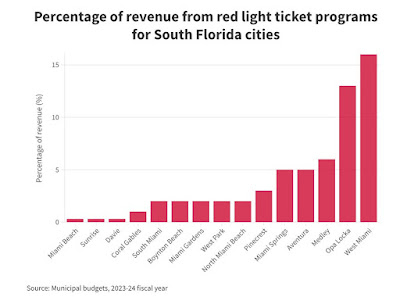
Florida cities have long used red light cameras as a tool to promote traffic safety and reduce violations at dangerous intersections. These cameras generate significant revenue for local governments, funding various public services. However, the State of Florida is increasingly interested in obtaining a portion of this income, raising questions about the impact on local budgets and public safety initiatives. Here’s a look at why the state wants a share of red light camera revenue, what it means for Florida cities, and how it could affect residents.
Why Does Florida Want Red Light Camera Revenue?
Illinois Proposal: Trial by Phone Marks Court Shift

In an effort to modernize the judicial system and enhance accessibility, Illinois legislators have introduced a groundbreaking proposal to allow trials to be conducted via phone. This innovative approach aims to streamline court processes, reduce backlogs, and improve the overall efficiency of the legal system. As courts adapt to the challenges posed by the COVID-19 pandemic and embrace technological advancements, this legislation could set a precedent for other states. Here’s what you need to know about the proposed trial by phone legislation in Illinois.
The Need for Change in the Judicial System
The traditional court system has faced numerous challenges in recent years, including:
-
Backlogs and Delays: Courts across Illinois have struggled with significant backlogs, leading to lengthy delays in legal proceedings. This has affected the timely resolution of cases and has often left defendants waiting months or even years for their day in court.
-
Accessibility Issues: Many individuals, particularly those in rural areas or with mobility challenges, find it difficult to attend court hearings. Travel time, transportation costs, and other barriers can prevent people from accessing justice.
-
Technological Advancements: The pandemic accelerated the adoption of technology in various sectors, including the legal field. Virtual court proceedings became a necessity, demonstrating that remote participation could be effective in many situations.
Key Features of the Proposed Legislation
The Illinois legislation proposing trial by phone includes several key features:
-
Remote Participation: Defendants, attorneys, and witnesses would have the option to participate in court proceedings via phone. This would allow for greater flexibility and accessibility, particularly for those unable to attend in person.
-
Limited to Certain Cases: The proposal is likely to focus on specific types of cases, such as minor traffic violations or low-level misdemeanors, where a phone trial could be appropriate without compromising the integrity of the judicial process.
-
Procedural Safeguards: The legislation would include procedural safeguards to ensure that the rights of all parties are protected. This may involve recording the proceedings, ensuring secure communication channels, and providing options for in-person hearings if necessary.
-
Cost-Effectiveness: By reducing the need for in-person appearances, the legislation aims to cut down on court costs, transportation expenses, and lost work time for participants.
Potential Benefits of Trial by Phone
The proposed legislation offers several potential benefits:
-
Increased Accessibility: By allowing trials to be conducted via phone, individuals who may have difficulty attending court in person can participate more easily, promoting fairness and inclusivity in the legal process.
-
Reduced Backlogs: Remote trials could help alleviate court backlogs, enabling cases to be resolved more swiftly and efficiently. This would benefit not only defendants but also the judicial system as a whole.
-
Flexibility for Legal Professionals: Attorneys and legal representatives would have greater flexibility in managing their schedules, allowing them to handle more cases effectively.
-
Adaptability to Future Challenges: As society continues to adapt to technological advancements, implementing phone trials positions the Illinois judicial system to respond to future challenges, whether they be health-related or logistical.
Challenges and Considerations
While the proposal presents many advantages, there are also challenges to consider:
-
Ensuring Fairness: Critics may raise concerns about ensuring fair trials and the ability to adequately present evidence over the phone. Safeguards will be necessary to maintain the integrity of the judicial process.
-
Technical Issues: Reliance on technology means that courts must be prepared to address potential technical issues that could disrupt proceedings or affect communication.
-
Public Perception: The perception of phone trials as a less formal or serious approach to justice may lead to resistance from some legal professionals or the public.
Conclusion
The proposed legislation in Illinois to allow trials by phone marks a significant step towards modernizing the judicial system and increasing accessibility. By leveraging technology, the state aims to address long-standing challenges in the legal process while ensuring that justice remains accessible to all. As the legislation progresses, it will be crucial for lawmakers, legal professionals, and the public to engage in discussions about its implications and to work together to create a system that serves the needs of all citizens effectively.
Where is it illegal to drive with headphones in ear?

Laws regarding the use of headphones while driving vary by country, state/province, and even local jurisdictions within those areas.
Cameras May Enforce Texting While Driving

On September 24th, 2008 the Governor of California, Arnold Schwarzenegger signed Senate Bill 28 (SB 28) into law. The new bill “Prohibits a person from driving a motor vehicle while using an electronic wireless communications device to write, send, or read a text-based communication." The new bill will impose a fine of $20 for the first offense and $50 for subsequent offenses starting January 1, 2009. No violation points will be given as a result of the offense and there are exceptions for emergency personnel.
The bill requires motorists to use hands-free devices while talking on a mobile phone when driving a motor vehicle. California motorists using cell phones have been required to use hands-free devices since July, and drivers under age 18 can't use any electronic devices. Seven other states and the District of Columbia ban text-messaging or the use of hand-held phones while driving, according to the National Conference of State Legislatures.
Why Democratic Lawmakers Love Red Light Cameras?

Why Do Democrats Love Red Light Cameras More Than Republicans?
Connecticut is just one of the many States and Cities in throughout the U.S. considering to adopt red light camera legislation. National Coalition for Safer Roads is a group lobbying for support of the cameras in Connecticut that receives funds from Arizona-based American Traffic Solutions, a private vendor of red light cameras that has spent more than $100,000 on lobbying in Connecticut since last year. Democratic lawmakers are pushing hard for the new legislation and are now running up against some resistance. Read the full story.
Red Light Cameras Catch Cheating Spouses & Pot Smoking Kids

Senator Larcenia Bullard recently shared a story of one of her constituents’ sons who was caught by a red light camera while driving some of his pot-smoking friends. Police used the tape showing his back-seat friends getting high and charged the teenager with a drug offense instead of a traffic infraction, said Bullard, whose district includes part of Palm Beach County. Invasive or fair? How did they know it was pot?
Senator Bullard said the red light cameras cameras should take photos limited in size to the trunk of the car and not include the window of the vehicle. That way officers – and others – can’t peek at what’s going on inside, she said. Ridiculous claim in my opinion. It would be interested to see what those who study criminal justice or have a degree in criminal justice think about this.
Senator Bullard he went on to say that, "A man is sitting in the back seat of a car with a woman who he’s not married to and his wife,” Bullard, D-Miami, said, drawing snickers from her Senate Transportation committee colleagues. “But it’s very true. This is real. This stuff happens. I see where this camera is really working but we need to get beyond taking pictures of that back window where you can see someone cheating on his wife or someone smoking marijuana.”
The cameras are not installed for these purposes, however, they do have some unintended policing benefits. Karma is a bitch and bad people will always get caught for doing bad things.
Which States Ban the Use of Red Light Cameras?
 |
| State Laws vs City Laws |
Here is a list of fifteen US States that have banned the use of red light cameras. Most State laws prohibit the use of new photo enforcement locations by cities and municipalities who might be considering it. However, there are a few cities that were using cameras before the State law was passed and the camera usage maybe grandfathered in. It remains to be seen what will happen if States begin to pass laws banning cameras if they will require cities to remove them. For example, the state of Florida used the State law to ban the cameras but they are still widely used in many cities. Could this be a dirty legal tactic for the States to get leverage in order participate in the revenue share with the municipality? I suspect were are going to see more State legislatures passing laws that ban the cameras simply to use this as leverage to share in the State revenue with the City. Here are the States below that have passed laws banning them from 1995 - 2010.
Utah 1996
Alaska 1997
Nebraska 1999
Nevada 1999
Arkansas 2005
New Hampshire 2006
West Virginia 2006
Michigan 2007
Minnesota 2007
Indiana 2008
Maine 2009
Mississippi 2009
Montana 2009
South Carolina 2010
Redflex & ATS Class Action Lawsuits

There have been court challenges to the cost-neutral clause and as a result, several Peninsula cities have stopped using the red light cameras, others are in the process of dropping it, among them is Redwood City. Another trend seems to be the growing use of right turn cameras or those intersections that monitor if you make a "California Stop". A California stop is also referred to as a rolling right turn.
Related articles:
Red-light cameras in Redwood City have not resulted in a significant drop in accidents
Judge Rules Red Light Cameras Are Not Legal

The city can appeal the ruling by Circuit Court Judge Jerald Bagley, and the judge's decision has no bearing on other cities nor did it invalid the constitutionality of red-light programs. But if it stays in force, the ruling could set a legal precedent that could be used in suits against red-light camera programs in other cities.
Other South Florida cities have similar ways to catch speeders and beef up city revenues, so the ruling against the cameras could open the flood gates to challenges. Cities, like Aventura, Miami Beach, Pembroke Pines and others, have used cameras to cite red-light runners with a code violation, instead of a traffic violation. Lusskin argued that was merely a way of circumventing the state law and that cities could only issue tickets to red-light runners if an officer is present.
In his ruling Monday morning, Bagley sided with Lusskin and granted his motion for summary judgment against Aventura.
The lawyer representing Aventura city attorney Michael S. Popok said that the judge's ruling only addressed whether or not cities can issue fines based on the red-light cameras - and not the presence of the cameras themselves or the program. The state charter says that cities have the power to use ``security devices'' to ``regulate'' what occurs on the roadways, and the issue, according to Popok, is whether or not the word ``regulate'' gives cities the authority to issue fines.
The judge did not issue an injunction against the program as part of his ruling, so it can continue to operate while the city decides whether or not to file an appeal.
Redflex Fighting Release of Records to League City, Texas

The Daily News made a request on Jan. 12 to the League City Police Department for the daily reports it received from Redflex of all red light camera citations issued from Oct. 1, 2009, through Jan. 9. The Daily News requested the same information from League City’s government. League City forwarded The Daily News’ request to Redflex. In a Feb. 2 letter, Redflex asked the Texas Attorney General’s Office to deny the request.
“The Requesting Party seeks confidential, proprietary, and copyrighted information regarding Redflex and its business operations,” Redflex Associate General Counsel John M. Jacobs wrote. “As a result, such information is properly excepted under the laws of the State of Texas.” Attorneys for League City informed the attorney general’s office they would rely on Redflex’s decision because the city is unsure how to handle the request. Joseph Larsen, a Houston-based attorney for the Freedom of Information Foundation of Texas, said copyright and state law do not preclude anybody from viewing the records Redflex is seeking to protect.
“You’re entitled to inspect them even if you can’t get copies of the records,” he said. “This is just typical obstruction you see from cities and vendors into any inquiries about red light camera programs,” Larsen said.
Two city council members said they were concerned about the company’s response to the request. “I have several concerns with the red light cameras that are being used in League City, and this is indeed one of them,” Councilman Mike Lee said. “I personally believe that all information related to city property is a public record,” Councilman Mick Phalen said. “Unfortunately, Redflex Systems disagrees and has not released them.” League City officials were waiting Tuesday for Redflex to provide them with additional records on the city’s red-light camera program. “Redflex informed us that they would supply us with a report by this afternoon. To our knowledge we have not yet received a report from Redflex,” Public Information Officer Kristi Wyatt said.
Popular Articles (All Time)
-
 Red light camera tickets typically take from 3-7 business days to process and are mailed to the registered owner of the vehicle. We r...
 -
 A Traffic Monitoring Camera Is Not The Same As A Red Light Camera Many of our readers often get confused about the difference betwe...
 -
 If you ever plan on traveling to Downtown Los Angeles on the 110 Freeway I would suggest buying one of these Fast Trak transponders to avoid...
 -
 Red Light Camera Ticket in The Mail It typically takes 5-7 business for a ticket to arrive in the mail in Florida, California, New Yo...
 -
 Red light cameras are increasingly common at busy intersections, and their purpose is to deter dangerous driving and reduce collisions. ...
 -
 The flash of a red light camera is one of the most dreaded things you can see when you pass an intersection. You may have noticed that if...
 -
 Red-light cameras remain one of the most debated traffic enforcement tools in the United States. Supporters argue they save lives by discour...
 -
 Search the Map for " Live Traffic " To Only See Traffic Cameras Bookmark Our Live Traffic Cameras App on Your Phone ...
 -
 Freedom of Information Act Request to Any Government Agency This is the most common question PhotoEnforced.com receives on a daily b...
 -
 Drives Should Be Wary of Short Yellow Lights at Camera Enforced Intersections