Search For Maps & Articles

Showing posts with label ALPR Cameras. Show all posts

Why Denver Replaced Flock Cameras with Axon

Why Denver Replaced Flock Cameras with Axon
Privacy backlash, data control, and the future of surveillance tech

Denver’s decision to replace Flock Safety license plate reader (LPR) cameras with Axon technology marks a major shift in how cities approach surveillance, privacy, and policing. While both systems are designed to help law enforcement track stolen vehicles and investigate crimes, the transition reflects deeper concerns about data sharing, public trust, and control over surveillance infrastructure.

In 2026, after mounting public pressure and political debate, Denver officials allowed their contract with Flock to expire and approved a new agreement with Axon. This move wasn’t just about switching vendors—it signals a broader trend across the United States where cities are rethinking how much surveillance is too much.

This article explores the real reasons Denver made the switch, what changed, and what it means for the future of policing and civil liberties.

What Are Flock Cameras and Why Were They Used?

Flock Safety is a rapidly growing surveillance technology company that installs automated license plate readers (ALPRs) across cities and neighborhoods.

These cameras:

  • Capture license plates and vehicle characteristics
  • Store data in a shared network
  • Allow police to search for vehicles linked to crimes

By 2025, Flock operated in thousands of U.S. communities and processed billions of vehicle scans monthly .

Why cities adopted Flock

Cities like Denver originally embraced Flock because:

  • It helped recover stolen vehicles
  • It provided investigative leads in violent crimes
  • It required minimal infrastructure (solar-powered poles)

Denver police credited LPRs with:

  • Recovering hundreds of stolen cars
  • Removing firearms from the streets

At first glance, the technology seemed like a clear win for public safety.

The Turning Point: Public Backlash and Privacy Concerns

Despite their effectiveness, Flock cameras quickly became controversial.

1. Mass surveillance concerns

Critics argued that Flock created a nationwide tracking system:

  • Cameras log where vehicles travel
  • Data can be shared across jurisdictions
  • Movement patterns can be reconstructed over time

Civil liberties groups warned this resembles warrantless tracking, raising Fourth Amendment concerns.

2. Data sharing with federal agencies

One of the biggest issues was how data could be accessed:

  • Reports showed local agencies could indirectly share data with federal authorities
  • Concerns emerged around immigration enforcement and tracking individuals

This became politically explosive, especially in cities like Denver.

3. Security vulnerabilities and misuse risks

Flock also faced criticism for:

  • Alleged data exposure vulnerabilities
  • Potential misuse of AI-powered tracking tools

4. Community pushback in Denver

Denver residents and activists voiced strong opposition:

  • Concerns about over-policing in certain neighborhoods
  • Lack of transparency about data use
  • Fear of permanent surveillance infrastructure

Ultimately, city leadership acknowledged the backlash.
Mayor Mike Johnston stated the decision to move on from Flock came after the city “heard the community loud and clear” .

Why Denver Chose Axon Instead

Denver didn’t abandon license plate readers entirely—it chose a different vendor: Axon.

1. Stronger control over data

One of the biggest advantages of Axon:

  • Data is stored within the city’s existing system (Evidence.com)
  • Integration with body cameras and police records
  • More centralized control over access

Officials emphasized that:

  • Data sharing with federal agencies would be restricted
  • Retention periods would be limited

2. Existing relationship with Denver Police

Axon already supplies:

  • Body cameras
  • Tasers
  • Digital evidence storage

This meant:

  • Easier integration
  • Lower operational friction
  • A unified technology ecosystem

3. Reduced surveillance footprint

Denver Police indicated the new system would:

  • Use fewer cameras
  • Be deployed more selectively
  • Focus on high-crime or high-traffic areas

Officials said this would reduce the overall surveillance footprint while maintaining effectiveness .

4. Competitive procurement process

The city ran a formal RFP (Request for Proposal), and:

  • Axon emerged as the top vendor
  • The decision followed months of evaluation and debate

The Contract Details: What Changed?

Denver’s new agreement with Axon includes:

  • 50 license plate reader cameras installed across the city
  • A one-year, $150,000 contract
  • Deployment in high-traffic areas to assist investigations

Compare that to the previous system:

  • Larger, more distributed network under Flock
  • Broader data-sharing capabilities

This represents a scaled-down, more controlled approach.

Key Differences: Flock vs Axon

Feature Flock Safety Axon
Data network Shared across jurisdictions More localized control
Federal access concerns Yes (indirect access issues raised) Restricted in contract
Integration Standalone system Integrated with body cams & evidence
Public perception High controversy Seen as more regulated (for now)
Deployment scale Large distributed networks Smaller, targeted rollout

The key takeaway:
Denver didn’t reject surveillance—it chose a more controlled and politically acceptable version of it.

Political and Social Factors Behind the Decision

The switch wasn’t purely technical—it was deeply political.

City council division

The decision passed narrowly:

  • 7–6 vote in favor of Axon

This reflects how controversial surveillance technology has become.

State-level pressure

Colorado lawmakers are actively considering:

  • New regulations on surveillance tech
  • Rules on data storage and access 

National trend

Denver is not alone. Across the U.S.:

  • Cities are reevaluating Flock contracts
  • Lawsuits and legislation are emerging
  • Public skepticism is growing

Does This Mean Less Surveillance?

Not exactly.

While Denver reduced its footprint:

  • License plate tracking is still active
  • Police still rely on LPR data for investigations

The shift is more about:

  • Who controls the data
  • How it’s shared
  • How transparent the system is

In many ways, this is surveillance evolution—not elimination.

The Bigger Picture: A New Era of “Controlled Surveillance”

Denver’s decision reflects a broader transformation:

Phase 1: Expansion

Cities rapidly deployed tools like Flock:

  • Minimal oversight
  • Maximum coverage

Phase 2: Backlash

Public concerns emerged:

  • Privacy
  • Civil liberties
  • Government overreach

Phase 3: Regulation (current phase)

Cities now demand:

  • Data limits
  • Transparency
  • Vendor accountability

Axon’s rise is partly due to positioning itself as a “safer” alternative in this new phase.

What This Means for Other Cities

Denver’s move will likely influence other municipalities:

Expect more vendor switching

Cities may:

  • Replace Flock with alternatives
  • Renegotiate contracts
  • Demand stricter terms

Increased scrutiny of surveillance tech

Future deployments will likely require:

  • Public hearings
  • Transparency policies
  • Legal safeguards

Hybrid surveillance models

Cities may adopt:

  • Smaller, targeted camera networks
  • Integrated systems tied to police infrastructure

Conclusion

Denver replaced Flock cameras with Axon not because the technology failed—but because public trust did.

The decision was driven by:

  • Privacy concerns
  • Data-sharing controversies
  • Political pressure
  • A desire for greater control

By switching to Axon, Denver aims to strike a balance between:

  • Maintaining public safety tools
  • Addressing civil liberties concerns

However, the debate is far from over. As surveillance technology continues to evolve, cities will face an ongoing challenge:

How do you use powerful tools to fight crime without creating a system that watches everyone all the time?

Denver’s answer—for now—is not less surveillance, but more controlled surveillance.

Do Flock Cameras Disrupt Wireless CarPlay?

car play and flock safety cameras wifi

Do Flock Cameras Disrupt Wireless CarPlay? What’s Actually Possible 

An Audi dealership recently told me something that will sound familiar to anyone who’s battled flaky wireless CarPlay or Android Auto: “The increase in Flock cameras is interfering with phone connections in the car because of Flock’s powerful Wi-Fi antennas.” It’s a clean, simple explanation—and it feels plausible if your music or navigation drops at the same intersections over and over. But is it true?

Here’s the most honest answer after doing due diligence: it’s technically possible for strong radio-frequency (RF) activity near roadways to disrupt wireless in-car connections, but blaming Flock cameras specifically—because of ‘powerful Wi-Fi antennas’—is not well-supported by public technical information. In most cases, the better explanation is broader: wireless CarPlay relies on unlicensed spectrum (Wi-Fi and Bluetooth), and that spectrum is increasingly crowded—especially near intersections, commercial corridors, dense housing, and areas with lots of radio equipment.

Let’s break down what wireless CarPlay actually uses, what Flock cameras appear to use, how interference works in the real world, and how to troubleshoot the issue like a pro without falling for myths.

First: what “Flock cameras” are (and what they communicate)

Flock Safety is a major vendor of automated license plate recognition (ALPR/LPR) systems and related public-safety camera products. These cameras are frequently mounted on poles at neighborhood entrances, major intersections, and along arterial roads. Flock’s marketing emphasizes quick installation and cloud access—often without trenching or hardwired network runs. [1]

Public descriptions from third parties (and even municipal FAQ-style documents) commonly describe these LPR units as sending captured plate data to the cloud over cellular/LTE—essentially “like a mobile phone,” which makes sense for solar-powered roadside deployments. [2][3]

At the same time, independent security research over the past year has documented that some Flock LPR devices expose Wi-Fi-accessible interfaces under certain conditions—researchers described interacting with the devices over Wi-Fi to test vulnerabilities. That doesn’t automatically mean the cameras are blasting high-power Wi-Fi 24/7 into the roadway, but it does indicate that Wi-Fi can exist on (at least some) devices, whether for setup, maintenance, debugging, or local access. [4][5]

Key point: “Has Wi-Fi somewhere in the system” is very different from “constant high-power Wi-Fi transmissions that overwhelm nearby cars.” The public material strongly supports LTE/cloud backhaul as the primary path for these cameras, and the Wi-Fi story (where it exists) appears more like a device-access channel than a roadside hotspot designed to serve the public. [2][3][4]

How wireless CarPlay works (and why it’s sensitive to RF noise)

Wireless CarPlay isn’t “Bluetooth audio with a fancy screen.” It’s a two-radio system. Apple’s own documentation explains that wireless CarPlay uses a two-stage process: Bluetooth is involved in discovery/pairing, and then the CarPlay session runs over a Wi-Fi link for the high-bandwidth data (screen, map tiles, UI updates, etc.). [6][7]

Apple’s support guidance also explicitly tells users to ensure Wi-Fi is on and to join the car’s CarPlay network. [8] And there are manufacturer service documents that describe wireless CarPlay sessions being established when the car detects the iPhone connected to Bluetooth (Bluetooth pairing method), or when the phone connects to an in-vehicle Wi-Fi hotspot (Wi-Fi pairing method). [9]

So if you’re seeing “it disconnects at the same spot every day,” you’re not crazy. Any disruption to the Bluetooth handshake phase or the Wi-Fi data phase—especially on crowded bands—can cause a drop, a stutter, or a full disconnect.

What interference really looks like near intersections

People often imagine interference as one device “attacking” another. In practice, most wireless dropouts are more boring: congestion (too many devices competing), overpowering signals (a strong transmitter near your receiver), or receiver desensitization (your car’s Wi-Fi radio struggles to hear your phone because the noise floor is elevated).

Intersections and major corridors can be RF soup. Common sources include:

  • Dense Wi-Fi from nearby businesses, apartments, outdoor access points, and private security systems
  • Traffic management electronics (signal controllers, sensors, cameras) that may include wireless links
  • Cellular infrastructure and small cells (not “Wi-Fi,” but strong RF nearby can still stress receivers)
  • Point-to-point microwave/Wi-Fi backhaul links on poles and rooftops

Car forums are full of “repeatable dead zones” where wireless CarPlay or Android Auto drops at the same spot—drivers often attribute it to RF congestion on 2.4 GHz or 5 GHz. That pattern (location-specific, repeatable) is exactly what you’d expect from local RF conditions, not a defect in your phone alone. [10]

So… can Flock cameras cause the problem?

Possible in theory: If a roadside device is emitting in (or near) the same unlicensed bands your car uses for wireless CarPlay, and it’s strong enough and close enough, it could contribute to a dropout—especially if your car’s receiver is already dealing with congestion. Interference is rarely a single culprit; it’s usually cumulative.

But here’s what the public evidence suggests: Flock LPR systems are widely described as using cellular/LTE to reach the cloud, which doesn’t align with the claim that “powerful Wi-Fi antennas” are the default, primary comms method. [2][3] Meanwhile, security research indicates Wi-Fi access is (at least sometimes) present on certain devices, but that’s not the same as blanket proof of constant, high-power Wi-Fi emissions blasting the roadway. [4][5]

The more likely truth: If your Audi is dropping wireless CarPlay at certain intersections, the cause is probably RF conditions at that location—and a growing number of roadside devices (including cameras of many brands, outdoor Wi-Fi, municipal radios, and private security gear) can raise the noise floor. Flock might be present at that intersection and get blamed because it’s visible and newly installed, but visibility is not proof.

A reality check from the FCC rules everyone lives under

Most consumer Wi-Fi and Bluetooth equipment operates under FCC rules for unlicensed RF devices (Part 15). In plain English: devices can’t cause harmful interference to authorized services, and they must accept interference they receive—even if it causes undesired operation. That’s why the same phone that works perfectly in one neighborhood can glitch in another, and nobody “owes” you a clean RF environment. [11]

This matters because wireless CarPlay is built on the same unlicensed spectrum ecosystem as everything else. There’s no guarantee of perfection when you’re driving through a canyon of competing radios.

How to test whether you’re dealing with interference (not a broken car)

If you want to treat this like an investigation (not a rumor), here are fast tests that separate “vehicle issue” from “location RF issue”:

  1. Drive the same route using wired CarPlay. If the problem disappears on the exact same stretch of road, you’ve strongly implicated wireless RF conditions (because wired CarPlay bypasses the Wi-Fi link entirely).
  2. Try a different phone. If two different iPhones drop in the same location, that points away from a single-device defect.
  3. Note whether it’s “always the same spot.” Repeatable dropouts are classic interference patterns. Random dropouts everywhere can be firmware/software, overheating, or hardware.
  4. Check whether your car is competing with a hotspot mode. Some systems behave differently depending on whether the phone is latching onto an in-vehicle hotspot vs a direct CarPlay Wi-Fi link. (Manufacturers document multiple pairing methods.) [9]

Practical fixes that work in the real world

If interference is the cause, you can’t “turn off the neighborhood.” But you can often make your connection more resilient:

  • Update iOS and your vehicle’s infotainment firmware. Wireless projection stacks get stability patches over time.
  • Reset your phone’s network settings (and re-pair CarPlay cleanly). Old Wi-Fi credentials and corrupted pairings can create fragile reconnections.
  • Forget the vehicle’s Wi-Fi network and rejoin. If your iPhone is hanging onto stale configs, a fresh join can help. Apple explicitly frames CarPlay as joining a “CarPlay network.” [8]
  • Disable VPNs or “battery optimization” behaviors while driving. Aggressive background restrictions can destabilize the session during handoffs.
  • Use wired CarPlay for routes with known “dead zones.” It’s the simplest workaround when the environment is the problem.
  • Keep the phone close to the head unit. A phone buried in a bag, under a seat, or behind metalized tint can weaken the link and make it easier for outside RF to win.

What Audi dealerships should (and shouldn’t) be saying

A dealership tech hearing “it disconnects at the same intersections” may be trying to give you an explanation that doesn’t end with “we can’t reproduce it in the service bay.” That’s understandable. But the specific claim that Flock cameras are doing it because of “powerful Wi-Fi antennas” jumps past several missing steps: (1) confirming the vehicle is using wireless CarPlay at the time of failure, (2) confirming the dropout correlates with RF congestion, (3) identifying what transmitters are actually present at the location, and (4) showing that a specific device’s emissions overlap your car’s Wi-Fi channel and are strong enough to matter.

Without those steps, it’s closer to a story than a diagnosis.

Bottom line: what’s “true enough” to take seriously?

Yes: Wireless CarPlay relies on Bluetooth and Wi-Fi, and it can drop in specific locations due to RF interference or congestion. Apple’s own materials confirm the Wi-Fi-based session architecture and the need for Wi-Fi to be enabled. [6][7][8]

Yes: Flock LPR deployments are increasing in many regions, and at least some research indicates Wi-Fi-accessible behavior exists on certain devices under certain conditions. [4][5]

Not proven: The blanket claim that “Flock’s powerful Wi-Fi antennas” are commonly interfering with in-car phone connections. Public descriptions more commonly point to LTE/cellular cloud connectivity as the primary communications method for these systems. [2][3]

Most likely: If you’re seeing repeatable dropouts at specific intersections, your best working hypothesis is general RF congestion at those locations, not a single camera brand. Treat it like you’d treat a cellular dead zone: mitigate it (wired connection, firmware updates, clean pairing) rather than expecting the environment to cooperate.

If you want, you can send me the nearest intersection(s) where you consistently see the dropouts and what Audi model/year you’re driving, and I’ll outline a tighter “field test” checklist you can run in one afternoon (without any special equipment) to narrow down whether it’s channel congestion, pairing behavior, or a vehicle firmware quirk.

The Ghost Plate Problem Spreads from the U.K. to the U.S.

How Do Drivers Do This? The Rise of “Ghost Plates” from the U.K. to the U.S.

Types and Functions of Speed Cameras Explained

Speed cameras have become one of the most widely used tools in traffic enforcement and road safety. They are designed to monitor vehicles, record traffic violations, and reduce accidents by discouraging dangerous driving behavior. Over the years, speed cameras have evolved from simple radar-based devices into multipurpose smart enforcement systems capable of performing a wide range of tasks, from speed enforcement to vehicle tracking and even detecting noise pollution. In this article, we will explore the major types of speed and traffic enforcement cameras, their specific functions, and how they are shaping modern traffic management systems.

What Cameras in Orem, Utah Could Help the FBI After the Charlie Kirk

The assassination of conservative activist Charlie Kirk at Utah Valley University has drawn national attention — not only because of the political violence involved, but also because of the technological tools available to investigators. While Orem is not a heavily surveilled city like New York or Chicago, it does have a network of cameras that could assist the FBI as it works to identify the shooter.

Campus Security Cameras 

Are Road Safety Cameras Speed Cameras?

Across the world, “road safety cameras” have become a common feature on highways, intersections, and school zones. Many drivers naturally assume these devices are simply speed cameras. While speed enforcement is often a part of their function, road safety cameras can perform a much wider range of traffic monitoring and enforcement duties. Understanding the distinction between the two helps drivers know how they work, what laws they enforce, and why cities deploy them. 

License Plate Hunter Cameras: How They Work & Where They're Used

License plate hunter cameras—formally known as Automated License Plate Readers (ALPR)—are specialized surveillance systems designed to automatically capture and analyze license plate data in real time. As discussed in PhotoEnforced's original article, these devices are often mistaken for speed or red-light cameras, but their primary function is vehicle identification rather than issuing direct traffic tickets.

In the last decade, ALPR systems have become a common sight on highways, at toll booths, in parking garages, and even in residential neighborhoods. Their rapid adoption is driven by their ability to process thousands of license plates per hour, integrate with vast databases, and provide immediate alerts to authorities when a match is found.

How License Plate Hunter Cameras Work

The core technology behind ALPR involves a high-resolution camera paired with optical character recognition (OCR) software. This combination allows the system to “read” license plates, regardless of whether the vehicle is moving at high speed or parked. Infrared imaging is frequently used so the system can function in darkness, rain, fog, or glare conditions.

When a plate is captured, the system typically records:

  • The license plate number
  • Date and time of capture
  • GPS coordinates or fixed location data
  • A photo of the vehicle (often showing make, model, and color)

The recorded information is then compared against one or more databases. These may include stolen vehicle lists, active warrant notices, wanted persons alerts, unpaid toll violations, or other watchlists. Matches can trigger real-time alerts to patrol officers or dispatch centers.

Key Applications of ALPR Technology

  1. Law Enforcement: Police departments use ALPR to detect stolen vehicles, track suspects, locate missing persons, and solve crimes. A single patrol car equipped with ALPR can scan thousands of plates per shift.
  2. Toll Collection: Many toll roads have eliminated cash booths entirely, relying on ALPR to identify vehicles and bill the registered owner.
  3. Parking Management: In garages and municipal lots, ALPR automates entry and exit logging, enforces permit requirements, and streamlines payment verification.
  4. Private Security: Gated communities, corporate campuses, and logistics hubs use ALPR to monitor and log all vehicle entries and exits, enhancing security without adding guard staff.
  5. Traffic Analysis: Transportation departments use ALPR data to monitor congestion patterns, calculate travel times, and plan roadway improvements.

Advantages of License Plate Hunter Cameras

ALPR systems deliver benefits that manual observation cannot match:

  • Continuous operation, day and night
  • Rapid, automated identification without human intervention
  • Integration with national, state, and local databases
  • Long-term storage for investigative purposes
  • Ability to process large traffic volumes efficiently

These strengths have made ALPR a cornerstone of modern traffic enforcement and vehicle monitoring efforts.

Privacy & Legal Concerns

Despite their utility, license plate hunter cameras have drawn criticism from privacy advocates and civil liberties organizations. The core concern is that ALPR allows mass surveillance of ordinary drivers without their knowledge or consent. Specific issues include:

  • Data Retention: In some jurisdictions, plate scans are deleted after 48 hours; in others, they may be kept for years.
  • Access Control: Questions remain over who can access the data and whether it is shared with private companies or other government agencies.
  • Potential for Abuse: Without strict oversight, ALPR data could be misused for tracking individuals for non-law-enforcement purposes.

Some U.S. states have passed laws regulating ALPR usage, retention, and sharing, while others have yet to address the technology in legislation. Court rulings have also begun to shape the legal boundaries, with some judges questioning whether prolonged, warrantless tracking violates the Fourth Amendment.

Where You’ll Find ALPR Cameras

License plate hunter cameras can be either fixed or mobile. Common installation points include:

  • Highway overpasses
  • Traffic signals and busy intersections
  • Toll plazas and express lanes
  • School safety zones
  • Police patrol vehicles
  • Parking garage entrances and exits
  • Industrial or residential gated entries

In mobile form, ALPR cameras mounted on police cruisers can scan vehicles parked along streets or traveling nearby in real time.

Case Study: Neighborhood ALPR Networks

Some private companies have expanded ALPR into residential security. For example, Flock Safety operates networks in thousands of U.S. neighborhoods, capturing billions of license plate scans each month. These systems are marketed as tools to reduce crime by sharing data directly with local police departments when a match occurs. Supporters cite significant reductions in burglary and theft rates, while critics raise concerns about continuous tracking and the absence of clear opt-out options for residents.

Potential Risks and Misidentification

ALPR accuracy is generally high, but it is not flawless. Misreads can occur due to dirty or damaged plates, unusual fonts, lighting conditions, or obstructions. In rare cases, such errors have led to mistaken stops or arrests, underscoring the need for human verification before taking enforcement action.

Future Trends in License Plate Recognition

ALPR technology continues to evolve rapidly. Artificial intelligence now enables systems to identify vehicles by make, model, and color in addition to plate numbers. Predictive analytics may soon allow law enforcement to anticipate vehicle movements based on past patterns. Smaller, cheaper units are making it possible to install ALPR in more locations, including portable units for temporary deployments.

As cities adopt “smart traffic” infrastructure, ALPR data is likely to be integrated with other sources such as traffic sensors, GPS feeds, and even facial recognition systems. These integrations promise greater efficiency in traffic management and public safety but will also raise deeper privacy debates.

Balancing Security and Privacy

License plate hunter cameras can make communities safer, speed up investigations, and modernize transportation systems. However, unchecked deployment risks eroding public trust. Policymakers, law enforcement, and private operators must balance the legitimate benefits of ALPR with strong safeguards to prevent misuse.

Transparency measures such as public notice of camera locations, limits on data retention, and independent audits can help ensure that the technology serves the public good without compromising individual freedoms.

Conclusion

License plate hunter cameras have transformed vehicle monitoring from a manual process into a sophisticated, automated system capable of scanning and analyzing vast amounts of data instantly. Whether used by police, toll agencies, parking operators, or private security, these systems are now a permanent feature of modern transportation networks. The challenge moving forward will be ensuring that their use aligns with both public safety needs and the fundamental right to privacy.

Top Red Light Camera Companies Ranked by 2024 Revenue

Top Red Light Camera Companies Ranked by 2024 Revenue

Red light camera enforcement has become a major industry driven by the need for traffic safety, automated violations processing, and smart city integration. But which companies lead the market in terms of size and revenue?

Below is a breakdown of the top global and regional red light camera system manufacturers, ranked by their estimated 2024 revenues, including companies like Verra Mobility, Jenoptik, Sensys Gatso, and others.

📊 2024 Red Light Camera Company Revenue Rankings

Rank Company Estimated 2024 Revenue (USD) Notes
1 Swarco Traffic $1.25 Billion Includes broader traffic control, not just red light cameras
2 Jenoptik Group $1.22 Billion Global traffic enforcement and optical tech leader
3 Verra Mobility $879 Million Includes American Traffic Solutions (ATS) and Redflex
4 Iteris Inc. $172 Million ITS sensors and data analytics, not camera-focused
5 Miovision $76 Million Growing in smart city traffic camera deployments
6 Redflex Holdings $75 Million Now part of Verra; still active in some markets
7 Sensys Gatso Group $63 Million Strong European presence in automated enforcement
8 Traffic Logix Not Disclosed Privately held; regional deployments in North America
9 Peek Traffic / PIPS Technology / TrafficVision Not Disclosed Specialized vendors with niche contracts and products

🌐 Who Dominates the Red Light Camera Industry?

The clear revenue leader for enforcement-focused technology is Verra Mobility, which processes millions of speed and red light violations each year for cities like New York, Chicago, Washington D.C., and Phoenix. Verra owns both ATS (American Traffic Solutions) and Redflex, previously its top competitors.

Swarco and Jenoptik lead globally in infrastructure-scale traffic systems, though only a portion of their business involves red light cameras. Their revenues reflect broader ITS deployments such as smart signals, lane control, and LED signage.

Smaller firms like Miovision, Traffic Logix, and Peek Traffic focus on specific municipal or regional contracts and often integrate with broader smart city technologies.

📍 Why This Matters

Understanding which companies lead the red light camera industry is important for:

  • City governments looking to partner with reliable vendors
  • Investors evaluating public firms like Verra Mobility (NASDAQ: VRRM)
  • Citizens and advocates analyzing the spread and impact of traffic enforcement

As the market grows—expected to surpass $2 billion globally by 2033—knowing the major players helps stakeholders understand how automation is shaping traffic safety, surveillance, and privacy.

🔗 Learn More

Tags: red light camera companies, Verra Mobility, traffic enforcement systems, Redflex, Swarco, Jenoptik, speed camera vendors, traffic technology providers, 2024 revenue ranking

What Do Speed and Red Light Cameras Reveal About a Community?

Speed and red light cameras are more than just automated enforcement tools — they often reflect a community’s values, governance style, public safety priorities, and even its trust dynamics between citizens and local officials. With over 4,000 active red light and speed camera systems across the U.S. and thousands more worldwide, their placement and usage patterns can reveal surprising insights about a region.

How Traffic Cameras Are Helping Detect Human Trafficking

How Traffic Cameras Are Being Used to Detect Human Trafficking

What Red Light Cameras Look Like in the UK

red light camera

Red light cameras are a key part of the UK's road safety system, used to monitor and deter drivers from running red lights at intersections. These devices play a crucial role in reducing accidents, especially in high-traffic urban areas. In this article, we’ll explain what red light cameras in the UK look like, how they work, where they’re typically installed—and how many there are.  What do red light cameras look like in the United States?

📊 How Many Red Light Cameras Are in the UK?

As of the latest data, the UK operates approximately 811 red light cameras. These cameras are strategically positioned at intersections with a history of accidents or a high rate of traffic violations.

In total, the UK has more than 7,000 traffic enforcement cameras, including speed and red light monitoring systems. Major cities like London, Manchester, Birmingham, and Glasgow have the highest concentrations of these cameras to promote safer driving.  Here is a map of red light cameras and speed cameras in the UK.  

🔍 How to Identify a Red Light Camera in the UK

Red light cameras in the UK have a distinctive appearance:

  • Bright Yellow Housing: Designed to be highly visible to drivers.

  • Box-Shaped Design: Rectangular or square form mounted on grey poles.

  • Intersection-Facing Lenses: Cameras face into the junction to photograph vehicles running red lights.

  • Multiple Windows or Lenses: Some cameras include two lenses for wide-angle and close-up shots.

  • Infrared Capabilities: Used for nighttime operation without visible flash.

📷 Common Types of Red Light Cameras

  1. Gatso Cameras

    • Yellow, bulky boxes mounted on poles.

    • Use radar and road sensors.

    • Can enforce both speed and red light violations.

    • Gatso camera

  2. Truvelo Cameras

    • Sleeker, forward-facing cameras.

    • Often use infrared technology.

    • Do not flash visibly at night.

    • Truvelo Camera

  3. VECTOR Cameras (ANPR)

    • Also used for Automatic Number Plate Recognition.

    • Mounted on poles or traffic light arms.

    • Can enforce red light, speed, and other traffic violations simultaneously.VECTOR Cameras

📍 Where Are Red Light Cameras Installed?

Red light cameras are typically located:

  • At busy intersections with frequent accidents or violations.

  • In urban centers and city outskirts.

  • Near schools, hospitals, and high pedestrian traffic zones.

  • Along major A-roads and dual carriageways.

These cameras are almost always accompanied by signage warning drivers of camera enforcement, as required by law.

⚙️ How Do Red Light Cameras Work?

Red light cameras use a combination of:

  • Inductive loops in the road surface to detect vehicles crossing the stop line after the light turns red.

  • Radar or sensors to detect motion and trigger the camera.

  • High-resolution imaging to capture clear photos of the vehicle and license plate.

When a violation is detected, a Notice of Intended Prosecution (NIP) is sent to the vehicle’s registered keeper. This usually includes a fine and potential penalty points on the driver’s license.

✅ Final Tip for Drivers

Even if you don’t see a camera, running a red light is never worth the risk. With over 800 red light cameras and thousands more for speed and other violations, enforcement in the UK is widespread and increasingly automated.  

Drive safely, and always assume an intersection could be monitored.

How City Cameras Solve Crimes and Keep Communities Safer

surveillance network

Surveillance cameras have become an essential part of urban infrastructure, quietly recording everything from traffic violations to public safety incidents. While privacy concerns remain, there’s growing evidence that city cameras have helped police solve major crimes, locate missing persons, and make neighborhoods safer. When managed with transparency and oversight, these systems can balance both public safety and individual rights.

The Expanding Role of City Surveillance

Across the United States, cities have invested heavily in surveillance technology. Chicago’s Operation Virtual Shield links more than 35,000 cameras. New York’s Domain Awareness System integrates tens of thousands of public and private feeds to give police real-time situational awareness. These networks connect to analytics systems that use facial recognition, license-plate readers, and even artificial intelligence to flag patterns or identify suspects faster than ever before.

While these systems are sometimes controversial, there is no question that they’ve become crucial investigative tools. Every frame of footage provides potential leads, helping authorities reconstruct events that would otherwise remain unsolved.

How Cameras Have Helped Solve Crimes

1. Boston Marathon Bombing

Perhaps the most well-known example of surveillance cameras aiding law enforcement was the 2013 Boston Marathon bombing. Investigators sifted through thousands of hours of footage from city-owned and private cameras, eventually identifying the Tsarnaev brothers within days. Their images, captured near the blast site, were released to the public and led directly to their capture. Without these recordings, the investigation might have taken weeks longer — and more lives could have been lost.

2. Chicago’s Homicide Cases

Chicago’s massive camera network has helped police close numerous homicide cases. In one instance, a security camera near a CTA station captured the vehicle used in a fatal shooting. Detectives traced the license plate using the city’s automated license plate recognition (ALPR) system, and the suspect was arrested within 48 hours. Police credit video evidence for contributing to hundreds of arrests annually, especially in violent-crime investigations where eyewitnesses are scarce.

3. Los Angeles Hit-and-Runs

Los Angeles has combined intersection cameras, traffic enforcement systems, and privately owned Ring doorbells to create an extensive safety net. In 2021, a deadly hit-and-run in downtown L.A. was solved when investigators pieced together footage from multiple camera sources showing the suspect’s damaged vehicle fleeing the scene. ALPR data later confirmed the route, leading to a quick arrest. This case highlights how public and private surveillance can work together to deliver justice for victims’ families.

4. San Francisco Retail Theft

As organized retail theft surged in 2022, San Francisco police leveraged high-definition surveillance feeds provided by local merchants. Video evidence captured the faces and vehicles of multiple suspects, helping dismantle a burglary ring that had targeted luxury stores across Union Square. The footage also gave prosecutors airtight evidence in court, showing how surveillance can protect both citizens and businesses.

5. Finding Missing Persons

Surveillance technology also saves lives. In Atlanta, city cameras tracked an elderly man with Alzheimer’s who had wandered away from home. Within hours, police located him unharmed. Similar systems in New York have repeatedly helped find missing children using subway and street cameras. When every second counts, quick access to video feeds can mean the difference between tragedy and reunion.

The Preventive Power of Cameras

Beyond solving crimes, cameras can deter them. The Urban Institute found that violent crime dropped by nearly 20% in parts of Washington, D.C., after surveillance networks were installed. In London, CCTV systems have helped clear over 60% of homicide cases, proving that visibility itself can discourage would-be offenders. Knowing cameras are present often makes criminals think twice before acting.

Traffic cameras also play a preventative role. They reduce speeding, discourage red-light running, and provide evidence in crashes — saving countless lives each year. The same principle applies to public spaces: clear signage and visible cameras signal that illegal behavior won’t go unnoticed.

Privacy, Oversight, and Public Trust

Critics argue that surveillance can become invasive if left unchecked, and they’re right. That’s why many cities now require transparency and community oversight. San Francisco and Seattle mandate that any new surveillance system receive public approval before installation. Oakland has a Privacy Advisory Commission that reviews all surveillance contracts to ensure accountability. These policies don’t eliminate surveillance — they make it smarter, safer, and more ethical.

Citizens should also be aware of how data is stored and for how long. Responsible programs automatically delete footage after a set period and restrict access to authorized personnel. Annual audits, community dashboards, and public reporting can go a long way toward building trust between residents and the institutions that protect them.

When Communities Partner With Law Enforcement

Many cities have created partnerships between residents, businesses, and police departments to share footage responsibly. In Philadelphia, for instance, the SafeCam program allows residents to register their private cameras so investigators can request footage when crimes occur nearby. The cameras remain privately owned, but the collaboration saves precious investigative time. Similar programs in New Orleans and Houston have yielded faster case closures and stronger community relationships.

These cooperative efforts represent the future of civic safety: decentralized, transparent, and driven by mutual trust. Citizens retain control over their cameras while still contributing to public security.

Artificial Intelligence and the Future of Surveillance

Artificial intelligence is now transforming how cities use surveillance. Instead of relying solely on human monitors, AI can scan footage in real time for patterns such as abandoned objects, sudden crowd surges, or fleeing vehicles. Systems like New York’s Domain Awareness System alert officers immediately when unusual activity occurs, allowing faster responses without constant manual supervision.

Still, experts warn that these systems must be audited regularly to prevent false positives or bias. The technology is only as fair as the humans programming it. As algorithms evolve, cities must ensure transparency in how these tools operate and what data they analyze.

Benefits Beyond Policing

City cameras have applications beyond law enforcement. They improve emergency response, guide urban planning, and provide evidence in civil cases. For instance, during floods or natural disasters, control centers use live feeds to direct rescue efforts. Urban planners analyze aggregated footage to identify dangerous intersections or poorly lit areas. Even schools use cameras to enhance safety and accountability without overpolicing students.

Conclusion: Technology With Accountability

When used ethically, surveillance cameras are not symbols of control — they’re instruments of safety, justice, and transparency. From solving high-profile crimes to preventing everyday accidents, these systems play a vital role in modern city life. The key is oversight: public audits, limited data retention, and clear community involvement ensure that surveillance serves the people, not the other way around.

The ultimate goal isn’t just to watch — it’s to protect. Cameras can make cities safer when citizens, policymakers, and law enforcement share a commitment to openness and accountability. After all, the question isn’t only “Who’s watching?” but “Who’s making sure they’re watching responsibly?”

FAQ: City Surveillance Cameras

How long do cities store surveillance footage?

Storage policies vary. Many cities delete footage after 30 to 90 days unless it’s tied to an active investigation. Some keep traffic-related videos longer for insurance or legal purposes. Transparency reports should list exact retention timelines.

Do traffic cameras actually help solve crimes?

Yes. Traffic and intersection cameras often capture critical evidence such as vehicle descriptions, license plates, and escape routes. These details have helped solve hit-and-runs, kidnappings, and violent-crime cases nationwide.

Can citizens request city camera footage?

In most U.S. cities, residents can file a Freedom of Information Act (FOIA) or public records request to access footage, though privacy laws limit what can be released. Requests involving active investigations are usually restricted.

Are facial recognition cameras legal?

It depends on the city. Some, like San Francisco and Portland, have banned government use of facial recognition technology. Others still employ it under strict regulations or limited pilot programs.

How do cities prevent camera misuse?

Responsible municipalities implement oversight boards, data-deletion rules, and access controls. Independent audits, transparency dashboards, and community reporting help ensure that surveillance remains accountable and ethical.

Philadelphia Legislation to Restrict the Use of Ski Masks in Public

ban ski masks

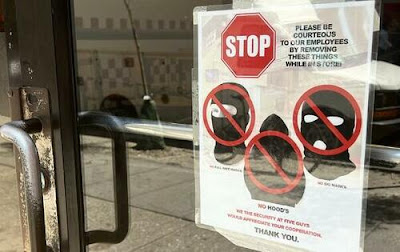
In a move aimed at enhancing public safety, the city of Philadelphia has introduced a new legislative proposal to prohibit the wearing of ski masks in public spaces. The initiative seeks to address concerns regarding potential misuse and criminal activities associated with concealing one's identity in public areas.

How to Obtain Video Surveillance From A City

FOIA from a city

The process of obtaining video footage from city surveillance cameras will depend on a variety of factors, including the location of the cameras, the purpose of the surveillance, and the policies and regulations governing access to the footage.

10 Ways How Are Cities Using ALPR Cameras

ALPR traffic camera light

Automatic License Plate Recognition (ALPR) cameras are used by cities for public safety in several ways. 

Map of Hermosa Beach Getting Vigilant Traffic Cameras For Safety

Hermosa Beach traffic camera locations

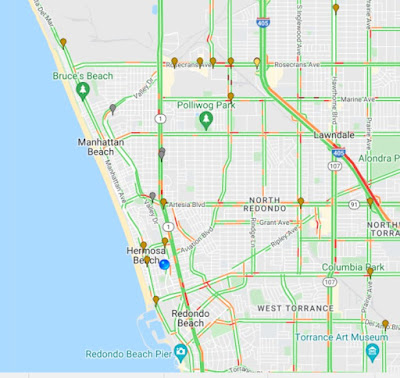
Map of Hermosa Beach Traffic Camera Locations

Four busy Hermosa Beach intersections soon will be under the gaze of local police officers, following the City Council's unanimous approval Tuesday of the purchase and installation of automated license plate readers (ALPR) at the sites.

How Much Do ALPR Cameras Cost?

How Much Do ALPR Cameras Cost?

If you think the cost of an ALPR camera will be just a few hundred dollars (or less), think again. These high-powered cameras come with sophisticated software, and also require a place to store the massive amount of information they collect.

How Is ALPR Used For Surveillance in California

license plate reader cameras

ALPRs are high-speed camera systems that take pictures of license plates, translate the numbers and letters into machine-readable text, tag them with the time and place, and upload the information to a database for later retrieval.

How Traffic Cameras Can Help Drivers Navigate Around Busy Roads

ALPR traffic cameras

Around the world, there are about 200 million traffic cameras. 

Popular Articles (All Time)