Search For Maps & Articles

Showing posts with label contracts. Show all posts

List of 20 Red Light Camera System Manufacturers

top red light camera manufacturers by estimated U.S. market share

Red light cameras are now a standard feature of modern traffic enforcement, helping reduce accidents and improve driver compliance at intersections. These systems capture vehicles that run red signals, using high-resolution imaging, radar, and software platforms to process violations.

Behind these systems is a highly competitive global industry. Some companies dominate international markets, while others serve regional jurisdictions with specialized solutions. Below is a comprehensive guide to the 20 most notable red light camera system manufacturers worldwide, including their role in the market and estimated U.S. market share.

The Global Leaders

1. Verra Mobility (formerly ATS)

Verra Mobility, which acquired American Traffic Solutions (ATS), is the largest player in the U.S. market. The company controls about 40% of the red light and speed camera industry, with deployments in hundreds of cities. Their cloud-based platforms streamline violation processing, payment systems, and compliance management.

2. Sensys Gatso Group

Born from the merger of Sweden’s Sensys Traffic and the Netherlands’ Gatso, Sensys Gatso is a worldwide leader with systems in more than 40 countries. They provide radar- and lidar-based red light enforcement solutions and have a strong U.S. presence through their Gatso USA division.

3. Redflex

Founded in Australia, Redflex became a pioneer in camera enforcement, with widespread use across North America, Europe, and Asia. They provide red light cameras, fixed and mobile speed systems, and integrated back-office platforms. Despite facing legal controversies in the past, Redflex remains a key global vendor.

4. Jenoptik

Germany’s Jenoptik has a reputation for precision engineering and reliable enforcement hardware. Their systems are used across Europe and the Middle East, providing cities with intersection safety and point-to-point speed enforcement.

5. Swarco

Austrian-based Swarco is best known for traffic management and smart mobility systems, but its red light cameras integrate seamlessly into broader intelligent transportation systems. Swarco’s focus on smart city platforms makes them a growing force in enforcement technology.

Mid-Tier and Regional Providers

6. Optotraffic

A U.S. supplier offering cost-effective solutions to local jurisdictions, Optotraffic focuses on turnkey red light and speed camera programs for smaller municipalities.

7. Iteris

Iteris contributes advanced video analytics to traffic enforcement. While not exclusively an enforcement company, their detection technology supports red light camera operations.

8. Traffic Technology Services (TTS)

Focused on connected vehicle data, TTS integrates predictive traffic analytics with enforcement, offering an advanced blend of safety and efficiency.

9. Gatso USA

The American division of Sensys Gatso, this branch is responsible for implementing and maintaining enforcement contracts across the United States.

10. Traffic Logix

Traffic Logix combines red light and speed enforcement with community traffic calming solutions, making them a popular choice for local governments.

11. PIPS Technology (Federal Signal Corporation)

PIPS Technology specializes in license plate recognition but also supports enforcement. Their ALPR systems are integrated into many red light camera programs.

12. WatchGuard Video

Known for police body cameras and in-car systems, WatchGuard Video also provides traffic enforcement cameras integrated with law enforcement evidence platforms.

13. Miovision

A Canadian company, Miovision uses AI-driven computer vision to manage intersections. Their systems can detect and document red light violations while also feeding into broader smart traffic networks.

14. TrafficVision (a division of Iteris)

TrafficVision applies video analytics to highway and arterial monitoring, detecting red light and stop bar violations as part of its wider monitoring suite.

15. Peek Traffic (Image Sensing Systems)

Peek Traffic, acquired by Image Sensing Systems, has decades of experience in detection and enforcement technology, with integration into municipal traffic signal systems.

16. Comarco Products

While smaller and less globally recognized, Comarco Products provides enforcement equipment for local municipalities seeking affordable solutions.

17. TrafficLand

Primarily a provider of live traffic video networks, TrafficLand supports enforcement partnerships by delivering real-time video integration.

18. Applied Information

Focused on smart cities, Applied Information connects red light cameras with connected vehicle technology, expanding enforcement into next-gen infrastructure.

19. Local and Regional Providers

In Asia, South America, and Africa, numerous regional manufacturers supply red light camera systems that meet local regulatory requirements. These firms often operate under government contracts and provide lower-cost alternatives to global vendors.

20. Emerging Innovators

Start-ups in AI, machine vision, and connected mobility are increasingly entering the enforcement market, blending traditional red light cameras with predictive analytics and automated violation adjudication.

The Future of Red Light Camera Manufacturers

The red light camera industry is evolving quickly. Manufacturers are no longer just selling cameras but entire enforcement ecosystems that include:

  • AI-driven violation detection

  • Cloud-based data management

  • Integration with license plate recognition

  • Predictive analytics for road safety

With the rise of connected vehicles and smart city initiatives, red light cameras are expected to become part of a larger web of traffic management tools. This evolution means that companies must innovate beyond cameras, offering solutions that balance safety, privacy, and public trust.

Conclusion

Red light cameras remain one of the most controversial yet widely adopted traffic enforcement tools. The companies listed above represent the top 20 manufacturers and providers shaping the industry. From global leaders like Redflex, Verra Mobility, and Sensys Gatso, to regional innovators like Miovision and Applied Information, each company contributes unique technologies to improve intersection safety.

As cities worldwide grapple with traffic fatalities and congestion, these manufacturers will continue to drive the conversation on how technology can save lives, enforce laws, and shape the future of transportation.

New York Speed Cameras: Expansion, Laws & Fines (2014–2030)

speed camera yellow
speed camera grey

More Than 2,000 Speed Cameras Are Now a Reality: What You Need to Know in 2025

Over a decade ago, the idea of deploying some 2,000 speed cameras in and around New York seemed ambitious. Today, that plan is not only realized — it has expanded and become central to New York City’s traffic safety strategy. What began as a 2014 proposal to deploy hundreds of new cameras across Long Island and the city now forms the backbone of Vision Zero and school zone enforcement efforts.

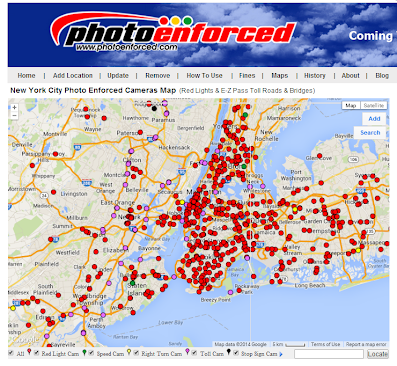
If you drive in New York today, here’s a clear, up-to-date guide to how these systems work, where they operate, and what’s new as of 2025.  NY Speed Cameras map.

A Decade-Long Journey: From Proposal to City-Wide Enforcement

The 2014 Proposal

In 2014, the New York State Senate passed a bill permitting more than 2,000 new speed cameras in New York City and surrounding counties. That bill authorized:

  • Up to 69 cameras in Suffolk County

  • 56 in Nassau County

  • An additional 120 cameras for New York City, atop the 20 already operational

These cameras were intended primarily for use before, during, and after school hours. Violators would be mailed $50 tickets for recorded speeding.

That marked the early push to expand automated speed enforcement beyond limited pilot zones into broader city and suburban coverage.

The Transition to 24/7 and Full Deployment

Over time, the program expanded in scope and authority:

  • In 2022, New York City began issuing speed camera violations 24/7, year-round, covering 750 school speed zones across all five boroughs.

  • As of 2025, NYC maintains approximately 2,200 active speed cameras covering these zones.

  • The cameras trigger fines for vehicles exceeding the posted speed by 10 mph or more (11+ mph over the limit).

The shift to 24/7 enforcement dramatically increased detection and fines — but more importantly, it solidified the role of speed cameras as a consistent deterrent, not just a daytime tool.

What’s New in 2025: Extensions, Expansions, and Enhancements

Program Reauthorization Through 2030

One of the biggest recent developments is legislative reauthorization:

  • In June 2025, the Governor signed legislation extending New York City’s school-zone speed camera program through July 1, 2030.

  • This law also strengthens enforcement rules, repeals outdated sections, and ensures continued deployment across the city.

Without this reauthorization, the program would have expired on July 1, 2025, causing the city’s 2,200+ cameras to go dark.

Work Zone & Highway Enforcement Expansion

In addition to school zones, New York has been piloting and expanding work-zone speed camera enforcement, particularly on state highways, bridges, and tunnels.

  • Proposed legislation aims to expand enforcement in work zones on the New York State Thruway and DOT-maintained highways and make the program permanent.

  • Officials are pushing to make these systems standard in MTA bridges and tunnels as part of the upcoming state budget.

  • The current Automated Work Zone Speed Enforcement systems operate where signage is posted, and cameras are activated after daily self-checks.

These expansions are especially aimed at protecting construction workers and managing speeds in high-risk highway settings.

Speed Limiter / “Super Speeder” Legislation

To address repeat offenders, lawmakers and city officials are pushing for intelligent speed assistance devices:

  • A proposed bill would require vehicles to install speed limiters if drivers rack up multiple violations (for example, 11 or more speed or camera tickets in 24 months).

  • The campaign is supported by evidence that a small group of drivers — sometimes called “super speeders” — are disproportionately involved in serious crashes.

  • However, the bill has been softened in negotiations, and red-light violations have been removed from some proposed thresholds.

Whether this legislation becomes law will influence how aggressive enforcement becomes in the coming years.

How the Cameras Work & What Happens if You’re Caught

Detection & Violation Process

  • Cameras operate 24/7, 365 days a year in school zones.

  • They photograph only vehicles going more than 10 mph above the limit (11+ mph).

  • The system filters out unclear captures, and DOT reviews to confirm that the vehicle is properly identified before issuing a Notice of Liability (NOL).

  • Once a violation is confirmed, the vehicle owner receives a Notice of Liability by mail in about 14 days.

  • The standard fine is $50 for an exceedance of 10+ mph.

If the violation is contested, you may dispute it online, by mail, or in person. Ignoring it can lead to late penalties, interest, or even vehicle booting or towing.

Results & Behavioral Change

  • Severe traffic injuries have dropped nearly 30% at locations with new cameras.

  • Some camera placements have produced dramatic changes — one Manhattan location saw a 75% reduction in speeding after installation.

  • Researchers have found that measurable behavioral shifts (reduced speeding) take about six months to fully materialize, and effects vary by neighborhood.

These patterns underline that sustained enforcement, not one-off deployments, yields long-term safety gains.

Challenges, Pushback & Loopholes

Tampering & Plate Evasion

To evade camera detection, some drivers have attempted tricks like:

  • Obscuring license plates with plastic covers, reflective spray, or bending them.

  • Covering cameras with objects such as fake flower bouquets.

  • Between 2020 and 2022, over 1.5 million tickets were never issued due to unreadable or obscured plates, representing tens of millions in lost fines.

New rules in 2025 make obscuring or altering plates illegal, with fines of $50, reinforcing that legible plates are essential for automated enforcement to work.

Political & Public Resistance

While many advocates hail the safety benefits, critics argue:

  • Speed cameras are a revenue trap rather than purely safety measures.

  • Some complain that frequent violations in residential areas amount to over-policing of driving behavior.

  • Legislative negotiations have diluted possible penalties, with some proposed “super speeder” thresholds scaled back.

Still, the fact that Albany renewed the program through 2030 suggests broad legislative support for continued automated enforcement.

Your Rights & Best Practices as a Motorist

If you drive in New York, here’s what you should keep in mind:

  1. Know the Speed Zones
    Cameras are limited to school speed zones, roughly within a ¼ mile of schools in each direction.

  2. Mind the “+10 Rule”
    Cameras issue citations for 11 mph or more above the limit. Driving 10 mph over is below the threshold.

  3. Dispute If Incorrect
    If you believe your Notice of Liability was in error, you have 30 days to respond, pay, or contest.

  4. Avoid Plate Tampering
    Don’t obscure or alter your license plate. That itself may draw penalties and undermines your defense.

  5. Track Recurring Violations
    If you incur multiple violations, you may become subject to increased scrutiny or future laws requiring speed-limiting technology.

Why This Matters: Safety, Accountability & Vision Zero

Speed is a leading factor in crash severity. Automated enforcement programs like New York’s are part of the broader Vision Zero initiative — aiming to eliminate traffic deaths altogether.

Legislation and deployment adjustments reflect a belief by policymakers that speed cameras are more than revenue tools — they are critical tools to compel safer driving behavior, especially in school zones and work zones where vulnerable pedestrians and workers are present.

The reauthorization through 2030 signals that the city intends to maintain consistency in enforcement for years to come.

Final Thoughts

What was once a speculative plan in 2014 has matured into a robust, city-wide network of speed cameras, now standard equipment in New York’s traffic safety arsenal. The 2,200+ cameras operating in 750 school zones reflect the program’s growth. Legislative reauthorizations, expansion into work zones, and future speed-limiter proposals show that the system continues evolving — both in breadth and in intensity.

For motorists, the implications are clear: staying within posted limits, keeping license plates visible, and understanding your rights if you receive a Notice of Liability are essential in a city where speed enforcement is no longer novel — it’s expected.  Which states allow speed cameras?

NYC red light cameras map

Montebello Wastes $500K on Red Light Cameras: A Warning

Montebello, CA is under fire after wasting an estimated $500,000 on red light cameras—a program that failed to deliver meaningful traffic safety improvements or financial returns. As California cities reevaluate red light enforcement, Montebello's experience offers an important lesson in what not to do.

What Happened in Montebello?

Montebello partnered with RedFlex Traffic Systems to operate red light cameras at high-traffic intersections like Garfield Avenue and Beverly Boulevard. The goal was to improve road safety and generate revenue from traffic violations.

However, recent reports show that the program lost money. A contract clause allowed the city to pay RedFlex less if citation revenue fell below expectations—an arrangement deemed illegal under California law, which prohibits traffic enforcement contracts based on financial incentives.

Yellow Light Timing Under Scrutiny

At the Garfield and Beverly intersection, the yellow light was set at 3.6 seconds—the legal minimum for a 35 mph speed zone. While this complies with California traffic signal regulations, experts argue it's not enough time for most drivers to stop safely. This has raised concerns that Montebello’s red light cameras prioritize profit over public safety.

Are Red Light Cameras Worth It?

Montebello isn’t alone in facing backlash. Other California cities like Los Angeles, Oakland, and San Diego have shut down their red light camera programs due to high costs, legal issues, and negligible safety benefits.

According to public data, many red light camera tickets in California go unpaid or dismissed in court, often due to technicalities, improper signage, or questionable enforcement practices.

Taxpayer Money Lost in Montebello

With nearly $500,000 in taxpayer funds wasted, residents and local watchdogs are demanding:

  • A full audit of the red light camera program

  • Greater contract transparency

  • Reforms in how automated traffic enforcement is implemented in California

Critics argue that the city should have focused on traffic signal upgrades, driver education, and real police enforcement, which are proven to be more effective at reducing crashes.

The Bigger Picture: Red Light Cameras in California

Montebello’s failed program is part of a growing trend. Across the state, cities are questioning whether red light cameras are:

  • Legal under California’s traffic enforcement laws

  • Effective at preventing accidents

  • Ethical in their implementation and intent

If cities continue to use them, best practices must include longer yellow light times, transparent contracts, and data showing a clear link to reduced traffic injuries.

Final Thoughts: Montebello's Mistake Shouldn't Be Repeated

The Montebello red light camera controversy is a clear example of poor policy planning and oversight. As more municipalities consider removing or regulating automated enforcement systems, Montebello’s experience could help guide statewide reform.

Illinois Lawmakers Have Considered Statewide Bans on Red Light Cameras

no red light camera sign

Lawmakers in Springfield, Illinois are set to debate a new bill this week that could lead to a statewide ban on automated red light cameras—a move that may dramatically change how traffic enforcement is handled across the state.

Proposed Bill Could Eliminate Red Light Cameras in Illinois

The legislation, which has garnered bipartisan support from both leading Republicans and Democrats, seeks to eliminate the authority of counties and municipalities to use automated red light cameras. These systems, which automatically issue tickets to drivers who enter intersections after the light turns red, have been widely deployed throughout Chicago and its suburbs.

What remains unclear is whether the proposed ban would apply only to new camera installations or if existing red light cameras would be removed as well. Historically, similar efforts in other states have allowed existing contracts with camera vendors—such as Redflex and American Traffic Solutions (ATS)—to run their course before requiring removal.

Illinois Among the Top States for Red Light Cameras

According to PhotoEnforced.com, Illinois is one of the fastest-growing states for red light camera usage. The site tracks the growth of traffic enforcement cameras nationwide, and its open database reports over 700 monitored intersections across Illinois. More than two-thirds of those are located in Chicago, making it one of the most heavily monitored cities in the country.

The Ongoing Debate: Safety vs. Revenue

Supporters of red light cameras argue that they help reduce traffic collisions, especially at high-risk intersections. They claim the threat of a ticket encourages safer driving behavior and saves lives.

However, opponents argue that the cameras are more about generating revenue than improving road safety. Many critics cite short yellow light times and lack of due process as reasons to discontinue their use. Others point to data suggesting that while T-bone accidents may decline, rear-end collisions often increase due to sudden braking at camera-equipped intersections.

What's Next?

The outcome of Tuesday’s legislative session could determine the future of automated traffic enforcement in Illinois. If the bill passes, it may set a precedent for other states considering similar bans.

Drivers, local governments, and traffic safety advocates across Illinois will be closely watching to see whether lawmakers prioritize public safety or choose to pull the plug on a controversial enforcement tool.

Public Records Resistance in Iowa

freedom of information

Access to public records is a fundamental right in many parts of the world, essential for transparency and accountability. In Iowa, however, there are increasing concerns about resistance to releasing certain types of public data, especially regarding traffic enforcement records, such as those from speed cameras and red-light cameras. Understanding the challenges surrounding public records in Iowa can help residents, journalists, and advocates push for more transparent practices. This article explores the barriers to public records access in Iowa, why these records are crucial, and how the state compares with others on this issue.

Why Public Records Matter in Iowa

Public records are essential for government transparency, giving the public insight into how taxpayer money is used and providing accountability for government actions. In Iowa, traffic enforcement records—such as data from red-light and speed cameras—can help the public understand enforcement patterns, assess traffic safety programs, and hold institutions accountable for the use of automated traffic cameras.

Access to these records allows Iowans to:

  • Verify enforcement accuracy: Errors in traffic citations can be challenged when records are accessible.
  • Hold public agencies accountable: Review agencies’ spending on traffic enforcement, especially in areas where automated cameras are in use.
  • Evaluate public safety effectiveness: Determine if red-light or speed cameras actually improve road safety or if they disproportionately generate revenue without substantial safety benefits.

Challenges to Public Records Access in Iowa

Despite these benefits, Iowa has seen resistance from some government agencies in releasing public records. Here are some key challenges to accessing this information:

  1. Privacy Concerns

    • Iowa agencies cite privacy as a primary reason for restricting access to traffic enforcement data. While privacy protection is essential, Iowa’s laws sometimes overly restrict information, leaving residents unable to assess how public resources are used.
  2. Cost of Access

    • In many cases, obtaining public records can incur high fees, often justified by the need to cover the time and labor required to produce the information. These costs can deter ordinary citizens from accessing data and reduce public scrutiny.
  3. Lack of Transparency in Record-Keeping

    • Record-keeping practices can sometimes be inconsistent or lack transparency, making it difficult to track down specific information. When agencies aren’t required to provide detailed reports, it leads to inconsistencies in data accessibility.
  4. Limited Resources for Records Requests

    • Agencies often claim limited resources to handle records requests in a timely manner. This results in delays that can take weeks, months, or even years, effectively rendering some data unusable for time-sensitive investigations or reports.

How Iowa’s Public Records Resistance Compares with Other States

Public records laws vary widely across the United States. Some states have robust systems in place to ensure data accessibility, while others, like Iowa, place significant hurdles before citizens. Here’s how Iowa compares with other states:

  • Stricter Regulations: While states like California have relatively accessible public records laws, Iowa has stricter regulations that can hinder transparency, particularly around automated traffic enforcement data.
  • Higher Fees for Access: States like Texas offer many public records at minimal costs, making it easy for residents to access data. In Iowa, however, fees can sometimes be prohibitively high.
  • Lengthy Processing Times: States with better funding and streamlined procedures, like Washington, allow for quicker processing of public records requests. Iowa's process, however, can take significantly longer, adding frustration for those seeking timely data.

Potential Solutions for Improving Public Records Access in Iowa

  1. Revisiting Privacy Laws: Updating laws to maintain a balance between privacy and transparency can ensure that the public gets access to essential information without compromising individual privacy rights.

  2. Standardizing Record-Keeping Practices: By implementing standardized record-keeping practices across all agencies, Iowa can reduce discrepancies and improve data consistency, making it easier for residents to locate information.

  3. Streamlining the Request Process: Simplifying the request process through online portals and efficient systems can speed up response times and reduce bureaucratic red tape.

  4. Reducing Access Fees: Lowering or eliminating fees for public records requests, especially for journalists and researchers, would encourage transparency and public oversight.

  5. Implementing a Digital Database: Iowa could establish a centralized digital repository where non-sensitive public records are available on demand, without needing to request them individually.

Why Public Records Matter to Iowa Residents

Ultimately, public records serve the public’s interest by promoting government accountability and transparency. For Iowans, having access to enforcement data can shed light on traffic safety initiatives, guide public opinion on automated enforcement, and influence local and state-level policy decisions.

Conclusion

While Iowa faces challenges in providing transparent access to public records, particularly in traffic enforcement, progress can be made with targeted reforms. Balancing privacy with transparency, reducing fees, and improving response times are all achievable goals that would bring Iowa closer to an open-access model. By addressing these issues, Iowa can ensure its citizens have the information they need to make informed decisions and hold government agencies accountable.

Loma Linda Red Light Cameras Turned Off & Lengthens Yellow Lights


Loma Linda has switched off the city’s red-light cameras earlier five years after they were installed at four intersections and has lengthened their yellow lights to solve the traffic accident problems. The cameras caught 20 red-light runners per day at a cost of nearly $500 a ticket which is $10,000 or approximately $300,000 per month. City officials said 80% of the traffic tickets written were for illegal right turn violations spotted by the cameras were for people making right-hand turns at 5 miles per hour and not coming to a complete stop.

So what was the trouble keep them profitable? Were they not collecting the ticket revenue? City officials claim most of the revenue went to the Redflex that managed the system or about $15 million according to Loma Linda officials. The city got only about $50,000 a year or $200,000 of the $15M in revenue generated. Redflex Traffic Systems, which operated the cameras at four intersections: Barton Road at Anderson Street and Mountain View Avenue, and Redlands Boulevard at Anderson and Mountain View.

Watch how some residents got out of the tickets and how the city solved the problem by making longer yellow traffic lights.

Cities Removing Red Light Camera Locations

Here is a continually updated list of cities that have removed or partially removed red light camera locations recently.  Subscribe to our red light camera locations database to get a full list of detailed locations.  Keep in mind some States and County jurisdictions have passed laws preventing the use of red-light cameras but Cities and Municipalities continue to use them illegally.  To remove a location please provide a link to a local newspaper article highlighting the City Council's decision to remove the cameras.  We are only concerned with locations that have been permanently removed and not those that have been deactivated temporarily.

Anchorage, AK
Arlington, TX
Avondale, CA
Burlingame, CA
Brooksville, FL
College Station, TX
Costa Mesa, CA
Lilburn, GA
Loma Linda, CA
Lubbock, TX
Melbourne, FL
Monterey Park, CA
Moreno Valley, CA
Naperville, FL
Norcross, GA
Peoria, AZ
Phoenix, AZ
Redlands, CA
San Carlos, CA
Scottsdale, AZ
Springfield, MO
Snellville, GA
Suwanee, GA
St. Peters, FL
Union City, CA
Wilmington, NC
Yucaipa, CA

As always, please email us if we are missing any cities on this list or still have locations listed in our public database that should be removed.

Related Articles:
How Many US Cities Use Red Light Cameras
Arizona Freeway Speed Cameras Go Bye Bye
Moreno Valley Dumps Red Light Cameras
Avondale Arizona Shuts Down Red Light Cameras

Judge Rules Red Light Cameras Are Not Legal

In a ruling that could have implications for other cities, a circuit court judge ruled Monday morning that the city of Aventura, Florida cannot use cameras to catch red-light runners.  However, it did not file an injunction ordering the city to stop using the cameras. The ruling came in a lawsuit filed by a motorist who argued that only the state Legislature can pass laws regarding traffic violations. Cities have gotten around the lack of state authorization by citing red-light runners with a code violation, rather than a traffic ticket.

The city can appeal the ruling by Circuit Court Judge Jerald Bagley, and the judge's decision has no bearing on other cities nor did it invalid the constitutionality of red-light programs. But if it stays in force, the ruling could set a legal precedent that could be used in suits against red-light camera programs in other cities.

Other South Florida cities have similar ways to catch speeders and beef up city revenues, so the ruling against the cameras could open the flood gates to challenges. Cities, like Aventura, Miami Beach, Pembroke Pines and others, have used cameras to cite red-light runners with a code violation, instead of a traffic violation. Lusskin argued that was merely a way of circumventing the state law and that cities could only issue tickets to red-light runners if an officer is present.

In his ruling Monday morning, Bagley sided with Lusskin and granted his motion for summary judgment against Aventura.

The lawyer representing Aventura city attorney Michael S. Popok said that the judge's ruling only addressed whether or not cities can issue fines based on the red-light cameras - and not the presence of the cameras themselves or the program. The state charter says that cities have the power to use ``security devices'' to ``regulate'' what occurs on the roadways, and the issue, according to Popok, is whether or not the word ``regulate'' gives cities the authority to issue fines.

The judge did not issue an injunction against the program as part of his ruling, so it can continue to operate while the city decides whether or not to file an appeal.

Loma Linda Keeps Rolling Right Turn Cameras

Press-Enterprise - Monday, February 15, 2010

The City Council agreed last week to leave the cameras in place at four intersections on Redlands Boulevard and Barton Road after learning that the number of traffic citations has dramatically dropped and that it would cost the city more than $534,000 to cancel its contract with the camera operator 10 months early.

Four months after Redflex Traffic Systems installed the cameras in 2006, the San Bernardino County Sheriff's Department reported that it was writing 1,200 tickets a month. Last month, City Attorney Richard Holdaway said the cameras captured 451 potential violations and only 157 tickets were issued.

Of the violations spotted in January, Holdaway said, 130 potential citations were not written because the deputy reviewing the pictures made "a finding of safe right turn on red."

City Council members say they have been besieged with complaints from motorists forced to pay a fine of more than $450 for not making a complete stop before turning right at the intersections of Anderson Street and Mountain View Avenue with Barton Road and Redlands Boulevard.

Holdaway met in closed session with the council last week to advise council members on the legal ramifications of cancelling Redflex's contract before it expires in December.

Then, in public session, City Manager T. Jarb Thaipejr disclosed that the cost to the city would be $534,558.83 if the contract were terminated this month and would amount to $42,000 a month for the remaining term if the council pulls the plug later this year.

Councilmen Rhodes "Dusty" Rigsby and Ovidiu Popescu lobbied last month for either pulling the plug on the cameras or telling the Sheriff's Department not to enforce right-turn violations based on photos from the cameras. They said the $13.5 million in fines imposed since the cameras were installed has been draining the local economy and discouraging people from driving to and through the city of 22,000 residents.

Holdaway said the state Vehicle Code precludes the city from ordering deputies not to write citations.

"Ultimately," he said, "the Sheriff's Department has the sole discretion as to whether or not to issue a citation. We need to respect that discretion that the law enforcement officer has.

"As a result of this discussion, the Sheriff's Department is exercising that discretion ... and they're looking at some of the safety issues, whether or not a particular situation rises to a significant safety violation," Holdaway said. "Right turn situations, the notorious California stop, are some of the situations that they're looking at."

Rigsby noted that the city's decision to increase the length of time that the lights are yellow by one second, at the expense of green lights, has reduced the number of left-turn violations from 240 month to 25 or 30.

He said the most egregious violations involve motorists who drive straight ahead through red lights and those incidents at the four intersections produced only five violations.

"That is tremendous improvement in safety from what we were seeing in the past," he said. "We could have had that safety with lengthening the yellow lights four years ago instead of installing red-light cameras.

Councilman Floyd Petersen, who has complained about the steep fines for right turns, said he was impressed with the decline in violations. He said it is "a very strong indication ... of increased safety at the intersections."

He also said that despite that decline, "I still very, very strongly feel that another issue needs to be addressed here. A $450 ticket for right-hand turn is ludicrous."

Mayor Stan Brauer acknowledged concerns about the message that ignoring violations would have.

"What do we tell our teen-age drivers? Well, you don't need to stop for red lights," he said.

Popescu said he is "very optimistic" after learning that the Sheriff's Department is writing fewer citations for right turns.

He said he still believes the city has a "viable option for us to get out of the contract early, given what I believe is an injury to the community."

He conceded, however, that the cost may be prohibitive.

"I think it is a little early" to make a final decision, he said, and vowed to bring up the issue again at the council's March 9 meeting.

Moreno Valley Dumps Red Light Cameras

Alessandro Blvd & Perris Intersection, Moreno Valley, CA

The money-making allure of red light cameras has worn off in a pair of Southern California cities as drivers get educated and ticket revenue drops and legal activity rises. In Moreno Valley on Tuesday, the city council voted 3-1 to shut down the automated ticketing machines that have been operating since 2008.

“Due to legal activities in the state legislature in the past few years regarding red light photo enforcement and the lack of public support for the program, city council’s consensus is to discontinue the existing red light photo enforcement service at the end of its 2-year pilot program,” Public Works Director Chris A. Vogt wrote in a memo to the mayor and council. At least one member of the public believed the council’s unspoken motivation has been the lack of expected revenue being generated by the program.

The city will notify Redflex Traffic Systems to remove its equipment from Frederick Street at Centerpoint Drive, and Perris at Alessandro boulevards. Eric Lewis, the city's traffic engineer, evaluated the data and said the 18-month test program was successful: Accidents dropped by a third at Frederick/Centerpoint and 16 percent at the Perris/Alessandro. But the program proved to be a marginal moneymaker, the public detested it and the council decided it wasn't worth it.

Popular Articles (All Time)