Search For Maps & Articles

Showing posts with label Removing. Show all posts

Ontario’s Ford Govt Bans School Speed Cameras—Mayors Push Back

Ford Government Bans School-Zone Speed Cameras — But Ontario Mayors Want to Keep Them

Ontario speed cameras banned

The Ford government has banned automated speed-enforcement (ASE) cameras in Ontario school zones, a move that has sparked outrage among mayors across the province. What began as a local safety initiative to protect children walking to school has turned into a major political clash between Queen’s Park and Ontario municipalities.

Premier Doug Ford’s government says the devices are nothing more than “cash grabs,” but mayors argue they’re proven life-savers. From Toronto to Ottawa and Hamilton, local leaders are calling on the province to reverse course—or at least make exceptions for school zones.


What the New Law Does

In 2025, the Ford government passed Bill 56 – Building a More Competitive Economy Act, which includes an amendment to the Highway Traffic Act that bans all municipal speed cameras. This prohibition applies to cameras located in community safety zones and school zones, where most municipalities had placed their ASE devices.

Municipalities have been ordered to shut down their camera programs by mid-November 2025. Cities such as Mississauga and Guelph have already announced deactivation dates around November 14, 2025.

Under the new law:

  • Cities must remove all ASE cameras and related warning signage.

  • Any tickets issued before the cutoff remain valid and must still be paid or contested.

  • The province will replace automated enforcement with larger, standardized school-zone signs and expanded police enforcement.

The government claims these changes will reduce “unfair” ticketing while ensuring students remain safe through alternative methods like flashing beacons, speed bumps, and crossing guards.


Why the Ford Government Banned the Cameras

Premier Ford insists the ban is about fairness for drivers and taxpayers. He argues that many cities were issuing tens of thousands of tickets per month, sometimes at locations where posted speed limits suddenly dropped—leading to perceptions of “speed traps.”

“The cameras have turned into revenue machines,” Ford said during a press conference in September 2025. “Municipalities should not be using drivers as ATMs.”

The government’s argument hinges on three main points:

  1. Consistency – ASE programs were managed differently across municipalities, creating confusion and unequal enforcement.

  2. Fair notice – Tickets arrived weeks later in the mail, offering no immediate feedback to drivers.

  3. Better alternatives – The province says physical road-safety infrastructure, such as speed humps, curb extensions, and flashing signs, can slow drivers more effectively and transparently.

Ford’s critics, however, say the Premier is misrepresenting the data and ignoring years of evidence that ASE saves lives.


Mayors Push Back: “This Will Make Our Roads Less Safe”

Ontario mayors and regional chairs have banded together to oppose the province’s sweeping ban. A joint letter signed by leaders from Toronto, Ottawa, Mississauga, London, Kingston, Hamilton, and Waterloo urged Ford to reconsider.

They argue ASE has delivered measurable safety benefits since its introduction. For example:

  • In Toronto, average speeds in school zones dropped by up to 45% after cameras were installed.

  • Ottawa reported thousands fewer repeat offenders, as drivers learned where cameras were located and slowed down.

  • Hamilton saw reductions in collisions and pedestrian injuries at several previously high-risk intersections.

  • Mississauga noted a steep decline in extreme speeding incidents—vehicles traveling more than 20 km/h over the limit.

Mayors proposed compromises instead of an outright ban:

  • Warning letters for first-time offenders.

  • Operating hours limited to school times only.

  • Uniform thresholds (for example, tickets only issued at 15–20 km/h over the posted limit).

Despite these proposals, the Ford government rejected any exceptions.


The Cities Most Affected

Ontario’s largest cities have invested heavily in ASE over the past five years. Their programs now face dismantling:

  • Toronto operates hundreds of rotating cameras near schools and parks. The city says losing them will undo years of progress made under Vision Zero, its road-safety initiative.

  • Ottawa, the province’s capital, had planned to expand its 36 cameras to 70 before the ban.

  • Hamilton launched its first ASE pilot in 2022, targeting 12 school zones that saw chronic speeding.

  • Waterloo and London both reported positive results in community-zone compliance but must now remove their cameras.

  • Kingston had planned installations for 2026 that are now cancelled.

  • Windsor recently launched its ASE pilot in 2024; the equipment will be removed after less than a year in service.

These cities now face sunk costs for cameras, software contracts, and processing systems—millions of dollars in infrastructure that will soon sit idle.


What Replaces Cameras Now

With ASE banned, municipalities are scrambling to maintain safe speeds around schools. The Ford government has directed cities to emphasize education and engineering:

  • New high-visibility yellow school-zone signs province-wide.

  • Flashing light beacons and digital “Your Speed” boards.

  • Raised crosswalks and speed humps to physically slow traffic.

  • Increased police patrols in known hot spots.

While most cities support these tools, they argue they can’t fully replace automated enforcement. Cameras provide continuous monitoring, freeing police for other duties.


The Evidence Debate: Safety vs. “Cash Grab”

The Case for ASE

Supporters point to peer-reviewed research and municipal data showing ASE reduces both mean speeds and severe crashes. Toronto’s analysis found that serious speeding (over 20 km/h above the limit) dropped by 88% in camera zones. Ottawa documented similar results.

The Ontario Association of Chiefs of Police (OACP) has also publicly opposed the ban, calling ASE “a proven life-saving technology.”

The Case Against ASE

The Ford government and critics claim ASE is more about revenue than safety. Some cameras generated millions in fines annually, prompting concerns about disproportionate impacts on working-class drivers.

The province also argues that ticket processing is inefficient and that mailed fines weeks later don’t create real-time deterrence. They want police presence and road design—not bureaucracy—to shape driver behaviour.

Shared Ground

Both sides agree on one thing: school zones must be safe. The question is whether that safety comes best from a camera lens or a speed bump.


The Political Battle Ahead

Municipalities aren’t giving up. Some are exploring legal options to challenge the ban, arguing the province overstepped by revoking local authority to manage traffic safety.

Others plan to gather post-ban data. If collision or injury rates rise in school zones once cameras are gone, the pressure on the Ford government could intensify.

Local leaders in Toronto, London, and Windsor have already hinted they’ll track changes closely through 2026. The results could determine whether a future government reinstates ASE—possibly limited to school zones only.


What’s Next for Ontario Drivers

As of November 2025, all ASE cameras across Ontario will be powered down. Drivers won’t receive new photo-based speeding tickets, but they should expect:

  • More visible police patrols near schools and parks.

  • Expanded signage reminding them of speed limits.

  • Community campaigns urging voluntary compliance.

Still, safety advocates warn that without constant enforcement, habitual speeders may return to risky behaviour—especially during off-peak hours when patrols are thin.


Bottom Line

Ontario’s ban on school-zone speed cameras represents a major policy reversal. The Ford government views the cameras as unfair and ineffective, preferring road design and education. Ontario mayors—from Toronto and Ottawa to Hamilton, Mississauga, London, Kingston, Waterloo and Windsor—see it as a setback for child safety and local autonomy.

Over the next year, the outcome will hinge on data: if speeding and collisions rise where cameras once stood, political and public pressure could force the province to revisit its decision. Until then, Ontario drivers will see fewer cameras—but the debate over what keeps roads safe is far from over.

Right on Red Photo Enforced Tickets vs. Running a Red Light Ticket: What’s the Difference?

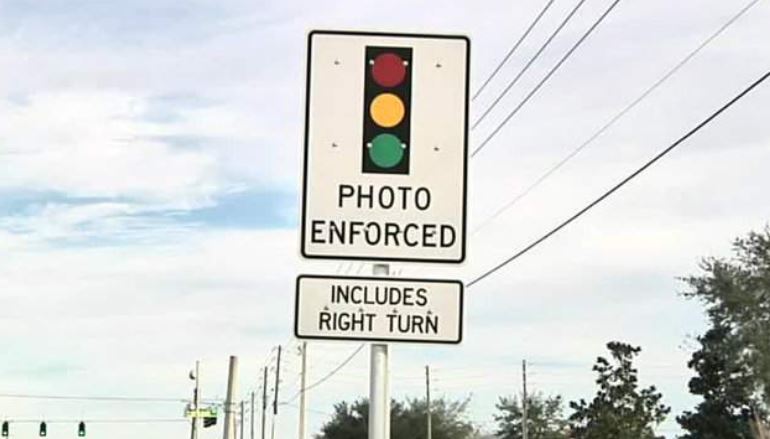
Right on Red Sign 

Traffic cameras are now a common feature in many U.S. cities, and two of the most debated violations they enforce are right-on-red tickets and red light running tickets. At first glance, they may seem similar, but legally and financially, they are treated very differently. Drivers often wonder why one carries a heavier fine or why some cities issue more of one type of ticket than the other. Understanding the distinctions can help drivers avoid fines and shed light on how municipalities collect revenue.

What Is a Right-on-Red Photo Enforced Ticket?

When a driver makes a right turn at a red light without a complete stop, a photo enforcement system may capture the violation. These tickets are typically issued when:

  • The vehicle does not stop before the crosswalk.

  • The turn is made despite a posted “No Turn on Red” sign.

  • The turn endangers pedestrians or cyclists.

Typical Penalties:

What Is a Running a Red Light Ticket?

A red light running violation occurs when a driver enters an intersection after the signal has turned red. Unlike right-on-red tickets, this is seen as a more dangerous infraction because it often leads to serious accidents.

Typical Penalties:

Revenue Differences

Cities make far more money from right-on-red violations simply because they are more frequent and easier to capture with cameras. However, red light running tickets, while less common, usually generate higher fines per ticket.

Comparison Table: Top 10 U.S. Cities with Camera Enforcement

City/State Right-on-Red Fine Red Light Running Fine License Points Insurance Impact Revenue Notes
Washington, D.C. $100 $150+ Yes (red light), often civil for right-on-red Yes, for moving Over 60% of camera tickets are right-on-red
Chicago, IL $100 $100 Treated as moving May impact insurance $50M+ annually from red light cameras
New York City, NY Rare (most intersections ban right-on-red) $50 Yes (moving) Minimal at $50 Focused on safety, low fines
Los Angeles, CA (ended in 2011) $159 base ($500 w/ fees) $159 base ($500 w/ fees) Yes Yes Ended program after public backlash
Phoenix, AZ $90 $250 Yes for both Red light strongly impacts Cameras operated by contractors like Redflex
Miami, FL $75 $158 Right-on-red: civil, no points; red light: moving Yes, for red light Highly controversial over fairness
Houston, TX (ended in 2010) $75 $75–$200 Yes Yes Program repealed by voter referendum
Philadelphia, PA $100 $100 Yes Yes Over $100M collected since program began
Seattle, WA $124 $136 Civil infraction, no points No insurance impact Revenue earmarked for traffic safety programs
San Francisco, CA $100+ (varies w/ fees) $500+ Yes Yes Among highest fines in the country for red light running

Safety vs. Revenue Debate

Critics argue that right-on-red tickets are more about money than safety, since the majority do not involve collisions. On the other hand, red light running tickets clearly address a dangerous behavior tied to serious crashes. Cities face pressure to balance safety goals with budget needs, which is why enforcement priorities differ.

Conclusion

While both right-on-red and red light running tickets come from camera enforcement, they differ in seriousness, penalties, and revenue generation. Right-on-red tickets tend to be lower in fines but more frequent, generating steady income for cities. Red light running tickets are harsher, more dangerous, and can have lasting impacts on driving records and insurance.

For drivers, the best approach is simple: always come to a complete stop, obey signage, and be cautious at intersections. For cities, the challenge remains ensuring that enforcement prioritizes safety over profit.

When and Where Will Greensboro’s Red‑Light Cameras Go Live?

  • About 20 years ago, Greensboro had a red-light camera program, typically operating at several of the city’s highest-risk intersections.
  • That past program was discontinued around 2005 due to a court ruling requiring 90% of revenue go to Guilford County Schools, making it financially unsustainable.
  • The new program just approved (up to $1.65M contract with NovoaGlobal) hasn’t yet announced live dates or locations—but they’ll likely target the five worst intersections first.

Palm Bay, FL Removes School Zone Speed Cameras

Palm Bay, FL — In a major policy reversal, Palm Bay officials are removing all school zone speed cameras after a FOX 35 investigation uncovered widespread installation errors, questionable $100 tickets, and legal disputes that have shaken public trust in the program.

License Plate Hunter Cameras: How They Work & Where They're Used

License plate hunter cameras—formally known as Automated License Plate Readers (ALPR)—are specialized surveillance systems designed to automatically capture and analyze license plate data in real time. As discussed in PhotoEnforced's original article, these devices are often mistaken for speed or red-light cameras, but their primary function is vehicle identification rather than issuing direct traffic tickets.

In the last decade, ALPR systems have become a common sight on highways, at toll booths, in parking garages, and even in residential neighborhoods. Their rapid adoption is driven by their ability to process thousands of license plates per hour, integrate with vast databases, and provide immediate alerts to authorities when a match is found.

How License Plate Hunter Cameras Work

The core technology behind ALPR involves a high-resolution camera paired with optical character recognition (OCR) software. This combination allows the system to “read” license plates, regardless of whether the vehicle is moving at high speed or parked. Infrared imaging is frequently used so the system can function in darkness, rain, fog, or glare conditions.

When a plate is captured, the system typically records:

  • The license plate number
  • Date and time of capture
  • GPS coordinates or fixed location data
  • A photo of the vehicle (often showing make, model, and color)

The recorded information is then compared against one or more databases. These may include stolen vehicle lists, active warrant notices, wanted persons alerts, unpaid toll violations, or other watchlists. Matches can trigger real-time alerts to patrol officers or dispatch centers.

Key Applications of ALPR Technology

  1. Law Enforcement: Police departments use ALPR to detect stolen vehicles, track suspects, locate missing persons, and solve crimes. A single patrol car equipped with ALPR can scan thousands of plates per shift.
  2. Toll Collection: Many toll roads have eliminated cash booths entirely, relying on ALPR to identify vehicles and bill the registered owner.
  3. Parking Management: In garages and municipal lots, ALPR automates entry and exit logging, enforces permit requirements, and streamlines payment verification.
  4. Private Security: Gated communities, corporate campuses, and logistics hubs use ALPR to monitor and log all vehicle entries and exits, enhancing security without adding guard staff.
  5. Traffic Analysis: Transportation departments use ALPR data to monitor congestion patterns, calculate travel times, and plan roadway improvements.

Advantages of License Plate Hunter Cameras

ALPR systems deliver benefits that manual observation cannot match:

  • Continuous operation, day and night
  • Rapid, automated identification without human intervention
  • Integration with national, state, and local databases
  • Long-term storage for investigative purposes
  • Ability to process large traffic volumes efficiently

These strengths have made ALPR a cornerstone of modern traffic enforcement and vehicle monitoring efforts.

Privacy & Legal Concerns

Despite their utility, license plate hunter cameras have drawn criticism from privacy advocates and civil liberties organizations. The core concern is that ALPR allows mass surveillance of ordinary drivers without their knowledge or consent. Specific issues include:

  • Data Retention: In some jurisdictions, plate scans are deleted after 48 hours; in others, they may be kept for years.
  • Access Control: Questions remain over who can access the data and whether it is shared with private companies or other government agencies.
  • Potential for Abuse: Without strict oversight, ALPR data could be misused for tracking individuals for non-law-enforcement purposes.

Some U.S. states have passed laws regulating ALPR usage, retention, and sharing, while others have yet to address the technology in legislation. Court rulings have also begun to shape the legal boundaries, with some judges questioning whether prolonged, warrantless tracking violates the Fourth Amendment.

Where You’ll Find ALPR Cameras

License plate hunter cameras can be either fixed or mobile. Common installation points include:

  • Highway overpasses
  • Traffic signals and busy intersections
  • Toll plazas and express lanes
  • School safety zones
  • Police patrol vehicles
  • Parking garage entrances and exits
  • Industrial or residential gated entries

In mobile form, ALPR cameras mounted on police cruisers can scan vehicles parked along streets or traveling nearby in real time.

Case Study: Neighborhood ALPR Networks

Some private companies have expanded ALPR into residential security. For example, Flock Safety operates networks in thousands of U.S. neighborhoods, capturing billions of license plate scans each month. These systems are marketed as tools to reduce crime by sharing data directly with local police departments when a match occurs. Supporters cite significant reductions in burglary and theft rates, while critics raise concerns about continuous tracking and the absence of clear opt-out options for residents.

Potential Risks and Misidentification

ALPR accuracy is generally high, but it is not flawless. Misreads can occur due to dirty or damaged plates, unusual fonts, lighting conditions, or obstructions. In rare cases, such errors have led to mistaken stops or arrests, underscoring the need for human verification before taking enforcement action.

Future Trends in License Plate Recognition

ALPR technology continues to evolve rapidly. Artificial intelligence now enables systems to identify vehicles by make, model, and color in addition to plate numbers. Predictive analytics may soon allow law enforcement to anticipate vehicle movements based on past patterns. Smaller, cheaper units are making it possible to install ALPR in more locations, including portable units for temporary deployments.

As cities adopt “smart traffic” infrastructure, ALPR data is likely to be integrated with other sources such as traffic sensors, GPS feeds, and even facial recognition systems. These integrations promise greater efficiency in traffic management and public safety but will also raise deeper privacy debates.

Balancing Security and Privacy

License plate hunter cameras can make communities safer, speed up investigations, and modernize transportation systems. However, unchecked deployment risks eroding public trust. Policymakers, law enforcement, and private operators must balance the legitimate benefits of ALPR with strong safeguards to prevent misuse.

Transparency measures such as public notice of camera locations, limits on data retention, and independent audits can help ensure that the technology serves the public good without compromising individual freedoms.

Conclusion

License plate hunter cameras have transformed vehicle monitoring from a manual process into a sophisticated, automated system capable of scanning and analyzing vast amounts of data instantly. Whether used by police, toll agencies, parking operators, or private security, these systems are now a permanent feature of modern transportation networks. The challenge moving forward will be ensuring that their use aligns with both public safety needs and the fundamental right to privacy.

How Many Cities & Countries Use Red Light and Speed Cameras?

How Many Cities Use Red Light and Speed Cameras?

Automated traffic enforcement using red light and speed cameras is a growing trend worldwide, although its implementation varies significantly by region. These systems are used to deter dangerous driving behavior, improve road safety, and reduce traffic-related injuries and deaths.

Red Light Cameras in the United States

Red light cameras are currently in use in approximately 338 U.S. communities, marking a decline from the over 500 cities that operated such systems a decade ago. These programs are permitted in 22 states and the District of Columbia, with large metro areas like New York City, Chicago, Philadelphia, and Washington, D.C. leading the way.

Rank City Approximate Number of Cameras Camera Types Used Notes
1 New York City, NY 2,200+ Speed Cameras, Red Light Largest U.S. program; 750 school zones covered
2 Washington, D.C. 5,000+ Speed Cameras, Red Light Most traffic cameras per capita in the U.S.
3 Chicago, IL 527+ Speed Cameras, Red Light Extensive program; significant revenue from fines
4 San Francisco, CA 33+ Speed Cameras New program with income-based fines; 50 cameras planned
5 Los Angeles, CA 33+ Speed Cameras Pilot program initiated; fines based on income
6 Philadelphia, PA 300+ Speed Cameras, Red Light Focus on high-risk intersections
7 Seattle, WA 100+ Speed Cameras, Red Light Active enforcement in school zones
8 Denver, CO 100+ Speed Cameras, Red Light Implemented to reduce accidents
9 Phoenix, AZ 100+ Speed Cameras, Red Light Comprehensive citywide coverage
10 San Diego, CA 100+ Speed Cameras, Red Light

These cameras are typically placed at high-risk intersections and are credited with reducing angle collisions and red light running violations. In some areas, their effectiveness has led to a decrease in the number of cameras needed over time.

Keywords: red light camera statistics, red light enforcement USA, cities with red light cameras

Speed Cameras in the United States

Speed camera programs are in operation in about 195 U.S. cities, with legal authorization in 19 states and the District of Columbia. These cameras are often deployed in school zones, high-accident corridors, and areas where speeding is a persistent problem.

For example, New York City operates over 2,000 speed cameras near schools. Between 2019 and 2021, data showed a 73% drop in speeding violations at fixed locations, highlighting the effectiveness of the system in reducing dangerous driving.

Keywords: speed camera usage USA, speed enforcement cities, speed cameras near schools

Global Camera Use: Red Light and Speed Enforcement Worldwide

Worldwide, the number of traffic enforcement cameras far exceeds those in the U.S. Combined, there are more than 118,000 red light and speed cameras around the globe.

  • Red light cameras worldwide: Over 19,000

  • Speed cameras worldwide: Over 80,000

The top countries with the most traffic enforcement cameras include:

Rank Country Red Light Cameras Speed Cameras Total Cameras
1 Brazil 1,170 14,210 15,380
2 Italy 2,321 8,104 10,425
3 United States 3,974 4,001 7,975
4 United Kingdom 811 4,004 4,815
5 Germany 408 3,869 4,277
6 France 720 2,969 3,689
7 United Arab Emirates 482 2,109 2,591
8 Sweden 0 2,487 2,487
9 Spain 377 1,598 1,975
10 Turkey 70 1,427 1,497
11 Austria 177 1,245 1,422
12 Argentina 470 772 1,242
13 Belgium 68 1,163 1,231
14 Finland 45 1,057 1,102
15 Canada 774 279 1,053
16 Taiwan 308 712 1,020
17 Poland 208 534 742
18 Australia 335 264 599
19 Morocco 7 548 555
20 Croatia 12 513 525

This shows a strong global commitment to improving traffic safety through automated enforcement.

Keywords: global red light camera statistics, worldwide speed camera data, countries with most speed cameras

Legal and Policy Differences

In the U.S., state-level laws govern whether red light and speed cameras can be used. While some states fully embrace these systems, others have banned or heavily restricted them. For example, Texas has prohibited red light cameras, although some cities were allowed to maintain them until contracts expired.

These legal differences make the U.S. a patchwork of enforcement zones, where drivers may face automatic fines in one state but not the next.

Keywords: red light camera laws by state, speed camera legal states, U.S. automated enforcement laws

Conclusion

Red light and speed cameras continue to play a major role in promoting road safety in the U.S. and around the world. While their use is growing globally, adoption in the U.S. remains dependent on local and state policy. Cities that do use these systems have often seen measurable improvements in driver behavior and road safety.

Keywords summary: how many cities use red light cameras, speed camera statistics USA, red light enforcement worldwide, traffic camera usage by country

School Zone Speed Camera Issues Lead to Suspensions in Cities

Several cities across the United States have suspended their school zone speed camera programs amid ongoing issues with incorrect fines, system errors, and malfunctioning technology. The suspensions, which have affected places like Palm Bay, Florida, Jonesboro, Georgia, and New Orleans, Louisiana, highlight a growing trend of challenges with automated speed enforcement in school zones.

Notable Cities with Speed Camera Issues

  • Palm Bay, Florida: The city paused its school zone speed enforcement program for the remainder of the school year after drivers complained of receiving fines on days when schools were closed. An audit revealed glitches in the system, leading to refunds or dismissals of incorrect violations.

  • Manatee County, Florida: Manatee County recently voted to discontinue its school zone speed camera program after issuing over 55,000 citations. Commissioners expressed concerns that the program did not effectively protect children and was perceived as a revenue-generating measure rather than a genuine safety initiative.

  • Jonesboro, Georgia: A malfunction in the automated system led to hundreds of drivers receiving tickets they shouldn’t have, sparking complaints and calls for accountability.

  • Riverdale, Georgia: In Riverdale, drivers experienced erroneous tickets from speed cameras that were placed outside of school zones. This led to refunds totaling over $500,000 and reignited debates about the fairness of automated ticketing systems.

  • New Orleans, Louisiana: The city improperly issued tickets to drivers in school zones during a snowstorm, later acknowledging the error and vowing to fix the system.

Common Issues with School Zone Speed Cameras

Cities that have suspended their school zone speed camera programs share several recurring issues that led to the cancellations:

  • System Errors: Glitches in the technology have resulted in the issuance of tickets when no violations occurred, causing confusion and frustration among drivers.

  • Incorrect Speed Readings: Some cameras have failed to accurately measure the speed of vehicles, leading to fines for speeding when drivers were within the posted limits.

  • Tickets Issued on Non-School Days: In some cases, tickets were issued in school zones on days when schools were closed, suggesting a failure to properly recognize school schedules.

  • Misplaced Cameras: Investigations revealed that some speed cameras were installed outside the designated school zones, resulting in improper ticketing.

  • Contractor Issues: In certain cases, problems with the vendor or contractor responsible for the camera system were identified as the root cause of the errors.

Consequences of Speed Camera Errors

The impact of these errors has been significant:

  • Suspension of Camera Programs: As a result of ongoing inaccuracies and system failures, several cities have been forced to pause or completely suspend their school zone speed camera programs.

  • Reimbursement for Drivers: Many cities are now working to refund drivers who were incorrectly ticketed, aiming to address the financial burden caused by the faulty systems.

  • Investigations and Audits: Local governments and news organizations have launched investigations into the technology used by these speed cameras, calling into question their accuracy and fairness.

Looking Ahead: A Push for More Reliable Systems

As cities work to address the issues plaguing their school zone speed camera programs, the debate continues over the balance between public safety and technological accuracy. While automated speed cameras are intended to protect children and encourage safer driving around schools, these incidents have raised concerns about their fairness and transparency.

In Palm Bay, Florida, police have suspended their school zone speed camera program until improvements can be made. Similarly, other cities, like Manatee County, Florida, have also discontinued their programs after issuing large numbers of citations that were found to be incorrect.

In Georgia, cities like Riverdale and Jonesboro have also faced criticism over automated speed cameras issuing incorrect tickets outside of school hours. These incidents have led to refunds totaling over $500,000 and sparked debates about the balance between public safety and revenue generation.

As these issues are investigated, cities are under increasing pressure to ensure their technology is functioning properly and providing accurate data. Until that happens, many local governments are choosing to put their automated enforcement systems on hold and revisit their effectiveness.


Related News:

City Councils Exit Costly Verra Mobility Contracts

Leon Valley Photo Enforced sign

Across the United States, city councils are beginning to question the value of their traffic enforcement partnerships with Verra Mobility, one of the largest providers of speed and red-light camera systems in the world. Once promoted as turnkey solutions for improving road safety and generating steady municipal revenue, these contracts are now drawing scrutiny over high costs, profit-sharing arrangements, and growing public resistance.

Why Cities Signed on with Verra Mobility

For years, Verra Mobility pitched municipalities on automated enforcement programs with little upfront cost. The company would install cameras at intersections or school zones, manage ticket processing, and handle collections. In return, cities shared a portion of ticket revenue with the vendor.

The appeal was simple:

  • Increased safety by reducing red-light running and speeding.

  • Revenue streams without requiring new taxes.

  • Operational outsourcing so cities didn’t need to hire staff to manage violations.

Many councils signed multi-year agreements, locking themselves into long-term partnerships.

Growing Concerns About Costs

While these contracts once seemed beneficial, costs have become a major sticking point. City leaders increasingly report that the vendor captures too much of the fine revenue, leaving municipalities with less funding than anticipated for public safety programs.

Key issues include:

  • High per-ticket fees charged by Verra Mobility for processing violations.

  • Escalating contract renewals with built-in price increases.

  • Unequal revenue splits, where cities receive less than half of each fine.

  • Legal challenges that have forced cities to refund millions in tickets, without reimbursement from the vendor.

In some cases, local governments discovered that after paying the company’s share, legal costs, and administrative overhead, the net revenue was negligible—or even negative.

Public Backlash and Legal Challenges

Opposition from residents has also pushed councils to reconsider. Critics argue that:

  • Automated enforcement prioritizes revenue over safety.

  • Camera placements often feel like “speed traps” rather than accident-prevention tools.

  • Errors in ticketing can place financial strain on drivers who may have limited ability to contest.

Several lawsuits across the country have challenged the legality of these programs, particularly around issues of due process, faulty calibration, and lack of officer oversight. In states like Texas and California, public pressure has led to bans or severe restrictions on automated enforcement.

Examples of Cities Reconsidering Contracts

  • Albany, Oregon: Council members have debated whether the city’s program justifies its costs after complaints from drivers and rising contract expenses.

  • Chicago, Illinois: While still under contract, leaders continue to face criticism over revenue-driven enforcement.

  • Small suburban towns in Florida and Colorado have chosen not to renew their contracts, citing high costs and resident dissatisfaction.

These examples highlight a growing trend of municipalities seeking to exit or renegotiate their deals with Verra Mobility.

The Political Shift Against Vendor Lock-in

City councils are also increasingly wary of vendor lock-in. Because Verra Mobility owns and operates much of the hardware and software infrastructure, ending a contract often means dismantling an entire enforcement program. This leaves municipalities in a difficult position—either renew at a high cost or risk losing all camera coverage.

Some councils are now exploring alternative models:

  • Running enforcement programs in-house with city-owned cameras.

  • Partnering with competing vendors offering more favorable revenue splits.

  • Transitioning from camera enforcement to increased traffic patrols.

Financial Transparency and Accountability

A recurring theme in council discussions is the lack of transparency in how much money vendors take versus how much is returned to the community. Open records requests have revealed millions flowing to Verra Mobility, while local budgets see only modest returns.

This imbalance has led to calls for:

  • Independent audits of traffic enforcement revenues.

  • Caps on vendor revenue percentages.

  • Shorter-term contracts that allow cities more flexibility to opt out.

What It Means for Drivers

For drivers, the shifting stance of city councils could mean fewer cameras and fewer automated tickets in the future. However, it may also lead to increased police presence on roads if councils replace cameras with traditional enforcement.

It’s also important for motorists to understand that outstanding tickets remain valid even if a city exits its contract. Fines, late fees, and license implications can still apply until legal action or legislation changes enforcement policies.

Conclusion: The Beginning of the End?

City councils across the country are increasingly skeptical of the long-term value of Verra Mobility contracts. While some programs have succeeded in reducing collisions, the high financial costs, legal risks, and community pushback are making them politically untenable.

As more municipalities demand transparency and explore alternatives, the once-booming business model of outsourced traffic enforcement may face significant downsizing. Whether this shift leads to safer roads—or just fewer tickets—remains to be seen.

LEON VALLEY, Texas – After receiving legal council, Leon Valley city leaders voted to write a letter supporting HB 1209.  The bill looks to void any existing contract that goes against a law passed in 2019 that outlaws the use of red light camera programs in Texas.

License Plate Covers & Sprays Don’t Work — Here’s Why

License Plate Covers and Sprays Don’t Work — Here’s Why

For more than a decade, companies have marketed license plate sprays and covers that promise to make your car invisible to traffic cameras. The ads claim these “stealth” solutions can outsmart red-light cameras, speed cameras, and automated license plate readers (ALPRs) used by police and toll agencies. They promise an easy fix: a few sprays or a clear plastic cover, and you can drive freely without worrying about tickets or tolls. Unfortunately, real-world testing and scientific evidence show the truth — license plate covers and sprays don’t work.

From early tests in Iowa to modern investigations by British lawmakers and American transportation agencies, these gimmicks have repeatedly failed. Worse, using them may put you on the wrong side of the law, exposing you to fines or even criminal penalties. This article breaks down the history, technology, and legal reality behind the myth — and why smarter enforcement systems make “ghost plates” impossible to rely on.


The 2010 Cedar Rapids Experiment

Back in 2010, a local news team in Cedar Rapids, Iowa, teamed up with police to test one of the most popular products at the time: PhotoBlocker spray. The product claimed to “make your license plate invisible to cameras” by reflecting light back at the camera flash.

To test it, officers removed a vehicle’s plate, applied five coats of the spray, reinstalled it, and drove through intersections equipped with red-light and speed cameras. The result? Every photo captured by the city’s camera system showed a perfectly clear plate. The spray made no difference at all.

Police concluded the test with a warning: “If it’s too good to be true, it probably is.” In other words, the only real way to avoid a ticket was simple — obey the law.


Why the Science Doesn’t Work

The premise of license plate spray is that it can reflect or distort the light used by traffic cameras. These systems often use infrared illumination (IR) or bright flash photography to capture plates under all lighting conditions. The spray is supposed to create a reflective layer that overexposes the image, blurring the characters.

However, modern cameras use advanced optics and software that automatically adjust exposure and contrast. They’re also designed to capture multiple images at slightly different angles and wavelengths. That means even if one photo is washed out, another will be readable.

In short: a $30 spray can’t defeat a $50,000 camera system. The same applies to clear plastic license plate covers marketed as “photo blockers.” While they might reflect sunlight or glare from a phone camera, they fail against the specialized sensors used by traffic enforcement systems.


The Rise of “Ghost Plates” in the U.K.

In 2025, the British government launched a Parliamentary inquiry into the growing use of ghost plates — illegal or modified number plates that fool ANPR (Automatic Number Plate Recognition) cameras. Drivers were using reflective films, altered fonts, and even fake cloned plates to evade detection.

Lawmakers discovered more than 130 licensed suppliers selling illegal or unreadable plates, and a black market thriving on TikTok and eBay. Offenders weren’t just dodging speeding tickets; organized criminal groups were using ghost plates to move stolen vehicles and avoid detection during crimes.

The findings echoed what American cities learned years earlier: no matter how clever the product claims to be, camera enforcement always evolves faster.


Why License Plate Sprays and Covers Fail in 2025

1. Infrared and Polarized Detection: Modern cameras use IR illumination invisible to the human eye. Reflective sprays don’t distort IR wavelengths effectively, so the characters remain visible. Cameras also use polarization filters that cut glare and compensate for reflective surfaces.
2. Multi-Angle Capture: Many U.S. systems like Redflex and Verra Mobility now use dual-angle cameras to take simultaneous shots of the plate from two perspectives. Even if one angle produces glare, the other is clear.
3. AI Image Correction: Enforcement systems now use machine learning to reconstruct plate numbers even from partial or blurred images. Algorithms fill in missing pixels or compare to vehicle databases.
4. Manual Review: When automated systems fail to read a plate, trained reviewers examine the image manually. If the plate is found intentionally obscured, drivers may receive an “obstructed plate” citation — often a higher fine than a regular speeding ticket.
5. Stronger Materials Standards: States like California and New York now require plates made from retroreflective materials designed to resist tampering and allow accurate capture even under heavy reflection.

Together, these advances mean that even if a spray causes temporary glare, enforcement systems can still extract your plate data with little effort.


U.S. Enforcement: Stronger Laws and Bigger Fines

Across the U.S., altering, obscuring, or covering a license plate is illegal in nearly every state. Here are a few examples:

  • California: Vehicle Code §5201 prohibits any cover or coating that obstructs visibility or alters plate reflectivity. Fines can exceed $250 per violation.

  • New York: Police have issued thousands of tickets in “Operation Clear Plate,” targeting cars with tinted covers or ghost plates.

  • Florida: Possession of plate-flipping devices or sprays used to obstruct cameras can carry fines up to $5,000 and possible impoundment.

  • Texas: State lawmakers have debated micro-etching and RFID chips to authenticate plates and catch counterfeits.

In every case, authorities emphasize that even attempting to alter your plate’s visibility can bring penalties greater than the traffic fine you were trying to avoid.


False Security and Real Consequences

Many drivers buy sprays and covers believing they’re harmless — after all, the plate still “looks fine” to the naked eye. But police and insurers treat it differently.

If you’re caught using a device or spray that interferes with enforcement, you can be cited for obstructing a license plate or tampering with vehicle identification. In some states, it’s classified as a misdemeanor.

And if that same plate is used in a crash, hit-and-run, or stolen-vehicle investigation, you may face criminal exposure far beyond a speeding ticket. Insurers can deny claims if your vehicle is found to have illegal modifications.

Even worse, when these products fail — as most do — drivers still receive citations and often end up paying two fines instead of one.


What Independent Tests Show

Independent tests across both the U.S. and Europe have consistently disproven the claims of spray and cover manufacturers:

  • RadarTest.com concluded after multiple trials: “Photoblocker spray had zero effect on cameras.”

  • ProductReview.com.au users reported that the spray “made the plate more visible.”

  • UK police trials of reflective films found 100% legibility of plates under infrared camera light.

  • Consumer Reports warned in its road-safety bulletin that such products offer “a false sense of immunity from detection” and can lead to more aggressive driving behavior.

These findings line up with what police observed in Cedar Rapids 15 years ago — despite new marketing and packaging, the core problem hasn’t changed.


Safer and Legal Alternatives

If your motivation is privacy rather than evasion, there are legal ways to protect your information without breaking the law:

  • Request ALPR data deletion: Some U.S. cities let residents request removal of non-criminal license plate data from databases.

  • Install a dash cam: Protect yourself from false accusations with your own record of traffic events.

  • Avoid aftermarket plate frames or tints: Keep your plate clean, visible, and compliant with state standards.

  • Drive responsibly: The simplest, cheapest way to avoid tickets is to obey posted limits and stop lights.

For privacy-minded drivers, advocacy for better data-retention limits and transparency laws is more effective than resorting to products that don’t work.


The Bigger Picture: Technology Always Wins

Traffic enforcement technology has become smarter, faster, and more integrated. Systems now link cameras, toll databases, and DMV records in real time. The idea that a spray or cover could outsmart that ecosystem is outdated.

In the U.K., police are testing AI-driven camera systems that detect altered plates automatically. In the U.S., highway patrol units use mobile ALPR scanners capable of reading hundreds of plates per minute from moving vehicles — day or night.

Against that backdrop, the logic of a reflective spray simply doesn’t hold up.


Final Thoughts

Fifteen years after the first “PhotoBlocker” test in Iowa, the verdict is still the same: license plate sprays and covers don’t work. They fail under modern technology, invite legal trouble, and ultimately offer false confidence that can lead to riskier driving.

If your goal is to avoid fines, the answer isn’t chemical coatings or tinted plastic — it’s safe, lawful driving. If your goal is privacy, push for smarter laws on data retention, not illegal products that can backfire.

The bottom line hasn’t changed since 2010: The only guaranteed way to avoid camera tickets is to drive responsibly and keep your plate clean and legal.

Illinois Lawmakers Have Considered Statewide Bans on Red Light Cameras

no red light camera sign

Lawmakers in Springfield, Illinois are set to debate a new bill this week that could lead to a statewide ban on automated red light cameras—a move that may dramatically change how traffic enforcement is handled across the state.

Proposed Bill Could Eliminate Red Light Cameras in Illinois

The legislation, which has garnered bipartisan support from both leading Republicans and Democrats, seeks to eliminate the authority of counties and municipalities to use automated red light cameras. These systems, which automatically issue tickets to drivers who enter intersections after the light turns red, have been widely deployed throughout Chicago and its suburbs.

What remains unclear is whether the proposed ban would apply only to new camera installations or if existing red light cameras would be removed as well. Historically, similar efforts in other states have allowed existing contracts with camera vendors—such as Redflex and American Traffic Solutions (ATS)—to run their course before requiring removal.

Illinois Among the Top States for Red Light Cameras

According to PhotoEnforced.com, Illinois is one of the fastest-growing states for red light camera usage. The site tracks the growth of traffic enforcement cameras nationwide, and its open database reports over 700 monitored intersections across Illinois. More than two-thirds of those are located in Chicago, making it one of the most heavily monitored cities in the country.

The Ongoing Debate: Safety vs. Revenue

Supporters of red light cameras argue that they help reduce traffic collisions, especially at high-risk intersections. They claim the threat of a ticket encourages safer driving behavior and saves lives.

However, opponents argue that the cameras are more about generating revenue than improving road safety. Many critics cite short yellow light times and lack of due process as reasons to discontinue their use. Others point to data suggesting that while T-bone accidents may decline, rear-end collisions often increase due to sudden braking at camera-equipped intersections.

What's Next?

The outcome of Tuesday’s legislative session could determine the future of automated traffic enforcement in Illinois. If the bill passes, it may set a precedent for other states considering similar bans.

Drivers, local governments, and traffic safety advocates across Illinois will be closely watching to see whether lawmakers prioritize public safety or choose to pull the plug on a controversial enforcement tool.

List of Red Light Camera Programs Active & Discontinued in CA


Our database currently tracks approximately 49 cities that have active red light camera locations. California currently has 385+ active red light camera locations (intersections) remaining.  In the last 10 years approximately 75 cities have removed or shutdown red light camera programs in California.

Below is a list of cities that have active red light camera programs.  Please comment below if we need to update our information.  Some intersections have multiple cameras and this list only accounts for only the active intersection.

California red light and cameras map
City          Cameras
Bakersfield 15
Beverly Hills 11
Canoga Park 3
Capitola 1
Carmichael 1
Cathedral City 4
Cerritos 3
Citrus Heights 10
Commerce 4
Covina 7
Culver City 14
Daly City 4
Del Mar 3
East Los Angeles 1
Elk Grove 6
Encinitas 3
Fremont 11
Garden Grove 7
Hawthorne 2
Hollywood 3
Los Alamitos 2
Los Angeles 78
Lynwood 1
Mar Vista 1
Menlo Park 5
Millbrae 1
Modesto 4
Montebello 7
Napa 3
Newark 2
N. Hollywood 3
Oxnard 10
Rancho Cordova 3
Redding 5
Redwood City 3
Sacramento 39
San Francisco 32
San Leandro 9
San Mateo 3
Santa Ana 14
Santa Clarita 7
Santa Cruz 1
Solana Beach 2
Tarzana 2
Van Nuys 7
Ventura 19
Vista 6
Winnetka 1
Woodland Hills 2
Grand Total 385

Below is a list of 75 cities in California that have removed cameras or shutdown red light camera programs. 

Anaheim, Baldwin Park, Bell Gardens, Belmont, Berkeley, Beverly Hills, Burlingame, Cerritos, Compton, Corona, Costa Mesa, Davis, El Cajon, El Monte, Emeryville, Escondido, Fairfield, Fresno, Fullerton, Gardena, Glendale, Grand Terrace, Hayward, Hesperia, Highland, Huntington Beach, Indian Wells, Inglewood, Irvine, Laguna Niguel, Laguna Woods, Lancaster, Loma Linda, Los Angeles, Manteca, Marysville, Melrose, Modesto, Montclair, Moreno Valley, Murrieta, Napa, Oakland, Oceanside, Orange, Paramount, Pasadena, Poway, Redlands, Redwood City, Riverside, Rocklin, Roseville, San Bernardino, San Carlos, San Diego, San Francisco, San Juan Capistrano, San Rafael, Santa Ana, Santa Clarita, Santa Fe Springs, Santa Rosa, South Gate, South San Francisco, Stockton, Turlock, Upland, Victorville, Vista, Walnut, West Hollywood, Whittier, Yuba City & Yucaipa

California Cities That Have Discontinued Red Light Camera Programs

stop ban red light cameras

Red light cameras have long been one of the most controversial traffic enforcement tools in California. Supporters argue that they improve road safety by discouraging drivers from running red lights. Opponents counter that the programs are primarily about generating revenue, not saving lives. In recent years, dozens of California cities have decided that the costs and legal challenges outweigh the benefits — and they have shut down their red light camera systems entirely.

The High Cost of a Red Light Camera Ticket in California

In California, receiving a red light camera ticket can be a painful financial burden. The base fine for a red light camera violation is $446, but when additional court fees and administrative costs are included, the total can balloon to nearly $500. For drivers who decide to contest their ticket, legal costs can push the total even higher.

Because these citations are so expensive, many drivers have turned to attorneys who specialize in fighting red light camera tickets. Lawyers often argue that the systems are unreliable, that citations violate constitutional rights, or that cities have failed to follow proper procedures. In many cases, drivers are winning — and cities are losing revenue as a result.

Why Cities Are Pulling the Plug

The red light camera business model relies on fines covering both the cost of operating the cameras and the revenue-sharing agreements with private camera vendors. When too many tickets are overturned in court, or when legal defense becomes widespread, the financial equation collapses.

Several key reasons explain why California cities have ended their programs:

  • High Operating Costs: Contracts with private vendors can run into millions of dollars per year.

  • Legal Challenges: Courts have increasingly scrutinized the fairness and constitutionality of automated enforcement.

  • Public Backlash: Voters and community groups have pressured city councils to end what they see as “cash grab” programs.

  • Limited Safety Benefits: Studies in some cities have shown mixed or negligible improvements in accident rates.

The List of California Cities That Removed Red Light Cameras

Over the past decade, 61 California cities have shut down their red light camera programs. This includes some of the state’s largest metropolitan areas, such as Los Angeles, San Diego, San Jose, Long Beach, and Oakland. Smaller cities and suburbs have followed suit, often after heated debates at city council meetings.

Here is the most recent list of California cities that have removed their programs:

Belmont, Bell Gardens, Berkeley, Burlingame, Cerritos, Compton, Corona, Costa Mesa, Cupertino, El Cajon, Davis, El Monte, Escondido, Emeryville, Fairfield, Fresno, Fullerton, Gardena, Glendale, Grand Terrace, Hayward, Highland, Indian Wells, Irvine, Laguna Woods, Lancaster, Loma Linda, Los Angeles, Long Beach, Marysville, Maywood, Montclair, Moreno Valley, Oakland, Paramount, Pasadena, Poway, Rancho Cucamonga, Redlands, Redwood City, Rocklin, Roseville, Rowland Heights, San Bernardino, San Carlos, San Diego, San Jose, San Juan Capistrano, Santa Fe Springs, Santa Maria, Santa Rosa, South Gate, Stockton, Union City, Upland, Vista, Walnut, Whittier, Yuba City, and Yucaipa.

In addition, the cities of Laguna Niguel, Orange, Anaheim, Murrieta, and Newport Beach have voted to ban red light cameras outright.

Spotlight on Major Cities

  • Los Angeles: Once home to one of the largest red light camera networks in the country, Los Angeles discontinued its program in 2011 after city officials admitted the system was not financially sustainable.

  • San Diego: The city removed its cameras after lawsuits and technical issues eroded confidence in the program.

  • San Jose: California’s third-largest city eliminated its cameras citing high costs and low returns.

  • Pasadena: Ended its contract after residents complained that the cameras were unfair and targeted certain intersections more than others.

How Lawyers Have Changed the Landscape

California attorneys have played a major role in dismantling red light camera programs. By educating drivers on how to fight red light camera tickets, lawyers have shown that many citations are vulnerable to dismissal. Common defense strategies include:

  • Challenging the accuracy of camera equipment

  • Questioning the chain of custody for photographic evidence

  • Arguing that the driver cannot be positively identified

  • Highlighting improper signage or inadequate notice of cameras

As these defenses became more widely known, the volume of contested tickets skyrocketed, overwhelming courts and further undermining the profitability of camera programs.

Are Red Light Cameras Gone for Good?

While dozens of cities have eliminated their cameras, red light enforcement is not completely gone in California. A few municipalities continue to operate programs, and state law still allows cities to contract with private vendors. However, the trend is clearly moving toward phasing out automated enforcement. With rising legal costs and strong public opposition, many observers believe it is only a matter of time before most remaining programs shut down as well.

Impact on Drivers

For California drivers, the removal of red light cameras means:

  • Fewer automated tickets arriving in the mail

  • More reliance on traditional law enforcement for red light violations

  • Continued debate about how best to balance safety and fairness

Drivers should not assume that the absence of cameras means freedom to run red lights. Police officers can and do continue to issue citations for violations, often with penalties similar in cost to camera-based tickets.

The Future of Traffic Enforcement in California

As cities abandon red light cameras, many are exploring other technologies and strategies to improve road safety, such as:

  • Increased police patrols at high-risk intersections

  • Road redesigns that shorten crossing distances and improve visibility

  • Smart traffic signals that adjust timing to reduce congestion and red-light running

  • Public education campaigns aimed at safer driving habits

These approaches may offer better long-term results without sparking the controversy that has plagued red light cameras.

Frequently Asked Questions (FAQ)

Q: How much does a red light camera ticket cost in California?
A: The base fine is $446, but with added fees the total is typically around $500.

Q: Can you fight a red light camera ticket?
A: Yes. Many drivers successfully challenge tickets with the help of attorneys, often on grounds of unclear evidence or improper procedures.  How to Fight Red Light Camera Tickets 

Q: Why are cities removing red light cameras?
A: High operating costs, widespread legal challenges, public backlash, and limited evidence of safety benefits have led cities to discontinue the programs.

Q: Are red light cameras banned statewide?
A: No. State law still allows them, but dozens of cities have voluntarily ended their programs or voted to ban them locally.

Q: Do police still enforce red light violations?
A: Yes. Even in cities without cameras, law enforcement officers continue to issue citations for running red lights.

Conclusion

California’s experience with red light cameras illustrates the complex balance between safety, revenue, and fairness. Once seen as a promising enforcement tool, the cameras have proven costly, unpopular, and legally vulnerable. With over 60 cities now eliminating their programs, the state has become a national leader in rejecting automated enforcement. For drivers, the takeaway is clear: while the cameras may be disappearing, the responsibility to drive safely remains more important than ever.

Popular Articles (All Time)