Florida Red Light Camera Ticket Facts

Florida red light camera sign

It is dangerous and unlawful to drive past a red light. Using a red light camera to drive through a red light is dangerous, unlawful, and costly. The cost of a red light ticket is generally $158, but if you don't pay after the first notification, the cost rises to $262. Here are a few key points to remember about red light cameras.

Failure to stop when making a right-hand turn.

If you turn right without coming to a complete stop, these red light cameras are infamous for blinking. You can expect to get a penalty if you don't come to a complete stop at a red light, even if you're making a right turn. 

Driving through a yellow light will not result in a citation.

The red light cameras will only record your car if you enter the intersection while the signal is red. You will not be issued a ticket if you enter when the light is yellow and it turns red while you are already at the intersection.

The ticket is sent to the registered owner of the car.

If you drive your friend's car and run a red light, the charge will be sent to the person whose name is on the registration. The same may be said for your vehicle. If someone else runs a red light, the ticket will be issued to you. You can dispute this, but proving it can be tough.

The first warning does not result in further points being added to your license.

A red light ticket, also known as a Notice of Violation, will not result in points being added to your driver's license. If you do not pay the initial $158 notice, you will receive a second notice with a higher amount of $262. If you receive this second notice, which is now considered a ticket, the offense will result in points being added to your license.

Not all flashes result in a violation.

Even if someone does not drive through a red light, the cameras may activate. This commonly happens when someone makes a hard stop in front of a red light, triggering the cameras without really driving through it. The car's front wheels may have gone past the trigger point, turning off the camera's lights. A Notice of Violation is not always delivered when these or similar events occur.

It's worth noting that each image captured by the camera is scrutinized by a police officer, who then decides whether or not a violation happened.

What does the cameras capture?  Video and photos? 

The camera will snap two photos and record a video of 12 seconds. The date, time, and position of the intersection will all be included in your message. Because most cameras don't capture faces, the car's driver is unknown.

Can I take the ticket notice to court and contest it?

You have the right to challenge your infraction in court if you believe it was unjustified. You are being lawfully cited in Florida for s. 316.075(1)(c)1., Fla.Stat., which states that a driver must stop before approaching a red light.

Consider taking a basic driver improvement (BDI) course if a red light traffic ticket has added points to your license and you want to prevent points and insurance increases while learning more about the subtleties of the road.

California Red Light Camera Ticket Facts

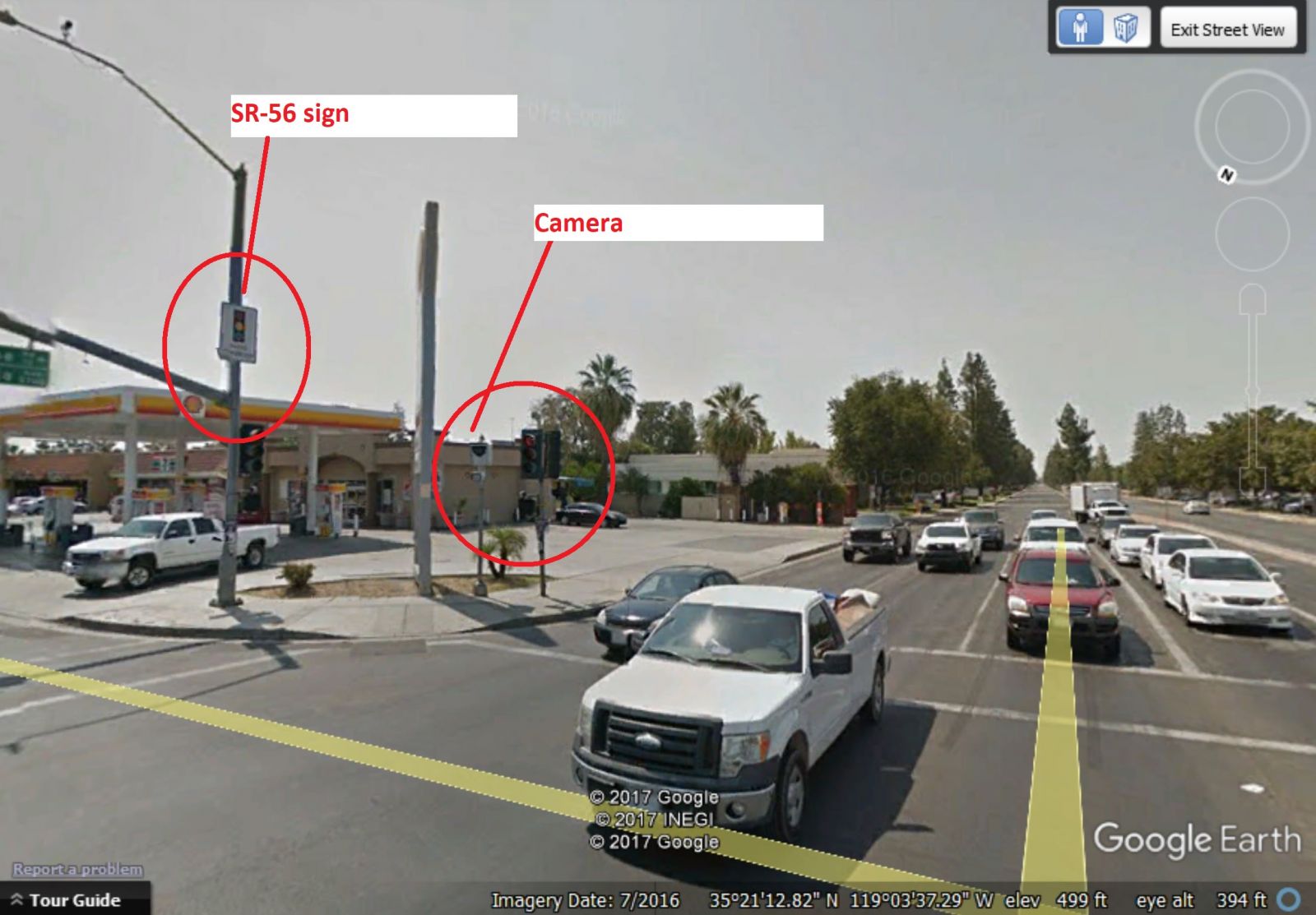
California red light camera and sign

Running a stop sign or red light in California usually results in a fine and demerit points on your driving record. Many areas around California now have red light cameras in place to catch lawbreakers. When you receive one of these red light camera tickets, it's critical that you answer appropriately and quickly.

Here are five things you should know about California red light camera tickets so you can be prepared if you get one.

1. Sensors cause red light camera tickets to be issued.

When a vehicle passes over a sensor when the light is red in an intersection in Los Angeles and most other cities in California, a red-light ticket is issued. The camera then takes a picture of the vehicle's license plate as well as the driver. Because the camera flashes will go off as you travel through the intersection, you may see that you've been caught running a red light by a camera. A traffic ticket will be mailed to the vehicle's registered owner. The fine amount, visual proof, a copy of the traffic citation, and information on how to dispute the ticket will all be included with the ticket.

2.  Red light cameras are operated by companies operating outside of California 

Outside corporations, not the city, install and operate the bulk of red light camera systems in California. As a result, these businesses are compelled to issue tickets to drivers. Vehicle owners may receive unjustified tickets because they are contractually compelled to achieve a minimum number of recorded offenses.

3.  What is the fine for running a photo enforced red light in California? 

The amount of fines a driver has to pay for California traffic violations include a base fine plus a number of fees and surcharges, which can substantially increase the total fine amount. The fees and surcharges are a variable, but you can count on the base fine as the standard starting point.  

The following are the base fines in California for infractions of stoplights and stop signs:

  • Running right through a solid or flashing red light will get you $490 for running red lights.
  • Making an unlawful right turn at a red light costs $250
  • The average fine for rolling through a stop sign is $250 in California. 

4.  Do I get any points for a red light camera violation in California? 

Californians should be informed that, in addition to the fines connected with stop light and stop sign infractions, each of these will result in one point being added to their driving records. A license suspension can result from accumulating too many points. Fortunately, completing a course at a California traffic school can help you avoid a red light violation.

Drivers should also be aware that, depending on the circumstances of the offense, a red light or stop sign violation could result in a reckless driving conviction. In the worst-case scenario, a driver could be charged with vehicular manslaughter if one of these violations results in the death of another person.

5.  Can I get the ticket dismissed, lowered, or ignore the citation received in the mail? 

You should be aware of the following critical red light ticket factors:

  • Some red light tickets are issued by mistake, such as when you make a right-hand turn on red without first coming to a complete stop.
  • You may also not be the driver of the vehicle
  • You may be able to keep points off your record or seek to have the fine reduced depending on the type of infraction. To find out, contact someone who knows, such as an attorney or an online traffic school.
  • According to California law, a citation for a red light camera infraction can only be issued if the driver and license plate are clearly visible.
  • Not all red light camera tickets require you to take action or come with consequences if you don't pay the fine.

If you receive a red light camera ticket in California, the first line of defense is to become knowledgeable.


How Traffic Cameras Can Help Drivers Navigate Around Busy Roads

ALPR traffic cameras

Around the world, there are about 200 million traffic cameras. 

Understanding SharePoint Web Parts

Microsoft has produced a host of great tools that enable their users to perform several functions. One of those tools is the Microsoft SharePoint platform that can be used to design intranet web pages using templates and Microsoft SharePoint web parts. When these features are combined to create a website, its basic functionality is enhanced a great deal.

SharePoint web parts are various components that together with Microsoft SharePoint help execute functions on a website. For instance, web parts can be used to create bespoke intranet content, make changes in the overall page layout and adjust scripts through a web interface.

You cannot create a SharePoint web page or make adjustments to it without the aid of SharePoint web parts. In this post, we are going to look at the various SharePoint web parts and the key roles they play in a SharePoint website.

Categories of SharePoint web parts

The different SharePoint web parts on the Microsoft SharePoint platform perform different functions and have been categorized based on the purpose they accomplish. You can read this VirtoSoftware post which explains the various SharePoint web parts that can help customize your web page. The different SharePoint web parts on Microsoft SharePoint include:

1.     Content roll-up web parts

These web parts can be used to check out the active content on a SharePoint website. For instance, you can use the picture library slide show web part to display the images that have been embedded in a web page in a slideshow form. There is also the content query web part which can be utilized to query content from any part of a website.

2.     Lists and libraries web parts

These web parts help store the details including the names or the identity of the various sources where data used to create a web page was acquired. Examples of these web parts include the SharePoint calendar web part that displays the calendar and announcements web part that shows announcements. These web parts can be added to various SharePoint web parts to help display any information you query including any alterations that have been made.

3.     Media content web parts

These web parts play a key role in displaying the media content on a page including pictures, videos, and text. In addition, these web parts can also be used to add media content to a web page including text, pictures, and videos. The content editor web part for instance can be used to add tables, hyperlinks, and texts that have been formatted for a SharePoint website. The image viewer web page can also be used to either view images or add new images to a web page.

4.     Business data web parts

These web parts help display data and information from different databases. If you want to view information or data from an external database, the business list web part can help you do that.

Custom web parts

Apart from the web parts that have been created by Microsoft SharePoint, users can also create their own custom web parts to help improve the functionality of a page. VirtoSoftware is one of the leading designers of custom web parts for pages that can be easily integrated into a SharePoint web page. Their web parts are broad but help to create a much better page with enhanced features and security.

What Kind of Camera is This On Traffic Light in Ohio?

 
Those are not red light cameras. Likely these cameras on the stop lights are tracking traffic and volume to manage the light signal timing.  Read other articles on connected signals of traffic lights

These cameras were found in Monroe, Ohio.

There are several types of traffic cameras used for various purposes to monitor and enforce traffic regulations. Here are some common types of traffic cameras:

Red Light Cameras: Red light cameras are designed to capture images or videos of vehicles that enter an intersection after the traffic signal has turned red. They are typically positioned at intersections and are intended to deter red light violations and improve intersection safety.

Speed Cameras: Speed cameras are used to detect and record vehicles that exceed the posted speed limit. They can be either fixed or mobile cameras and are often placed in areas prone to speeding or areas where safety concerns are high, such as school zones or work zones.

Surveillance Cameras: Surveillance cameras are installed in various locations for general traffic monitoring and security purposes. They are typically used to observe traffic flow, monitor road conditions, and assist in law enforcement activities.

Automatic License Plate Recognition (ALPR) Cameras: ALPR cameras use optical character recognition technology to capture and read license plate numbers. These cameras are often mounted on police vehicles or stationary structures and can quickly scan multiple license plates to identify stolen vehicles, vehicles with expired registrations, or vehicles associated with other violations.

Mobile Cameras: Mobile cameras can be used for various purposes, such as monitoring speed in temporary construction zones, conducting traffic studies, or capturing violations in specific problem areas. They are typically deployed on trailers or vehicles and can be moved to different locations as needed.

Bus Lane Cameras: Bus lane cameras are specifically designed to enforce bus lane regulations. They capture images or videos of vehicles that enter restricted bus lanes, helping to ensure that only authorized vehicles, such as buses or emergency vehicles, use those lanes.

These are just a few examples of the types of traffic cameras that are commonly used. It's important to note that the specific types and applications of traffic cameras can vary between jurisdictions, as different regions may have their own regulations and systems in place to monitor and enforce traffic laws.

Are Speed Cameras Legal?

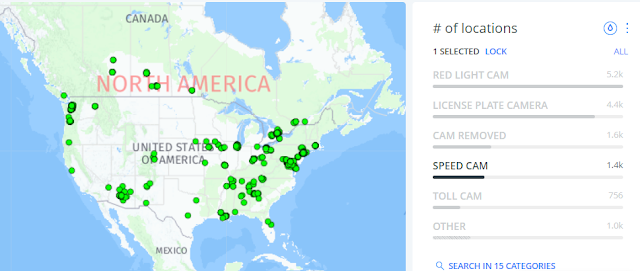
speed camera locations map
Speed regulation is mostly the responsibility of state and local governments. Traditionally, the federal government's responsibility has been to accumulate speed-trend and safety information, undertake and coordinate research, fund national highway and safety programs, and regulate new vehicle standards. There are two notable exceptions.

• From 1942 to 1945, the War Department ordered a nationwide speed limit of 35 mph to conserve rubber and gasoline for the war effort.

• In 1973 during the oil embargo, Congress enacted the National Maximum Speed Limit, set at 55 mph, to conserve fuel.

The NMSL was repealed by Congress in 1995, ending Federal penalties for noncompliance as well as the obligation for states to provide speed compliance statistics. States and communities have demonstrated increased interest in discovering better ways to efficiently manage speeds and minimize speeding-related crashes in the years since the repeal.

Since the NMSL's repeal, the federal government's role has evolved from NMSL compliance and enforcement to conducting research and providing recommendations in support of state and local highway safety programs, as well as providing science-based countermeasures and technical guidance for reducing speed.

The most popular approach for controlling speed is to set speed restrictions. In the 1920s and 1930s, the current framework for setting speed limits was devised. Every state has a basic regulation requiring drivers to travel at speeds that are acceptable and prudent in light of the current environment. State statutes establish speed restrictions that apply to a variety of road types and geographic areas. State and most municipal governments, on the other hand, have the right to establish speed zones for highway portions if statutory restrictions do not meet specific road or traffic conditions based on engineering studies.

In speed zones, speed restrictions are set for ideal conditions such as good weather, free-flowing traffic, and good visibility. As conditions change or deteriorate, drivers are expected to reduce their speeds. The most common approach is to set the limit based on an engineering study that considers factors like free-flowing vehicle operating speeds, crash experience, roadside development, roadway geometry, and parking and pedestrian activity levels to determine what speed the posted limit should be set at. When systems for setting speed limits are perceived as subjective and poorly understood, pressure from the public or elected authorities to lower speed restrictions is prevalent and difficult to resist.Speed management is a highly localized issue, with States and towns having the freedom to choose the right balance of risk and mobility.

Here are list of communities across the United States have implemented speed safety camera enforcement. Examples of these successful programs include: 

Auburn, WA has speed and red light safety camera locations.

Baltimore, MD  has speed and red light safety camera locations.

Denver, CO has speed and red light safety camera locations.

Chicago, IL - has lots of speed and red light camera safety camera locations.

Cedar Rapids, IA - has speed safety camera locations.

Chattanooga, TN - has speed safety camera locations.

Dayton, OH - has speed safety camera locations.

Montgomery County, MD experienced a 59% decrease in the likelihood of a driver exceeding the speed limit by more than 10 mph and reported a reduction in fatal or incapacitating injuries by 49% on roads with speed safety cameras.

New York City, NY speed cameras are only allowed in designated school zones, which encapsulate a quarter-mile radius of school buildings. The current law — an expansion of a school-zone camera program implemented in 2013 and expanded in 2019 — is set to expire in 2022

New Orleans, LA - has speed and red light camera safety camera locations.

Portland, OR reported a 46% reduction in traffic fatalities from an average of 56.8 annual traffic deaths before the program's implementation to an average of 30.5 traffic related deaths as the program has grown. Average and 85th percentile speeds also declined at speed safety camera locations. There was 85% decrease in the number of drivers exceeding the speed limit by 10 mph or more

Providence, RI - has speed safety camera locations

Seattle, WA had an overall calming effect on the city reporting a 4% reduction in the average speed of a speeding violation in miles per hour above the posted speed limit

Washington, D.C. experienced a 73% reduction in traffic fatalities, a decrease from 71 deaths in 2001 to 19 deaths in 2012 and a 34% decrease in traffic related injuries. Whereas one in three drivers were travelling 10 mph above the speed limit, when cameras were introduced the rate of speeders dropped to just one in 40 drivers.

10 Ways To Prevent Falling Asleep While Driving

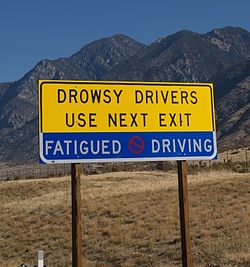
Drowsy Driving Sign
Let's imagine you're taking a lengthy vacation and want to make sure you're always aware behind the wheel. You know what to do if you become sleepy on the road, but what can you do ahead of time to prepare? Here are some ideas for you.
  1. Download some intriguing podcasts or invest in satellite radio that you can take with you everywhere you go before your vacation.
  2. Another effective approach to keep yourself occupied is to listen to audiobooks; local library may have some suggestions.
  3. Avoid driving during usual sleeping hours, roughly midnight through 6 a.m. Late afternoon drowsiness is also prevalent.
  4. Avoid alcohol and cannabis. This should go without saying whenever you’re behind the wheel. Liquor or pot makes for dangerous driving decisions.
  5. Prescription medicines that cause drowsiness should be avoided. Check the labels of any medications you're taking to make sure they won't affect your ability to stay awake.
  6. The night before a big journey, get a decent night's sleep (7-8 hours).
  7. Talk to your doctor about how to drive safely if you have (or fear you have) a sleep issue like apnea.
  8. Plan your vacation ahead of time to prevent driving for large periods of time in one day. You'll be able to handle drowsiness better if you spread your journey out across two or more days.
  9. Make arrangements for the company. Even if they aren't able to assist with driving, a friend or family member (even a youngster) can help you keep them aware.
  10. Know where the rest spots are on your journey and keep an eye out for safe locations to pull over.
We've all experienced how tiredness can sneak up on us without us even realizing it, but there are a few warning signals that should alert you to the need to pull over.

7 Driving Drowsy Warning Signs 
  1. You're drifting out of your lane or slamming into the rumble strips.
  2. You realize you've been immersed in a daydream all of a sudden.
  3. You have a habit of yawning.
  4. You miss your exit or become lost or confused about your whereabouts.
  5. You're having trouble keeping your eyes open or you're blinking too much.
  6. You have no recollection of the last few miles you have driven.
  7. You suddenly realize you're tailgating the automobile in front of you.
If you notice any of these signs, you should take action right away to relieve your tiredness, even if it involves pulling over to the side of the road for a little nap. Any of those signals could mean you're going towards microsleep, a condition in which you sleep in small bursts while doing anything else.

Who is the most vulnerable to drowsy driving?

Drowsy driving affects about one out of every 25 drivers every month. Although exact data on falling asleep at the wheel is difficult to come by, the National Highway Traffic Safety Administration (NHTSA) estimates that it causes 91,000 crashes each year, with 800 of these resulting in death.

Moreover, despite the fact that Americans have driven less during the pandemic, data reveals that we are having more accidents and driving more irresponsibly, including driving while tired or sleep-deprived.

Some populations are more vulnerable to it than others. If you fall into one of these groups, you're more likely to drive when drowsy.

Professional drivers: When they've been on the road for hours without stopping, long-haul truckers and others who drive professionally may experience sleepy driving. Federal restrictions limit the number of hours an interstate truck driver can travel per day to 11, with a ten-hour break between shifts.

Nearly 15 million Americans work evenings or alternate between night and day shifts. This can throw off the body's circadian rhythm, making getting to and from work difficult.

Those with untreated sleep problems: Those who suffer from sleep apnea, narcolepsy, or other sleep disorders are already dealing with the difficulties of interrupted or inadequate sleep. You run the danger of sleepy driving or falling asleep behind the wheel if you drive in this situation.

Young drivers: high school and college students lack the years of driving experience that older drivers have, and they frequently work long hours while studying and working part-time job. Driving home after working or studying all night might be a recipe for catastrophe.

Male drivers: According to a study published in 2019 by the American Academy of Sleep Medicine, men had a harder time staying awake when driving than women.

Individuals who drive for rideshare firms like Uber should also be aware of the dangers of drowsy driving. In fact, in 2018, the American Academy of Sleep Medicine (AASM) issued a policy statement warning rideshare drivers to be aware of the public safety risk they pose when driving when tired.

Drowsy driving can occur at any time of day, but it is most common between the hours of midnight and 6 a.m. If you're used to sleeping during those hours, it's a good idea to be especially cautious if you're traveling late at night.

Anyone with a low resting heart rate in the 30-50 beats per minute.  

If you become drowsy while driving, you should:

Allow a friend to take the wheel. If you're driving with someone, they can take the wheel while you close your eyes and relax. Turn off the light every two hours or so.

Pull over to a safe location and take a brief sleep – this is possibly the most effective way to avoid drowsy driving. Consider bringing a weighted blanket with you in the drive so you can cozy up and fall asleep quickly. Even a half-hour snooze should suffice to rejuvenate you.

Every two hours, take a break. You don't have to wait until you're tired to use this advice; it's a good idea whenever you're on a long trip, regardless of how alert you are. Get out of the car, stroll around the parking lot, stretch, or jog in place when you come to a halt.

Take a coffee or energy drink break. Coffee isn’t an ideal stimulant, because it only works for a while and then leaves you more tired than before. And energy drinks contain sugar that provides a short-term lift — followed by a crash. But in a pinch, they can stave off drowsiness for the short term.

Avoid going too fast. You may believe that if you're sleepy, you should drive faster to get to your destination faster and nap - but this is risky thinking that could result in an accident or, at the absolute least, a speeding ticket.


How To Build Backlinks With Video Content?

build backlinks

If you wonder what SEO strategy is one of the most potent, backlinks building heads the list. Backlinks stand for hyperlinks earned from a specific website or web page, proving your resource is trustworthy and expert on a given topic. 

Since your fundamental task is to get high search engines’ credibility, resulting in high-ranking positions on the SERPs, you need to apply only efficient tools. Absolutely, video content belongs to that kind. Still, how to make a video link a working thing and what kind of link for video will be the hottest in 2022? We explored numerous video marketing tactics within the building backlinks process and created a must-follow guide for roaring success.

1.   Quality First

The golden rule for any content-making sphere is high-quality and video production is not an exception. If you strive for qualitative backlinks, take care that your video rolls be valuable and relevant. 

Try to make your video content exceptional and informative as far as possible. Thus it will interest and engage a broader audience. Sharing is also essential. In case videos are available to share, more backlinks you earn. That way, organic traffic and authority in search engines will rise. 

So, what type of videos can match the mentioned earlier criteria. The most appropriate are how-to-do guides, explainers, customer reviews, company culture specialties, etc. There are plenty of Internet resources to discover more info about such video content generation. Don’t skip their reviewing since you may find much fruitful advice there.

2.   Sharing On Various Platforms

Despite your highly catchy videos, that’s still not enough for flourishing link a video. The sharing flow on diverse video platforms will solve the problem. Besides, posting on specific platforms may attract high traffic to video content that will considerably grow your online presence and selling activity. 

What’s more, it is worth adding links to your site every time you post videos on social networks. Of course, some may say that links without subscription activity are meaningless. Still, all types of getting links for your website are beneficial, regardless you got followers or not. So, don’t hesitate to point out a link in the description box since your traffic will rise simultaneously with brand awareness. When publishing videos on social networks, Youtube - and others, it is important to attract a user to your video when he sees it in recommendations or advertising. In other words, you need to increase your CTR. Use a clickbait headline for this (but don't overdo it) and most importantly, a good intro. An image or photo for it should be prepared separately, and not taken as a freeze frame from the video. Correctly processing a photo for a thumbnail is the key to success. The photo for it should be bright, eye-catching and professionally made. It is not recommended to do it yourself in Photoshop if you do not have design skills. 

Sometimes you need to gain high traffic in a limited time and it is just impossible to reach naturally. There is a way out - to buy SEO traffic. However, it is crucial not to skimp on it and use only reliable and quality sites, as bad backlinks may irreparably harm your website’s SERPs positions. 

3.   YouTube

YouTube is one of those precious sites where backlinks usage is accessible even in the video description. There are two main types of YouTube backlinks: dofollow and nofollow. 

Dofollow backlinks appear within the highly valuable content for the audience, whereas nofollow backlinks don’t influence your general YouTube videos’ SEO on the whole. So, it is better to focus on dofollow links creation. 

But what does it actually take to make a youtube backlink? Simply put, it is about adding links from other sites or sources to the video on YouTube manually. You may achieve it in different ways. For instance, write comments on various social networks, submit your video roll to a certain platform, answer forum threads and much more. 

Building backlinks is dramatically different from creating them. It is a bit more complex process as it involves gaining an audience via search engines, social media, or word of mouth and contacting other content makers and YouTube channel managers by asking for links to your source. 

The best decision for starting backlinks building on YouTube from scratch is to set off your own channel. It will be the perfect place to collect all your video rolls and store backlinks within engaging posts. So, if you haven’t done it yet, it is just time.    

4.   Profound Research

Speaking about simple video production, there is no necessity to perform detailed research. It is optional and depends on the creator. Still, in case you have a task to make a video with backlinks generation further, solid research is a must. It is vital to have a clear vision of the target audience, including age, preferences, trends and more. 

After studying these points, look for the requisite info on the Internet and find analogous video content for comparison. Analyzing high-demand videos will give you an insight into how to outreach link a video properly and drive the best Google rankings.

5.   Boosting Social Networks Activity

When it comes to publishing video rolls on websites or other social media, likes, commenting and sharing play an extremely significant role. They are powerful tools for organic traffic improvement, as the higher, it is, the more positive dynamic in conversions appears. So, try to do your best to encourage as much viewers’ activity as possible. It really can change the course of events. 

In addition, if people do great sharing, you will gain many social media links and social signals boosting as a result. The high social signals level can provide a large number of backlinks in a natural way. And you don’t have to go the extra mile to build a link for video. Thus, it’s crucial to apply social plugins during video production as it will help to ease the video-sharing process to a great extent.

Final Thoughts

Video content is an integral part of the backlinks building process, without any doubt. So, if you want to be on the crest of a wave, stick to those mentioned above and make video link tips. Just give it a shot and enjoy wishful achievements right now!

How To Deal With Emotional Distress Caused By An Injury

foot in cast

Dealing with stress caused by an injury from an accident requires both emotional and physical resilience. Though most of the injuries are physical and patients focus on physical rehabilitation, it’s also necessary to include psychological therapy to help the victim recover fully from an injury and anxiety.

Athletes, soldiers, surgeons, and other occupations that primarily use their physique for their daily duties experience emotional turmoil when injured. They often feel anger, denial, depression, sadness, and so forth. Experiencing such accidents disrupt their mental health because their injury hampers their career and daily life.

Much of these feelings lead to trauma. For victims of this, it’s best to move forward with positive strategies to deal with this problem. Fortunately, suing for emotional distress is an option for some. Although the process gets complicated, it’s possible to receive compensation for your troubles. One of the challenges in cases like this is that it's often difficult to estimate the financial value of your emotional pain. You can learn more about it on this blog post by raphaelsonlaw.com.

Aside from legal action, there are many ways to alleviate the emotional distress caused by an injury. Here are some strategies you can apply: 

1.     Learn About Your Injuries

The earlier you learn about your injury’s cause, treatment, and prevention, the less it can cause emotional breakdown and fear to cope with life. Most people seem in denial for so long because they don’t know how to recover. Ask your doctor, therapist, coach, and partner questions until you get satisfied and know what to do for you to heal.

The doctor needs to clarify the symptoms that may occur right after the accident and later on. Also, you need to be aware that delayed injuries symptoms can be life-threatening. Knowing what to expect from all the therapists will save you energy, lessen anxiety, and help you take control of your life again. 

2.     Set Appropriate Goals

Just because you’re undergoing some distress doesn’t mean you have to stop planning and setting strategic goals. Make your healing process a priority rather than feeling sorry for yourself about the injury. Set your recovery goals and focus on achieving them one at a time. This will keep you motivated, encouraged, and focused.

By striving to achieve your goals, you’ll be able to see some progress in your rehab process, which will make you feel proud and confident that you’re getting better. Always remember to take things slow and steady, and follow the timeline set by the doctor. 

3.     Maintain A Positive Attitude

Commit to overcoming your injury by having a positive attitude during the whole treatment process. Your self-talk also determines your attitude towards the healing process. The way you treat yourself throughout the entire process contributes a lot to the healing of your injury.

Work hard to maintain a positive mindset and do not focus on what you lack. 

rehab injury walking
4.     Commit to Staying Fit

Depending on the injury you have, you may adjust your training routine to maintain cardiovascular strength. Work with your therapist, trainer, or doctor to develop an alternative workout program that won’t strain your muscles.

Fitness enables you to stretch muscles and keep you from losing your mind. It’s also an opportunity to retrain your body and get it ready for when you go back to your routine. It’s best to focus on better nutritional health and fitness while recovering. 

5.      Practice Acceptance

Accepting that your injury happened doesn’t mean taking the blame for the accident. It is a shift in mindset; instead of dwelling on your anger and hurt and feeling sorry for yourself, you need to accept that you have an injury and you’re responsible for your healing process.

By accepting and taking responsibility for your recovery, you’ll find more relief and regain control over your life. Let go of the so-called victim mentality. You’ll feel empowered to put the past behind you and move forward. 

6.     Use Your Mind To Heal

Researchers have proven that it may be possible to speed up your healing process by using mental skills and techniques like self-hypnosis and imagery. All this makes your mind create feelings, images, and sensations related to how much you want to go back to your everyday life control.

If you are a spiritual person, turn to spiritual books and songs to lift your spirit. Many people also turn to prayer and guided meditation. 

7.     Get Support

Most people tend to isolate themselves after the injury. However, you are advised to remain in contact with your peers, coaches, partner, and teammates as you recover. People in your circle significantly participate in your recovery by listening, encouraging, and offering support during the healing process.

Knowing you’re not facing the injury alone can give you comfort and courage to tackle the process every day. Doctors always encourage you to join a group with the same disabilities as you. 

Conclusion

With sufficient guidance, support, patience, and knowledge, you can overcome your injuries. Be persistent, take things slow, and use the above strategies to recover well. Don't forget to regularly consult your doctors and therapists to make sure you are on the right track.

Popular Articles (All Time)