The assassination of conservative activist Charlie Kirk at Utah Valley University has drawn national attention — not only because of the political violence involved, but also because of the technological tools available to investigators. While Orem is not a heavily surveilled city like New York or Chicago, it does have a network of cameras that could assist the FBI as it works to identify the shooter.

Showing posts with label crime. Show all posts
Showing posts with label crime. Show all posts
What Do Speed and Red Light Cameras Reveal About a Community?
Speed and red light cameras are more than just automated enforcement tools — they often reflect a community’s values, governance style, public safety priorities, and even its trust dynamics between citizens and local officials. With over 4,000 active red light and speed camera systems across the U.S. and thousands more worldwide, their placement and usage patterns can reveal surprising insights about a region.
How Traffic Cameras Are Helping Detect Human Trafficking
How Traffic Cameras Are Being Used to Detect Human Trafficking
How to Use Red Light Camera Video Footage as Evidence
Red light cameras are becoming increasingly common in cities across the United States, capturing thousands of traffic violations daily. But beyond issuing tickets, this footage can also serve as powerful evidence in legal and insurance disputes. Whether you're fighting a citation or proving your innocence in an accident, understanding how to access and use red light camera video footage can make a significant difference. Here's everything you need to know.
What Is Red Light Camera Video Footage?
Red light cameras are automated enforcement systems placed at intersections. When a vehicle runs a red light, the system captures high-resolution images and short video clips of the violation. These clips typically show:
-
The vehicle before entering the intersection
-
The traffic light status at the time
-
The vehicle in the intersection after the light turned red
-
A timestamp and location marker
This footage is often used by municipalities to issue citations, but it can also be requested and used as legal evidence in court.
Why Use Red Light Camera Footage as Evidence?
Red light camera footage can be instrumental in:
-
Disputing a traffic ticket: If you believe the citation was issued in error, the footage may support your claim.
-
Proving fault in a car accident: Video evidence can show which vehicle had the right of way.
-
Supporting an insurance claim: Insurers may accept camera footage as reliable proof of events.
-
Defending against wrongful accusations: If you’re wrongly blamed for an incident, the footage may exonerate you.
How to Obtain Red Light Camera Footage
1. Identify the Camera Location
Determine the intersection where the red light camera is located. This is typically stated on the citation, or you can check with the local Department of Transportation (DOT) or police department.
2. Contact the Appropriate Agency
Red light cameras are usually managed by local law enforcement or traffic enforcement offices. Submit a request to:
-
The city or county traffic enforcement division
-
The police department’s records unit
-
The state’s Department of Transportation
Ask specifically for video footage and still images from the red light camera at the specified date and time.
3. Submit a Public Records Request
In most jurisdictions, traffic camera footage is considered public record. File a Freedom of Information Act (FOIA) request or a state-specific public records request. Include:
-
Your full name and contact information
-
The date, time, and location of the incident
-
License plate number (if applicable)
-
Reason for your request
4. Act Quickly
Camera footage is usually only stored for a limited time—often 30 to 90 days—unless there's an ongoing investigation. The sooner you request the footage, the better.
How to Use the Footage in Court or Claims
A. In Traffic Court
If you're contesting a red light ticket, you can request that the court review the footage. Some jurisdictions provide an online portal to view and download this evidence.
B. In Civil Court (e.g., Car Accident Lawsuits)
You or your attorney can submit the footage as evidence during litigation. Be sure it is authenticated (officially verified) and accompanied by a statement or affidavit from the agency that supplied it.
C. For Insurance Claims
Provide the footage to your insurance adjuster to support your claim or defense. This may help speed up the claims process or reduce disputes over liability.
Legal Considerations and Admissibility
-
Chain of custody: You may need to show the footage has not been tampered with.
-
Authenticity: Footage should come directly from the city or agency to ensure it's admissible.
-
Privacy laws: In some states, certain privacy laws may apply, but generally, footage captured in public spaces is allowed in court.
Final Thoughts
Red light camera video footage can be a game-changer in resolving legal or insurance matters. Acting quickly, following the correct process, and understanding your rights can ensure that this digital evidence works in your favor.
How City Cameras Solve Crimes and Keep Communities Safer

Surveillance cameras have become an essential part of urban infrastructure, quietly recording everything from traffic violations to public safety incidents. While privacy concerns remain, there’s growing evidence that city cameras have helped police solve major crimes, locate missing persons, and make neighborhoods safer. When managed with transparency and oversight, these systems can balance both public safety and individual rights.
The Expanding Role of City Surveillance
Across the United States, cities have invested heavily in surveillance technology. Chicago’s Operation Virtual Shield links more than 35,000 cameras. New York’s Domain Awareness System integrates tens of thousands of public and private feeds to give police real-time situational awareness. These networks connect to analytics systems that use facial recognition, license-plate readers, and even artificial intelligence to flag patterns or identify suspects faster than ever before.
While these systems are sometimes controversial, there is no question that they’ve become crucial investigative tools. Every frame of footage provides potential leads, helping authorities reconstruct events that would otherwise remain unsolved.
How Cameras Have Helped Solve Crimes
1. Boston Marathon Bombing
Perhaps the most well-known example of surveillance cameras aiding law enforcement was the 2013 Boston Marathon bombing. Investigators sifted through thousands of hours of footage from city-owned and private cameras, eventually identifying the Tsarnaev brothers within days. Their images, captured near the blast site, were released to the public and led directly to their capture. Without these recordings, the investigation might have taken weeks longer — and more lives could have been lost.
2. Chicago’s Homicide Cases
Chicago’s massive camera network has helped police close numerous homicide cases. In one instance, a security camera near a CTA station captured the vehicle used in a fatal shooting. Detectives traced the license plate using the city’s automated license plate recognition (ALPR) system, and the suspect was arrested within 48 hours. Police credit video evidence for contributing to hundreds of arrests annually, especially in violent-crime investigations where eyewitnesses are scarce.
3. Los Angeles Hit-and-Runs
Los Angeles has combined intersection cameras, traffic enforcement systems, and privately owned Ring doorbells to create an extensive safety net. In 2021, a deadly hit-and-run in downtown L.A. was solved when investigators pieced together footage from multiple camera sources showing the suspect’s damaged vehicle fleeing the scene. ALPR data later confirmed the route, leading to a quick arrest. This case highlights how public and private surveillance can work together to deliver justice for victims’ families.
4. San Francisco Retail Theft
As organized retail theft surged in 2022, San Francisco police leveraged high-definition surveillance feeds provided by local merchants. Video evidence captured the faces and vehicles of multiple suspects, helping dismantle a burglary ring that had targeted luxury stores across Union Square. The footage also gave prosecutors airtight evidence in court, showing how surveillance can protect both citizens and businesses.
5. Finding Missing Persons
Surveillance technology also saves lives. In Atlanta, city cameras tracked an elderly man with Alzheimer’s who had wandered away from home. Within hours, police located him unharmed. Similar systems in New York have repeatedly helped find missing children using subway and street cameras. When every second counts, quick access to video feeds can mean the difference between tragedy and reunion.
The Preventive Power of Cameras
Beyond solving crimes, cameras can deter them. The Urban Institute found that violent crime dropped by nearly 20% in parts of Washington, D.C., after surveillance networks were installed. In London, CCTV systems have helped clear over 60% of homicide cases, proving that visibility itself can discourage would-be offenders. Knowing cameras are present often makes criminals think twice before acting.
Traffic cameras also play a preventative role. They reduce speeding, discourage red-light running, and provide evidence in crashes — saving countless lives each year. The same principle applies to public spaces: clear signage and visible cameras signal that illegal behavior won’t go unnoticed.
Privacy, Oversight, and Public Trust
Critics argue that surveillance can become invasive if left unchecked, and they’re right. That’s why many cities now require transparency and community oversight. San Francisco and Seattle mandate that any new surveillance system receive public approval before installation. Oakland has a Privacy Advisory Commission that reviews all surveillance contracts to ensure accountability. These policies don’t eliminate surveillance — they make it smarter, safer, and more ethical.
Citizens should also be aware of how data is stored and for how long. Responsible programs automatically delete footage after a set period and restrict access to authorized personnel. Annual audits, community dashboards, and public reporting can go a long way toward building trust between residents and the institutions that protect them.
When Communities Partner With Law Enforcement
Many cities have created partnerships between residents, businesses, and police departments to share footage responsibly. In Philadelphia, for instance, the SafeCam program allows residents to register their private cameras so investigators can request footage when crimes occur nearby. The cameras remain privately owned, but the collaboration saves precious investigative time. Similar programs in New Orleans and Houston have yielded faster case closures and stronger community relationships.
These cooperative efforts represent the future of civic safety: decentralized, transparent, and driven by mutual trust. Citizens retain control over their cameras while still contributing to public security.
Artificial Intelligence and the Future of Surveillance
Artificial intelligence is now transforming how cities use surveillance. Instead of relying solely on human monitors, AI can scan footage in real time for patterns such as abandoned objects, sudden crowd surges, or fleeing vehicles. Systems like New York’s Domain Awareness System alert officers immediately when unusual activity occurs, allowing faster responses without constant manual supervision.
Still, experts warn that these systems must be audited regularly to prevent false positives or bias. The technology is only as fair as the humans programming it. As algorithms evolve, cities must ensure transparency in how these tools operate and what data they analyze.
Benefits Beyond Policing
City cameras have applications beyond law enforcement. They improve emergency response, guide urban planning, and provide evidence in civil cases. For instance, during floods or natural disasters, control centers use live feeds to direct rescue efforts. Urban planners analyze aggregated footage to identify dangerous intersections or poorly lit areas. Even schools use cameras to enhance safety and accountability without overpolicing students.
Conclusion: Technology With Accountability
When used ethically, surveillance cameras are not symbols of control — they’re instruments of safety, justice, and transparency. From solving high-profile crimes to preventing everyday accidents, these systems play a vital role in modern city life. The key is oversight: public audits, limited data retention, and clear community involvement ensure that surveillance serves the people, not the other way around.
The ultimate goal isn’t just to watch — it’s to protect. Cameras can make cities safer when citizens, policymakers, and law enforcement share a commitment to openness and accountability. After all, the question isn’t only “Who’s watching?” but “Who’s making sure they’re watching responsibly?”
FAQ: City Surveillance Cameras
How long do cities store surveillance footage?
Storage policies vary. Many cities delete footage after 30 to 90 days unless it’s tied to an active investigation. Some keep traffic-related videos longer for insurance or legal purposes. Transparency reports should list exact retention timelines.
Do traffic cameras actually help solve crimes?
Yes. Traffic and intersection cameras often capture critical evidence such as vehicle descriptions, license plates, and escape routes. These details have helped solve hit-and-runs, kidnappings, and violent-crime cases nationwide.
Can citizens request city camera footage?
In most U.S. cities, residents can file a Freedom of Information Act (FOIA) or public records request to access footage, though privacy laws limit what can be released. Requests involving active investigations are usually restricted.
Are facial recognition cameras legal?
It depends on the city. Some, like San Francisco and Portland, have banned government use of facial recognition technology. Others still employ it under strict regulations or limited pilot programs.
How do cities prevent camera misuse?
Responsible municipalities implement oversight boards, data-deletion rules, and access controls. Independent audits, transparency dashboards, and community reporting help ensure that surveillance remains accountable and ethical.
Hidden Cameras Found in Garden Grove Spark Community Concern
Garden Grove, CA – Residents of Garden Grove are on edge following the discovery of a hidden camera aimed at a home in their community. The incident has raised concerns about possible connections to burglary tourism, a phenomenon that has recently been making headlines.
What do hidden cameras look like?
Evolution of Crime in the Era of Ring and Home Security Cameras
In recent years, the proliferation of home security systems, particularly those equipped with cameras such as Ring, Nest, and other similar devices, has significantly altered the landscape of crime. These technologies have introduced new elements that both deter criminal activity and provide valuable evidence for law enforcement. Let's delve into how ring and home security cameras have changed the elements of crime:
The Battle Against Ghost Cars in Texas: Safety & Enforcement
In recent years, the use of unmarked or "ghost" cars by law enforcement agencies in Texas has sparked debates and concerns among citizens. These vehicles, designed to blend in with regular traffic, are often employed for traffic enforcement and other law enforcement purposes. However, their inconspicuous nature has raised questions about transparency, accountability, and fairness in policing practices.
Philadelphia Legislation to Restrict the Use of Ski Masks in Public
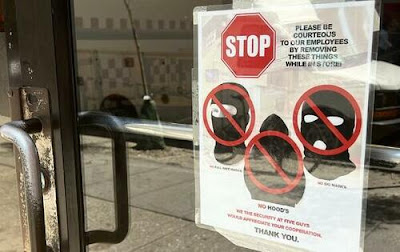
In a move aimed at enhancing public safety, the city of Philadelphia has introduced a new legislative proposal to prohibit the wearing of ski masks in public spaces. The initiative seeks to address concerns regarding potential misuse and criminal activities associated with concealing one's identity in public areas.
10 Ways How Are Cities Using ALPR Cameras

Automatic License Plate Recognition (ALPR) cameras are used by cities for public safety in several ways.
2 Main Uses of Traffic Cameras Are Not To Catch Speeders
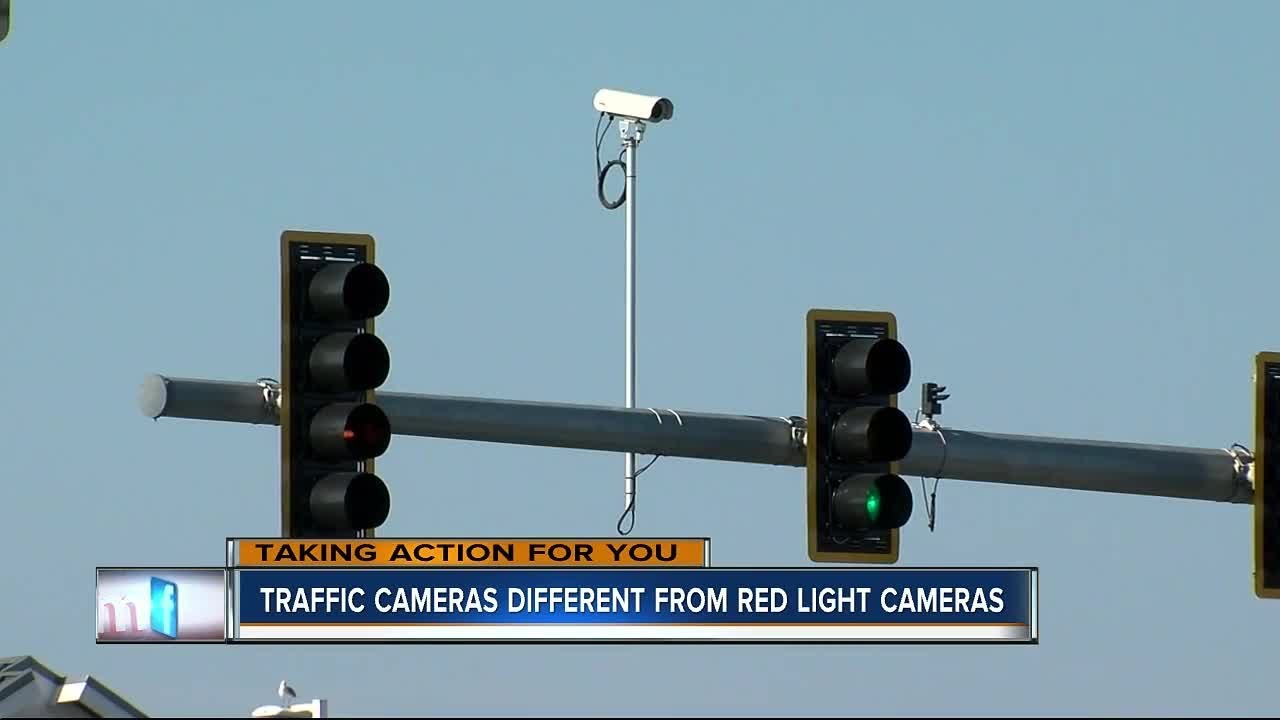
Traffic cameras have a wide range of public safety uses including:
1) Traffic flow. Many cities install traffic flow monitoring devices on roadways and busy intersections in order to measure traffic volume and speed at different times of the day, week, month, or year. The videotapes from these cameras can help engineers understand how people are using streets and highways so that more effective design decisions can be made about future development projects in the area.
If there's congestion in an intersection, cities can adjust the timing of traffic signals for that particular intersection to help with traffic flow. If there's congestion in an intersection, police can adjust the timing of traffic signals for that particular intersection to help with traffic flow. This is called adaptive signal control. Cameras are used to monitor traffic flow so that when it's needed, an agent can go into a system and adjust the timing at the appropriate intersections during high-volume periods. This helps keep traffic flowing smoothly and prevents backups from happening at key intersections.
The National Highway Traffic Safety Administration uses these cameras to track traffic patterns and lessen gridlock. Some cities use video feeds from their highway surveillance systems as part of an overall system designed to help motorists navigate through town by making informed decisions about which routes they choose when traveling during different times of day or night.*
2) Crimes and accidents. Another use for cameras is safety. Cameras can monitor roads for crimes, such as someone stealing from another car, road rage incidents, accidents (or fender benders), and other things that may need attention from law enforcement. Police officers can use these cameras to track down criminals, stolen vehicles, and missing people. Crime prevention is another benefit that traffic cameras offer; they deter potential criminals from committing a crime because they know their photo will be captured on the camera.
Because incidents like robberies or hit-and-run accidents often occur near busy roads and highways, police departments sometimes use camera systems as tools for investigating these crimes when they take place near traffic cameras (only if there is no obvious violation). Traffic camera video and photos can be used to document accidents or crimes. Each city archives video for a certain period of time so if you get in an accident you can subpoena the footage as evidence.
Emergency response. Cities also use their video feeds to track the activity on city streets as part of their emergency response system; if an accident occurs on a major highway, officials can review previous videos taped by nearby cameras in order to better understand what happened when emergency responders arrive on the scene.
6 Different Types of Lawyers and What They Do

There is a good chance that we will need to contact a lawyer at least once throughout our life. But what most don't realize is that there are many different types of legal professionals. It's not all like what you see in the movies! Each has their own specialties, a Phoenix car accident lawyer will have a different set of skills compared to a New York corporate lawyer, and it's important to know what they do before you reach out to them.
Below we are going to mention six types of
lawyers and explain their primary roles.
Want to learn more? Then keep on reading.
General
Practice Lawyer
A general practice lawyer handles a wide
range of cases and is not particularly specialized in a specific area. From
handling minor criminal matters such as a red light ticket to
drafting and reviewing contracts, they have a broad range of knowledge.
Generally, younger lawyers will start off in this career until they find their
field of interest. However, this doesn't mean they are not competent.
Family
Lawyer
A family lawyer focuses on matters that
involve legal relationships. This includes handling cases relating to divorce
and child custody. However, their work can also cross over into other fields.
For instance, they may also assist with a domestic violence case, deal with
pre-nuptial and post-nuptial agreements, and even
litigation.
Criminal
Lawyer
The role of a criminal lawyer is to prosecute
or defend an individual that is accused of a criminal offense. In addition,
they provide legal advice to their clients, investigate certain matters and
help review necessary documentation in preparation to present their case in
court.
If you have been charged with a crime, it's
essential that you contact the right professionals straight away, like the team
at Pringle Chivers Sparks Teskey.
Corporate
Lawyers
A corporate lawyer represents a
corporation/business as a whole. Their role is to advise their clients of all
of their rights and responsibilities. Most of these professionals tend to work
in-house, handling a variety of issues. For example, alongside assisting with
deals, contract drafting, and policies, they also ensure that the corporation
is complying with the securities law.
Estate
Lawyers
Estate lawyers help ensure all of your
finances are taken care of in the event of your passing. They handle all
aspects of estate planning, including writing a will so that
your wishes are met.
They can also work with you to develop a
living will in the case that you are mentally incapacitated. This way, your
family does not need to make such challenging decisions.
Civil
Litigation lawyer
Finally, last on the list, the role of a
civil litigation lawyer is to resolve disputes between two different parties.
Generally, this is a conflict between people or businesses over finances. They
represent either the applicant (plaintiff) or the respondent (defendant) and
work to share their side of the case. Like most of the lawyers on this list,
their responsibilities may also cross over into other sections.
Here’s a quick comparison table showing where traffic lawyers fit depending on the type of violation:
| Type of Violation | Examples | Lawyer Type Most Relevant | Why |
|---|---|---|---|
| Minor Traffic Infractions | Speeding, stop sign, red light camera tickets, expired registration | General Practice Lawyer | These are low-level cases, often resolved by paying a fine or disputing the ticket. Many generalists handle them. |
| Serious Traffic Offenses (Criminal) | DUI/DWI, reckless driving, hit-and-run, driving on suspended license | Criminal Lawyer | These involve criminal charges, potential jail time, and court appearances. Criminal defense lawyers are best suited. |
| Traffic-Related Civil Disputes | Car accident lawsuits, insurance disputes, negligence claims | Civil Litigation Lawyer | These deal with damages and financial compensation between parties rather than criminal penalties. |
| Specialized Traffic Defense | Habitual offender cases, CDL (commercial driver license) issues | Traffic Lawyer (subset of Criminal Lawyer) | Some lawyers market specifically as “traffic lawyers,” but legally they practice criminal law with traffic focus. |
👉 In summary:
-
General practice lawyers = good for minor tickets.
-
Criminal lawyers = best for serious or repeat offenses.
-
Civil litigation lawyers = handle financial/legal disputes after accidents.
LAPD Has Only Used Facial Recognition 30,000 Times Since 2009

Fresh face recognition programs, including a "smart vehicle" fitted with face recognition and real-time face recognition cameras, have been repeatedly revealed by the Los Angeles Police Department, yet the agency claimed to have "no documents sensitive" to our document request.
Since 2009, the Los Angeles Police Department has used facial recognition software almost 30,000 times, with hundreds of officers running photographs of criminals against a vast database of mug shots captured by law enforcement from surveillance cameras and other outlets. Are the police using this technology on traffic cameras in Los Angeles?
"It is no secret" that the LAPD uses facial recognition, that he personally testified to that fact before the Police Commission a few years back, and that the more recent denials, including two after last year, one to The Times, were just errors, LAPD assistant chief Horace Frank said.
LAPD spokesman Josh Rubenstein told the paper that the app was used to help classify suspects in crimes without witnesses, gang crimes where witnesses are reluctant to come forward, and by a multi-law enforcement agency task force investigating arsons, burglaries, and other crimes that took place during summer demonstrations over police shootings.
The software was used to equate the geographic database with photographs from crime scenes, witnesses, and surveillance cameras. Rubenstein said the LAPD also doesn't use the program to search crowds or in any live-streaming capacity. He said the program had access to 330 LAPD staff.
A three-year ban on the use of facial recognition systems in police body cameras has been implemented by California. Similar moves in New Hampshire and Oregon were followed by the prohibition. San Francisco and Oakland banned police and other city agencies last year from using any facial recognition. In the Boston suburb of Somerville, Massachusetts, it has also been banned.
Has facial recognition video technology been using on the hundreds of automatic license plate reader traffic cameras throughout the city?

What Is A License Plate Reader Camera (ALPR)

Traffic Monitoring Cameras
Automated license plate readers can be broadly divided into two categories. Stationary ALPR cameras and mobile ALPR cameras. These are installed in a fixed location, such as a traffic light, a telephone pole, the entrance of a facility, or a freeway exit ramp. These cameras generally capture only vehicles in motion that pass within view. Mobile ALPR cameras are often attached to police patrol cars, allowing law enforcement officers to capture data from license plates as they drive around the city throughout their shifts. In most cases, these cameras are turned on at the beginning of a shift and not turned off again until the end of the shift.

Automatic License Plate Readers or ALPR is used among US law enforcement agencies at the city, county, state, and federal levels. Over 66% of all US police departments use some form of ALPR. ALPR is becoming a significant component of municipal predictive policing strategies and intelligence gathering, as well as for recovery of stolen vehicles, identification of wanted felons, and revenue collection from individuals who are delinquent on city or state taxes or fines, or monitoring for "Amber Alerts".
In addition to the real-time processing of license plate numbers, ALPR systems in the US collect (and can indefinitely store) data from each license plate camera. Images, dates, times, and GPS coordinates can be stockpiled and can help place a suspect at a scene, aid in witness identification, pattern recognition, or the tracking of individuals.
Automatic License Plate Readers - ALPR' s collect license plate numbers and location details, along with the exact date and time that the license plate was located. Some devices are capable of capturing vehicle make and model. They could pick up thousands of plates per minute. One vendor praises that its dataset contains more than 6.5 billion scans and rises every month at a rate of 120-million data points.
Automated license plate readers (ALPRs) are computer-controlled high-speed camera systems usually placed on street poles, streetlights, highway overpasses, mobile trailers, or connected to police squad cars. ALPRs automatically capture all identifiable license plate numbers, along with location, date, and time. The data, which includes photographs of the vehicle and sometimes its driver and passengers, is then uploaded to a central server.
Vendors suggest police may use the information gathered to figure out where a plate was in the past, to determine if a car was at the scene of a crime, to recognize travel habits, and even to locate vehicles that could be connected to each other. Law enforcement agencies may opt to communicate with thousands of other agencies about their knowledge.
The functionality of license plate readers allows law enforcement to use many eyes and complex analytics functions. An automatic license plate reader can tell the intimate story or your travels. Using video footage, license plate readers can drastically reduce the time it takes to find a suspicious vehicle linked to criminal activity. Having a camera is like a deputy sheriff standing at the intersection where the cameras are, seeing the license plates, and immediately knowing if there's a vulnerable person, a wanted person.
Much of this ALPR data was stored for long periods of time in databases — often as many as five years. Police departments manage the databases but they are also managed by private firms. Law enforcement agencies can access data collected by other law enforcement agencies through regional sharing systems and networks run by those private companies without their own ALPR systems. Several firms run independent ALPR systems that are non-law enforcement, negotiating with drivers to install cameras on private vehicles to capture the details. These data are then sold to companies like insurers, but law enforcement can also purchase access to this commercial data on a subscription basis.
Law enforcement authorities will also preload a list of license plates actively searched for by the ALPR system — such as stolen vehicles and vehicles registered with expired warranties. Police officers will set up their own hotlists, too. If the ALPR camera scans a plate on the list, the device will send a warning to the officer in the squad car (if it is a mobile reader) or to the department (if it is a fixed reader). Some hotlists include misdemeanors at low levels and traffic offenses. Some companies are using these hotlists to raise money by avoiding scofflaws seeking citations.
Officers may use ALPR to automatically identify or track individual vehicles in real-time by adding a license plate to a "hot list" License plates are also applied to hotlists when the car is stolen or connected with a warrant that is pending. Officers can also add a plate number to the record if the car was seen at the crime scene, the driver is a suspect in a crime, or the car is suspected to be linked to a gang. Hotlists also include crimes at low levels, too.
Since ALPRs usually collect information about everyone — not just the hot-listed vehicles — officers can scan and analyze historical data using a tag, partial tag, or physical address. For example, when a robbery occurs, an officer can enter a convenience store location to locate vehicles seen nearby. Then the officer will look up certain plate numbers and identify other places that were caught on the plate.
Related Articles
Traffic Camera or Red Light Camera?
Evolution of License Plate Reader Cameras in the US

Automatic license platereader cameras (ALPR) are game-changers when it comes to law enforcement and surveillance.
Popular Articles (All Time)
-
 Red light camera tickets typically take from 3-7 business days to process and are mailed to the registered owner of the vehicle. We r...
 -
 A Traffic Monitoring Camera Is Not The Same As A Red Light Camera Many of our readers often get confused about the difference betwe...
 -
 If you ever plan on traveling to Downtown Los Angeles on the 110 Freeway I would suggest buying one of these Fast Trak transponders to avoid...
 -
 Red Light Camera Ticket in The Mail It typically takes 5-7 business for a ticket to arrive in the mail in Florida, California, New Yo...
 -
 Red light cameras are increasingly common at busy intersections, and their purpose is to deter dangerous driving and reduce collisions. ...
 -
 The flash of a red light camera is one of the most dreaded things you can see when you pass an intersection. You may have noticed that if...
 -
 Red-light cameras remain one of the most debated traffic enforcement tools in the United States. Supporters argue they save lives by discour...
 -
 Search the Map for " Live Traffic " To Only See Traffic Cameras Bookmark Our Live Traffic Cameras App on Your Phone ...
 -
 Freedom of Information Act Request to Any Government Agency This is the most common question PhotoEnforced.com receives on a daily b...
 -
 Drives Should Be Wary of Short Yellow Lights at Camera Enforced Intersections