Search For Maps & Articles

Showing posts with label Motorcycle. Show all posts

Are You Sick of Loud Cars and Motorcycles? How to Deal with Noise

Loud cars and motorcycles are a common nuisance in neighborhoods and cities around the world. Whether you're trying to enjoy your backyard, focus on work, or simply relax, the constant noise of revving engines can disrupt your peace. In this article, we’ll explore why loud cars and motorcycles are so common, the harmful effects of noise pollution, the fines and penalties associated with loud vehicles, and the new technology used to detect and deter noise violations.

Why Are Loud Cars and Motorcycles So Noisy?

Understanding why some cars and motorcycles are louder than others can help explain the problem and guide you in finding a solution.

  1. Modified Exhaust Systems: Many vehicle enthusiasts intentionally modify their cars and motorcycles with aftermarket exhaust systems. These modifications are often made for aesthetic or performance reasons but can result in extremely loud and disruptive noise levels. In many cases, these modified exhausts violate noise ordinances in residential areas.

  2. Engine Type and Design: Motorcycles, particularly sport models, tend to produce louder sounds compared to regular passenger vehicles. The design and power of motorcycle engines, along with their smaller mufflers, contribute to higher noise levels. While it may be enjoyable for the rider, it’s a common source of frustration for anyone nearby.

  3. Wear and Tear: Older cars and motorcycles that are not properly maintained can become louder over time. Worn-out mufflers, rusted exhaust pipes, and engine malfunctions can contribute to noise pollution, adding to the disturbance.

The Dangers of Noise Pollution: How Loud Cars and Motorcycles Affect Your Health

Noise from loud vehicles isn't just annoying—it can have a significant impact on your physical and mental health. Here's how:

  1. Hearing Damage: Prolonged exposure to loud noises from cars, motorcycles, and other vehicles can lead to hearing loss. Motorcycles with modified exhaust systems, for example, can reach decibel levels that are harmful to your hearing.

  2. Increased Stress Levels: Constant exposure to disruptive noises can increase your stress and anxiety levels. Noise pollution has been linked to a rise in cortisol (the stress hormone), which can affect your overall well-being.

  3. Sleep Disruptions: One of the most common complaints about loud vehicles is how they affect sleep. The persistent noise from motorcycles and cars can make it difficult to fall asleep or stay asleep, leading to fatigue, irritability, and reduced focus.

  4. Mental Health Concerns: Over time, noise pollution can lead to mental health issues such as increased anger, frustration, and depression. For those living in areas with high traffic or heavy vehicle noise, it can feel like a constant source of tension and unrest.

Fines and Penalties for Loud Cars and Motorcycles

To combat the issue of loud vehicles, many cities and states have enacted noise ordinances and established fines for those who violate them. These fines aim to reduce noise pollution and encourage drivers to be more considerate of their impact on their community.

  1. Loud Vehicle Fines: Many cities impose fines for vehicles that exceed a certain decibel level. For example, in New York City, drivers can face fines of up to $350 for using a modified exhaust system that exceeds the city’s noise limit. Some areas have stricter rules that can result in even higher fines, especially for repeat offenders.

  2. Motorcycle Exhaust Violations: Motorcycles with modified exhaust systems are a major source of noise pollution. In places like California, there are specific rules regarding motorcycle noise emissions. Riders can be fined if their motorcycles exceed certain noise levels, and these fines can escalate depending on the severity of the violation.

  3. Vehicle Noise Inspections: In some cities, law enforcement may conduct vehicle noise inspections or set up checkpoints to test the noise levels of vehicles. Vehicles that fail the noise test can face fines or even have their registration revoked.

How Cameras Are Detecting Loud Vehicles

To better enforce noise ordinances, some cities are turning to technology to detect loud cars and motorcycles. One innovative solution is the use of noise detection cameras, which automatically capture data on noisy vehicles.

  1. Noise Detection Technology: Noise detection cameras work similarly to speed cameras. They are equipped with microphones and sensors that measure the decibel levels of passing vehicles. If a vehicle exceeds the legal noise threshold, the camera records the event and can automatically issue a ticket to the owner of the vehicle.

  2. Global Adoption of Noise Cameras: Countries like the UK and Japan have already begun experimenting with noise detection cameras in high-traffic areas or neighborhoods known for frequent complaints about noise pollution. These cameras provide a more efficient way to monitor and enforce noise laws without requiring law enforcement officers to be physically present.

  3. Benefits of Noise Detection Cameras: The introduction of noise cameras helps cities reduce the need for manual enforcement, streamline the process of issuing fines, and ensure that all vehicles are held accountable for their noise levels. It also makes it harder for offenders to argue against the violation since the evidence is captured automatically.

What You Can Do to Reduce the Noise from Loud Cars and Motorcycles

If you’re tired of dealing with the constant noise from loud vehicles, there are practical steps you can take to reduce the disturbance and reclaim your peace.

  1. Check Local Noise Ordinances: Many cities have noise regulations that restrict the volume of vehicle noise, including car and motorcycle exhaust systems. Review local noise laws and find out if the loud vehicles in your area are exceeding these limits. If they are, you can file a complaint with local authorities.

  2. Advocate for Stricter Noise Regulations: If noise from loud cars and motorcycles is a persistent problem in your neighborhood, consider contacting local government officials or attending city council meetings to advocate for stricter noise control laws. More and more cities are adopting noise ordinances that specifically target modified vehicle exhaust systems.

  3. Install Noise Barriers: If the noise from nearby roads is unbearable, installing a noise barrier around your home can be an effective solution. Fences, hedges, and other soundproofing structures can help block some of the noise and provide a quieter environment.

  4. Use White Noise or Soundproofing: Inside your home, you can mitigate the impact of loud vehicle noises by using white noise machines or soundproofing your windows. Soundproofing measures, such as double-glazed windows or heavy curtains, can significantly reduce the amount of outside noise that enters your space.

  5. Report Loud Vehicles: If you witness cars or motorcycles with excessively loud exhaust systems in your area, report them to local authorities. Many jurisdictions offer an anonymous tip line or online reporting system for noise complaints.

Conclusion: Reclaim Your Peace from Loud Vehicles

Loud cars and motorcycles can be a constant source of frustration, but you don’t have to accept this noise pollution as part of your daily life. By understanding the causes of loud vehicle noise and taking action through local noise ordinances, advocacy, fines, and new detection technology like noise cameras, you can create a quieter, more peaceful environment for yourself and your family. Don’t let the roar of loud engines control your quality of life—take steps today to reduce noise pollution and restore peace to your surroundings.

Murrieta Voters Ban Red-Light Cameras in 2012 Ballot Measure

Voters in booth 

Murrieta Voters Remove Red-Light Cameras — How the 2012 Initiative Played Out

In 2012, the city of Murrieta, California, stood at a crossroads over its use of red-light camera enforcement. A controversial program that many residents viewed as an unfair money grab was suddenly put in the hands of voters after years of tension, legal maneuvering, and debates about whether cameras actually improved safety. A California appellate court had cleared the path for a citizens’ initiative to appear on the November ballot, creating a rare opportunity for the public to decide whether to keep or eliminate the automated enforcement system.

The movement to remove cameras gained traction because Murrieta residents, like many across California, had grown skeptical of red-light programs. Critics argued that the systems were designed primarily for revenue generation rather than safety, with cameras catching minor infractions such as rolling right turns or technical violations rather than egregious red-light running. Proponents of the initiative said voters deserved the final say. Meanwhile, city officials and supporters of the program pushed back, arguing that automated enforcement was an effective way to deter dangerous driving and reduce collisions.

At the center of the controversy was Measure N, a local ballot initiative crafted by citizens frustrated with the existing contract the city had signed with American Traffic Solutions (ATS). The measure was designed to prohibit the city from using red-light enforcement cameras in the future, effectively banning the technology outright. Opponents of the measure attempted to stop it from even reaching the ballot. They filed lawsuits, claiming traffic enforcement was a matter of statewide concern and not something that could be overturned through local referendum. Initially, a lower court agreed and ordered the initiative struck from the ballot. But in September 2012, the appeals court reversed the decision, restoring the measure and setting the stage for a high-profile showdown in November.

On Election Day, November 6, 2012, voters made their voices clear. Measure N passed with approximately 57.3% in favor versus 42.7% opposed, a decisive result that showed more than simple discontent. It represented a broader frustration with automated ticketing and the feeling that local residents had been excluded from the decision to install the cameras in the first place. True to the measure’s mandate, the Murrieta City Council acted in the following months to formally end the program. The council had already shifted its contract with ATS to a month-to-month basis pending the election outcome, signaling that it anticipated possible change. On May 8, 2013, the council voted unanimously to terminate the agreement, ordering all cameras, software, and infrastructure removed. For Murrieta drivers, it marked the end of red-light camera enforcement. Historic camera locations were later archived on PhotoEnforced.com, a resource that tracks where cameras have been installed and removed nationwide.

The battle did not end there, however. Legal disputes over who would bear the costs of the fight lingered. In 2014, a California Court of Appeal ruled that the party who attempted to block the measure from appearing on the ballot—acting on behalf of the camera vendor—was responsible for paying the attorney fees of the citizens who had sponsored the initiative. The court made it clear that interfering with voters’ constitutional right to weigh in on a ballot measure was not only improper but also financially risky for companies trying to preserve lucrative enforcement contracts. This outcome served as a warning to other vendors across the state that legal tactics to suppress local referendums could backfire.

Murrieta’s decision had ripple effects well beyond city limits. It became part of a growing list of California communities that turned against red-light cameras during the early 2010s. Cities such as Anaheim, Bell Gardens, Pasadena, and San Bernardino also ended their programs, citing cost concerns, legal issues, or public backlash. The Murrieta vote provided momentum to anti-camera advocates who pointed to the measure as evidence that voters, when given a choice, often rejected automated enforcement.

The debate over safety versus revenue was central to the Murrieta campaign. Supporters of cameras argued they prevented accidents by deterring red-light running. They cited studies showing declines in certain types of collisions after installation. Opponents, however, noted that rear-end crashes often increased because drivers slammed on their brakes to avoid tickets. They argued that true safety improvements could be achieved through better engineering—such as longer yellow lights, improved signage, and better intersection design—rather than through ticketing machines. In Murrieta, the latter argument resonated with a majority of voters who felt the risks and costs outweighed any benefits.

The legal precedent set in Murrieta also influenced broader policy discussions in California. Lawmakers in Sacramento took note of the controversy, and subsequent legislative proposals sought to regulate red-light and speed camera programs more tightly. The case also illustrated how local democracy could override expensive vendor contracts, a reality that forced cities to weigh public opinion more heavily when considering automated enforcement.

Another interesting aspect of the Murrieta story is how it highlighted the growing role of citizen activism in traffic enforcement policy. While many laws and contracts are decided in city halls and state legislatures, Murrieta proved that organized citizens could mount a successful campaign to change the rules. Petitioners gathered signatures, fought legal battles, and ultimately persuaded a majority of voters. Their persistence ensured that residents—not courts, vendors, or bureaucrats—would decide the future of red-light cameras in their community.

For Murrieta drivers today, the program is a memory rather than a daily frustration. The cameras have been gone for over a decade, and no attempt has been made to reinstall them. The city has relied on traditional policing and engineering improvements to handle traffic enforcement. Residents point to the victory as an example of democracy in action and a reminder that unpopular policies can be overturned when citizens mobilize.

Looking back from 2025, Murrieta’s story remains a touchstone in the nationwide debate over automated enforcement. It demonstrates that public opinion can be decisive, that ballot measures can be an effective check on city contracts, and that courts are reluctant to strip voters of their right to weigh in. It also underscores the risks to vendors who rely on litigation to protect their business interests. Today, with speed cameras expanding in some states and facing bans in others, the lessons from Murrieta continue to resonate.

Murrieta’s case shows that traffic enforcement policy is not only about engineering and safety statistics—it is also about public trust, fairness, and the perception of justice. When residents believe systems are tilted toward revenue generation rather than safety, they will push back. And when given the opportunity, as Murrieta voters had in 2012, they may choose to remove the cameras entirely. The city remains an important case study for communities across the United States as they weigh whether cameras truly serve the public interest or merely serve the balance sheet.

For those interested in the official history of the vote, the results are documented on Ballotpedia. The Murrieta decision will likely be remembered not just as a local policy change but as part of a larger wave of resistance that reshaped automated traffic enforcement in California and beyond.

Can Motorcycles Avoid Red Light Camera Tickets?

motorcycle crashing into side of car

Red light cameras are now a common fixture at busy intersections in many U.S. cities. These automated enforcement systems use sensors and high-resolution cameras to capture images of vehicles that enter intersections after the traffic signal turns red. While most discussions about red light camera enforcement focus on cars and trucks, many motorcyclists often wonder: Can motorcycles avoid red light camera tickets?

This article explores how red light cameras detect motorcycles, the challenges of enforcement, common myths, and what riders can do to stay safe and compliant with the law.

The Price of Running a Red Light on a Motorcycle

For motorcyclists, the cost of running a red light can be far greater than a fine—it can mean life or death. The stakes are higher because riders lack the protective shell of a car.

I personally witnessed this tragic reality one winter in Palm Desert. A man on a motorcycle attempted to run a red light and collided with a car that was turning left. The impact was fatal. This tragedy sparked a common question: are motorcycles heavy enough to reliably trigger red light camera sensors?

According to red light camera operators, the answer is yes. Systems are designed to detect motorcycles, even though they are lighter and smaller than cars. But this raises more questions:

  • Can the cameras capture a clear image if the rider is wearing a helmet?

  • Are they capable of producing usable evidence if the motorcycle is traveling at a high rate of speed?

We’ll dive deeper into these questions below.

How Red Light Cameras Work

To understand whether motorcycles can avoid tickets, it helps to first know how the cameras operate. Red light camera systems typically include:

  • Inductive loop sensors or radar: Embedded in the pavement, these sensors detect when a vehicle crosses the stop line after the light has turned red.

  • High-resolution still cameras and video: Once triggered, the system captures multiple images and sometimes video of the vehicle.

  • License plate recognition software: The software reads the license plate number, which is then matched with the vehicle’s registered owner.

After the violation is reviewed by trained law enforcement staff, a citation is mailed to the registered vehicle owner.

Are Motorcycles Detected Differently Than Cars?

Motorcycles present unique challenges for red light camera systems:

  1. Smaller profile: Motorcycles occupy less road space, which can make them harder to detect with inductive loops designed for larger vehicles.

  2. Single rear license plate: In many U.S. states, motorcycles are only required to display a rear plate, while cars have both front and back plates. This means a front-facing camera may not capture enough identifying information.

  3. Acceleration patterns: Motorcycles often accelerate more quickly than cars, which can result in shorter trigger times for sensors.

Despite these differences, most modern red light camera systems are calibrated to detect motorcycles just as effectively as cars.

Can Motorcycles Avoid Tickets Because of Detection Issues?

Some riders believe motorcycles can slip through enforcement gaps. Here are the most common myths—and the reality:

Myth 1: Motorcycles Are Too Light to Trigger the Sensors

Older systems sometimes failed to detect motorcycles because of their smaller metal mass. However, modern sensors are far more sensitive and calibrated to pick up everything from scooters to large trucks.

Reality: Today’s technology makes it very unlikely that a motorcycle won’t trigger a red light camera if it enters the intersection illegally.

Myth 2: Cameras Can’t Capture Helmeted Riders

Another common belief is that riders wearing helmets are impossible to identify in camera images.

Reality: Red light cameras don’t rely on facial recognition to issue tickets. They focus on capturing the motorcycle’s license plate, not the rider’s face. Even if the rider is wearing a helmet, the rear-facing camera can still document the plate and issue a citation.

Myth 3: Motorcyclists Can Outspeed the Camera

Some riders think that if they accelerate quickly through an intersection, the camera won’t capture them.

Reality: Cameras are designed to capture multiple frames per second, and many are paired with high-intensity flashes to ensure clear images regardless of speed. Whether traveling at 25 mph or 80 mph, the system can freeze the image and record the violation.

Do Motorcycles Receive Tickets at the Same Rate as Cars?

While motorcycles can be ticketed by red light cameras, studies suggest they may receive fewer citations compared to cars. This is not because of immunity but rather because:

  • Motorcycles make up a smaller percentage of overall traffic.

  • Some technical detection errors may still occur, though rare.

  • Riders may be more cautious at intersections due to safety concerns.

For example, in Los Angeles, motorcyclists represent a fraction of total red light camera violations compared to cars and SUVs. Still, enough citations are issued to confirm that motorcycles are not exempt.

State Laws and Motorcycle Enforcement

The legality of red light cameras varies by state. Some states ban their use entirely, while others limit them to certain zones such as school or work areas.

For motorcycles:

  • States with cameras in operation (e.g., California, New York, Illinois) actively ticket motorcycles.

  • States that prohibit red light cameras (e.g., Texas, New Hampshire) do not issue automated citations for any vehicle, including motorcycles.

It’s important for riders to know the specific laws in their state, as penalties and enforcement can differ significantly.

What Happens If a Motorcycle Is Ticketed?

If a red light camera captures a violation, the process is similar to that for cars:

  1. Review: Law enforcement staff reviews the video and still images to confirm a violation.

  2. Citation issued: The ticket is mailed to the registered owner of the motorcycle.

  3. Options for the rider: Pay the fine, contest the ticket in court, or attend traffic school (if eligible).

Fines for motorcycles are usually the same as for cars and can range from $50 to $500 depending on the state and local jurisdiction.

Safety Concerns Unique to Motorcycles

Motorcyclists face unique safety dilemmas at intersections with cameras. For example:

  • Stopping suddenly: If a rider slams on the brakes to avoid running a red light, the risk of losing control or being rear-ended increases.

  • Slippery pavement: Painted stop bars and wet roads can make hard braking dangerous.

  • Yellow light timing: Some cities have been accused of shortening yellow light times to increase camera revenue, leaving motorcyclists with little safe stopping distance.

Because of these issues, some rider advocacy groups argue that automated enforcement unfairly penalizes motorcycles and may even create hazards.

Tips for Riders to Avoid Red Light Camera Tickets

While motorcycles can’t “dodge” tickets through loopholes, riders can minimize risk by practicing safe and legal habits:

  • Approach intersections cautiously: Always anticipate a yellow light and prepare to stop safely.

  • Know your stopping distance: Motorcycles require skillful braking; practice emergency stops regularly.

  • Stay aware of camera zones: Use resources like community databases or city maps to know where red light cameras are located.

  • Avoid risky maneuvers: Running a red light may seem tempting to avoid sudden stops, but the safety and financial costs far outweigh the convenience.

FAQs About Motorcycles and Red Light Cameras

Q: Can motorcycles “sneak” between cars to avoid detection?
A: Lane splitting may position a motorcycle differently at the stop line, but if the rear wheel crosses after the light turns red, the camera will likely still capture the plate.

Q: What if my motorcycle isn’t detected at a traffic light at all?
A: Some states allow motorcycles to proceed after waiting through multiple signal cycles if sensors don’t detect them. However, this exemption does not apply to red light cameras that capture violations.

Q: Are red light camera tickets for motorcycles ever dismissed?
A: Yes. Errors in plate recognition, unclear images, or incorrect registration details can result in dismissal, but riders should not rely on this as a strategy.

Q: Do helmet laws affect camera enforcement?
A: No. Red light cameras focus on license plates, not the rider’s face.

Conclusion

Motorcycles are not immune to red light camera enforcement. While older systems sometimes failed to detect them, modern technology has largely eliminated that gap. Motorcyclists can and do receive tickets when they enter intersections illegally after the light turns red.

But the real penalty goes beyond a citation. For motorcyclists, running a red light carries life-and-death consequences. As the Palm Desert crash tragically showed, one split-second decision can prove fatal. Red light cameras might issue fines, but the greater danger is the physical risk of colliding with another vehicle at high speed.

The safest—and cheapest—approach for riders is to obey traffic signals, anticipate yellow lights, and practice safe stopping techniques. Though myths persist, the reality is clear: motorcycles cannot reliably avoid red light camera tickets, and attempting to do so puts both the rider and other road users at serious risk.

Crash Course: Navigating Car Accident Claims with Seasoned Attorneys

police motorcycle

If you have ever been involved in a car accident, you must have wondered about your legal rights and responsibilities concerning the situation. This is where car accident lawyers step in to help you navigate the complex legal world of traffic accidents.

If you were injured in the accident, the lawyer will build your case and press charges against the responsible parties. Continue reading this article to explore the process of filing a case in road accidents and the role of a seasoned car accident lawyer.

The Role of Car Accident Attorneys

Are You Sick of Loud Cars and Motorcycles? Tips for Quieter Roads

The roar of a powerful engine can be music to some, but for many, it's an unwelcome noise that disrupts peace and tranquility. If you're tired of the relentless cacophony of loud cars and motorcycles in your neighborhood, you're not alone. This article explores the issue of noisy vehicles and offers practical tips for promoting quieter roads and communities.

Understanding the Problem

California Has a New Loud Sound Camera Ticket Program

One of the most pressing quality-of-life issues in our ward is noise pollution caused by motorcycles 

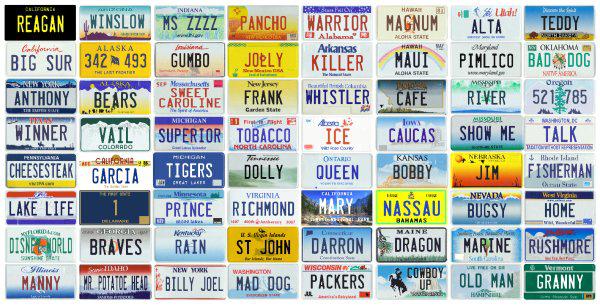
Personalized License Plates in the United States & Which States Offer

personalized license plates collection

Some states do not offer personalized plates. This article tells you how to get a personalized license plate in the states that do.

Alabama

You can apply for a personalized license plate in Alabama. In fact, you can even order a personalized license plate in Alabama online (as long as you have an existing AL license plate), so it's pretty easy to get one. The fee for a personalized license plate in Alabama is $50, and there are several different designs you can choose from. It'll take two to three weeks to get your personalized license plate approved and shipped to you, but they generally last longer than that -- some of the personalized plates available in Alabama are valid until the end of their designated registration period. To renew your vanity tag, visit the DMV website or go into one of their offices and fill out an application with your information and another check for $50 if it's time for renewal.

Alaska

In Alaska, residents may apply for a personalized license plate through the Alaska Division of Motor Vehicles (DMV). Plate orders can be done in person at any DMV office. Applicants must provide a completed application, a registration fee of $15, and an annual personalized plate fee of $10. A license plate with up to seven characters is available in gold on red or blue on white. There is also the option to choose from a variety of different colored backgrounds, ranging from orange to pink, with a fee of $25 for each color chosen. Once acquired, plates must be renewed annually.

Arizona

Visit the Arizona Motor Vehicle Division website and search for personalized license plate availability. You can also find a link to this on their homepage.

Make note of your three preferred letter or number combinations, in order of preference (if you need some inspiration, check out this list of ideas).

Fill out the application form with your vehicle registration and identification information, as well as your preferred combination choices. There is a $25 fee for this service that must be paid online with a credit card.

Complete the transaction and wait for your new plates to arrive in the mail!

Arkansas

The personalized license plates in Arkansas are truly some of the most creative and impressive ones I've seen—and this is coming from someone who used to do graphic design. It's a huge benefit in our area, as we have so many area codes that can't be easily recalled. On top of that, the fact that everyone in Arkansas has a chance to have their own plate makes it more memorable, which can give you a feeling of being very special.

California

Go to the California DMV website

On the left-hand side of the page, search for your desired plate configuration and check if it's available by clicking on “Check Plate Availability” under [Special Interest License Plates].

Once you've decided on a personalized license plate, click on “Start Your Application” under Personalized Plates

Follow the prompts and fill out the application form with your information (you may need to pay additional fees for certain types of plates).

Colorado

You must first complete and submit the Colorado License Plate Application. If you plan to personalize your car's license plate, then you must also complete and submit the Application for Personalized License Plates Form.

There is a $25 renewal fee every two years.

You can only use letters, numbers, and spaces when personalizing your plates; profanity and obscenities are not allowed.

Connecticut

You can apply for personalized license plates through the Connecticut DMV. The application fee is $55 and you'll need to submit it along with a signed Statement of Identity (Form YG-115). You will also need documentation that verifies your eligibility for the type of vehicle you want to register.

You may apply online or submit an application by mail or in person at a local DMV office. Before completing your application, check the availability of the license plate idea and be sure to read any restrictions on personalized plates (letters only, must not offend others, etc.).

Delaware

The state of Delaware offers drivers the option to order personalized plates. To apply, you'll need your driver's license number, your vehicle identification number (VIN), and payment information. You can request a vanity plate online or by mail. The current fee is $75 ($35 for renewals), which includes a $15 manufacturing fee.

Some plates have restrictions: personalized plates may not be rude or offensive, infringe on anyone's rights or property, contain any type of advertisement or slogan, refer to motor vehicle infractions, use official emblems or language that could make another person believe they're an official tag (unless they are), include punctuation (periods are okay but no question marks or anything else), include numbers only (no letters).

All plate requests must go through the state police office for review. Once approved, you should receive your plate in 6 weeks' time. If the application is denied, you will receive a full refund within 21 days of receipt of the application. Failure to abide by these rules will result in an immediate forfeiture and return of the license plate without reimbursement from the Division.

Florida

For standard plates, you can go to your local Division of Motor Vehicles (DMV) office, or you can order online. The cost of a standard plate is $28.15. A personalized license plate costs $38.15, and specialty plates cost $28.15 plus the additional fees associated with the type of specialty plate you choose (e.g., custom sports team plates). Florida offers many different types of specialty plates: military, college/university, veteran support, and environmentalism. 

Georgia

Georgia offers personalized license plates, but there are a few rules to keep in mind if you’re interested in making your car a little more unique:

You can only have one personalized plate per vehicle.

You cannot request obscene words or phrases, including abbreviations.

Personalized plate messages cannot exceed 7 characters (including spaces).

Hawaii

Visit the Hawaii DMV website to tell them you'd like a vanity plate. You'll have to pay $25 for your first plate and an additional $10 each time you renew it, but it's well worth it!

Choose your license plate:

The state of Hawaii has a system where you can see available characters as you type. Just enter your letter/number sequence in the box under "View Available Personalized Plate Combinations". This is very helpful because some sequences will result in combinations that aren't actually available.

The state offers several options for special characters on plates, including Hawaiian letters and Chinese characters.

Idaho

In Idaho, you can choose from a number of different styles. You can get a license plate with an image of Boise state on it. Other options include the Idaho flag or a graphic of a potato. There are also several types of plates that you can personalize in Idaho, including specialty plates that support causes like the fight against breast cancer and non-profit organizations like Big Brothers Big Sisters and Ducks Unlimited. You can order personalized license plates online, by mail, or in person at any county assessor's office.

Illinois

In Illinois, you can apply for a personalized license plate online or in person at your local DMV. The application will ask for the following information:

Your name and address

Your vehicle’s year, make, model, and VIN

The type of plates you want (passenger car plates or motorcycle plates)

Payment details for the $48 application fee (plus vehicle registration fees if applicable)

You’ll need to provide the following documents with your application:

1 primary document proving your identity (valid driver’s license, state ID card, birth certificate, U.S. passport)

1 secondary document verifying your identity (social security card, credit/debit card with embossed name)  If you have any doubts about whether a document is acceptable, check with the Secretary of State website.  You can use this link to find the nearest DMV office where you can submit your application in person.  Applying online is straightforward — all of the relevant forms and requirements are right on their website.  Once approved by a staff member at the DMV office or online via their automated service checker (for applications submitted online), your personalized plates should arrive within 10 business days.*

Indiana

When it comes to your personal vehicle, you have plenty of options for customizing your license plates. Indiana offers a wide variety of personalized tags to choose from. To find out the process of how to easily obtain the one that best fits your personality and interests, continue reading below.

Types of Personalized License Plates in Indiana

The Indiana Bureau of Motor Vehicles (BMV) has provided a few different types of personalized license plates:

Standard License Plates/Placards

Special Group Recognition License Plates/Placards

Military and Veteran License Plates/Placards

Collegiate and Professional Sports Team License Plate/Placard

Iowa

Iowa offers personalized plates through the Iowa Department of Transportation Motor Vehicle Division (MVD). The fee for a personalized plate is $35.00 ($15.00 for a personalized motorcycle plate) each year in addition to the registration fee and any other applicable service fees. A minimum of three characters must be entered, with no maximum number of characters. Personalized license plates are available in all classes except apportioned trucks, farm trucks over 8,000 pounds empty weight or 11,000 pounds gross vehicle weight rating and buses that have a gross vehicle weight rating of more than 16,000 pounds.

The following types of personalized license plates are also available:

Collegiate with up to six characters (maximum four characters for motorcycles).

County with up to three letters and numbers or four letters and numbers on a motorcycle.

Disability accessible with one letter or one letter and one number on a motorcycle.

Environmental (the environmental plate will have an extra designation at the bottom right corner indicating the fund type)

Military with up to five letters or five numbers, or 4 characters and 1 space on motorcycles (veterans who are Purple Heart recipients can order this type without additional fees).

Kansas

Here are the steps to get a personalized plate in Kansas:

Fill out and mail or deliver an application form.

Pay the $45 fee.

Cross your fingers that no one else has claimed your desired vanity plate before you did.

Kansas allows personalized plates in standard alpha-numeric format, as well as some special formats with symbols like #, &, -, @, /, and *. For example, if someone wanted to have a license plate that read "#BESTDAD", they could do so (although for the sake of their children's reputations, it would be advisable not to).

Kentucky

Every state in the United States offers personalized plates. Kentucky, however, is one of only a few that does not impose restrictions on what a registrant can choose for their license plate number. The personalized plate system in Kentucky is called "Prestige." Unlike many other states' systems, Prestige also allows you to order your customized plate online or by mail.[1]

You may search for and reserve a specific Prestige license plate number[2]. To do so, you must provide your name and address (if searching by mail), or email address (if searching online). You'll have to pay additional fees if the application process is approved and before the DMV will issue the license plates.

Louisiana

Cost: $25

Online: via the Louisiana Office of Motor Vehicles website

In person: at a local OMV office

By mail: using this form on the Louisiana Office of Motor Vehicles website

Louisiana allows you to choose from a list of stock plate designs, or order your own personalized design. You can also order specialty plates commemorating your support for professional sports teams and schools like LSU, Southern University, Tulane, and Nicholls State.

Maine

You can apply in person at any DMV office, including in Maine. The cost is $36, plus the $2 to renew your plate.

You can apply by mail via the USPS or UPS (you will be required to return a signed letter of acknowledgment before they ship your plate), at a cost of $38. This is also valid for 10 years and then you must reapply.

To apply online, you'll have to provide a valid form of photo identification and pay an additional non-refundable fee of $10. This does not renew the license plate for an additional five years from the date on which it expires. You must reapply every five years if you want to keep it.

Maryland

When you apply for a personalized plate, you need to submit:

The application form.

a $50 processing fee (in addition to the regular registration fee).

a certificate of title that is properly signed over to you.

Your personalized license plate will be issued when you register your vehicle.

Some states do not offer personalized plates. This article tells you how to get a personalized license plate in the states that do.

At the time of publication, all states offer some kind of personalized plate. The number of characters allowed and the type of lettering permitted vary from state to state. Most states will allow you to personalize your plate with a combination of letters and numbers, but others require that you use only letters.

In many cases, you can order personalized plates directly through your local DMV or BMV website, although in some instances, you must visit a brick-and-mortar office in person to fill out an application form. In most places, just show up with proof of insurance and identification to transfer the title, pay any applicable fees and taxes, and pick up your new set of wheels.

Motorcyclist Criminally Charged For $27,116 in Speed Camera Tickets

Manitoba police

In a startling case that has drawn significant attention, a motorcyclist has been criminally charged after racking up an astonishing $27,116 in speed camera tickets. This incident has raised questions about traffic enforcement practices, the consequences of excessive speeding, and the responsibilities of motorcyclists on the road. In this article, we will explore the details surrounding this case, its implications, and what it means for road safety.

The Details of the Case

The motorcyclist, whose identity has not been publicly disclosed, was reportedly issued a series of speed camera tickets over several months. Authorities noted that the individual was caught speeding on multiple occasions, leading to an overwhelming accumulation of fines that totaled more than $27,000.

Criminal Charges

As a result of the sheer volume of tickets, the motorcyclist faces criminal charges, highlighting the serious nature of their actions. The charges may include reckless driving and failure to comply with traffic laws, which could lead to severe penalties, including fines, points on their driving record, and potential jail time.

Understanding Speed Camera Enforcement

Speed cameras are used in many jurisdictions to monitor and enforce speed limits on the roads. These automated systems capture images of vehicles exceeding the speed limit, issuing tickets to offenders. While speed cameras are designed to enhance safety and reduce traffic accidents, excessive violations can result in severe financial consequences, as evidenced by this case.

The Purpose of Speed Cameras

  1. Deterrence: Speed cameras aim to deter drivers from exceeding the speed limit, thereby reducing the likelihood of accidents.

  2. Revenue Generation: While safety is the primary goal, speed camera fines also contribute to local government revenues, which can fund road safety initiatives.

  3. Data Collection: Speed cameras provide valuable data on traffic patterns, allowing municipalities to identify problem areas and implement targeted safety measures.

Implications for Road Safety

The case of the motorcyclist charged with $27,116 in speed camera tickets serves as a cautionary tale for all drivers. It underscores the importance of adhering to traffic laws and recognizing the potential consequences of reckless behavior on the road.

Effects on the Motorcycling Community

This incident could have broader implications for the motorcycling community. It may lead to increased scrutiny of motorcyclists and their behavior, which could result in heightened enforcement measures in certain areas.

Educating Riders

To promote safer riding practices, it’s crucial for motorcyclists to educate themselves about traffic laws and the importance of responsible riding. Awareness of speed limits and the dangers of reckless driving can help foster a safer environment for all road users.

Conclusion

The criminal charges against the motorcyclist who accrued over $27,000 in speed camera tickets serve as a stark reminder of the consequences of traffic violations. As authorities continue to crack down on reckless driving, it’s essential for all drivers—motorcyclists included—to prioritize safety and adhere to traffic laws. By doing so, we can collectively work towards reducing accidents and enhancing the safety of our roadways.

Expert Tips To Prove Your Innocence In A Car Accident Case

Car accidents are a significant problem worldwide and a leading cause of severe personal injury and wrongful death cases. With drunk driving, speeding, and general disregard for the road laws often leading to car accidents, proving your innocence in a road collision can sometimes be challenging. What's more, road collisions caused by fatigued truck drivers are also quite common, and the impacts can be fatal. We have crafted this list of expert tips to help you prove your innocence if you are the victim of a vehicle collision. 

Find A Specialised Lawyer

Suppose you were involved in a collision involving a truck. You will need expert legal representation following truck accident incidents. The same applies if you are the driver of the truck and the accident was caused by another road user. On the other hand, you should opt for a car accident attorney if both vehicles involved were regular cars. With that said, if you are a motorcyclist, you should consult an expert motorcycle accident attorney to handle your case. It is essential to find a lawyer specializing as they will best know the road laws regarding your vehicle and the other vehicle type involved in the collision. 

Provide Dashboard Cam Recordings

Dashboard cameras can be used in all vehicles. However, if you drive a motorcycle, you will need a built-in helmet cam. Providing your lawyer with the recorded footage of the incident is one of the best ways to prove your innocence. The recorded footage will serve as a first-hand perspective of the accident, proving which driver is responsible for the collision. If you don't yet have a dashboard camera, you really should consider investing in one to protect your best interests in the future as a road user. You may also be able to obtain traffic video footage to prove your innocence if you do not have a dashboard cam. 

Contact The Authorities Immediately

Neglecting to contact the authorities at the scene of an accident may seem like the action of the guilty party. Therefore, before reacting to the other driver, your first step should be contacting the authorities such as the local police, emergency services, and your lawyer. 

Photograph The Scene And Don't Move Your Vehicle

Once you have contacted the authorities, you should immediately start photographing the accident scene to provide evidence for your case. Be sure to set your smartphone to date camera images. Taking as many photos of the scene is crucial to providing accurate proof that you are innocent. If the accident is severe, you should not move your vehicle. Unfortunately, this is considered tampering with evidence. Instead, you should wait for authorities to arrive on the scene and inform you that you can safely move your vehicle. Suppose there are any seriously injured individuals in the accident. You should avoid trying to move them out of the car and instead contact paramedics and follow any instructions given while awaiting their arrival. 

Proving your innocence in a vehicle collision can be challenging. However, if you have all the correct and accurate evidence, you will be able to claim compensation from an insurer or the guilty party.

Top 3 Ways to Save on Auto Insurance

Are you paying too much for car insurance? I’m sure you’ve seen or heard ads from car insurance companies promising to help you save big. Often, they’ll mention bundling which is a great way to get a discount and save money. But there are so many other ways to save, too. 

Did you realize that sometimes even your occupation qualifies you for a discount? Almost every car insurance company offers a military discount, and some even offer discounted car insurance for firefighters, EMS workers, and teachers. 

Discounts are one of the best ways to save, but you can also pay less for car insurance by comparing quotes and switching to a company that offers your lower premiums. You can also tweak your coverage to appropriately cover your needs, which may help you save money. 

Read on for some of the top ways for you to save money on car insurance.

#1 – Discounts for Save on Your Car Insurance

rolled up money

Almost every driver is eligible for at least one discount and many can earn several discounts. Each car insurance company sets up its own discount system, and the discounts listed below aren’t recognized universally. 

Still, these are some of the most common car insurance discounts.

Bundling Discount

If you purchase a homeowners, renters, boat, or motorcycle policy from the same provider as your car insurance policy, you will probably be able to get a discount. This discount is one of the most common, and nearly every provider offers a percentage off of your premiums for bundling.

Good Driver Discount

Good drivers tend to continue being good drivers. If you haven’t gotten into an accident in three years, you may be able to get a good driver discount. Insurance premiums are based on the risk you present to an insurance provider. Good drivers are low risk, so they usually get a discount. 

Getting into accidents will affect your eligibility for a good driver discount, and so will filing claims and getting traffic tickets for things like speeding or running red lights.

Automatic Payments Discount

When you set up your payments to leave your account automatically each month, you’re less likely to miss a payment and more likely to stick with your current insurer, so they reward you with a discount.

Paperless Billing Discount

Paperless billing saves time and money for the insurance company because they don’t have to physically mail bills to your address, so they usually offer a small discount in return.

Low Mileage Discount

It makes sense that you’d pay less for car insurance if you drive fewer miles annually. The less time you spend on the road, the lower the risk that you’ll get in a crash and file a claim. 

Obviously, insurance companies like that and will incentivize that behavior.

Good Student Discount

Teen drivers pay the highest car insurance rates of any age group. Most car insurance companies will offer a significant discount for students who earn a 3.0 GPA or higher.

Driver’s Education Discount

A driver’s education discount is vital for teens because their car insurance rates are incredibly high, and they don’t usually qualify for many discounts. Find out which driver’s ed courses your car insurance company recognizes before investing in a class. 

If you’re going to take a class, you might as well get rewarded for it with a discount. You want a good driving instructor and program that will help your teen drive safely, but you’ll want it to be recognized by your insurance company so that you can get a discount for it.

Occupational Discounts

Military members can almost always earn a discount. Some car insurance companies offer reduced rates for first responders like firefighters, law enforcement, and EMTs. Teachers can sometimes find insurers who provide a discount for their occupation, as well.

#2 – Comparing Rates to Save

apples and oranges balancing

Every six months, you should make a quote comparison. As your personal factors change with time, your current car insurer may not be the best. Some car insurance companies are a better fit with specific demographics. 

You must realize that you may not be a good fit with your current provider anymore as your demographics change.

Switching Car Insurance Companies

It doesn’t take much time to compare rates, and if you find a reputable insurance company where you can save significantly, you should take advantage and switch providers. 

It’s crucial to compare identical coverage, though. Don’t compare different coverage levels between companies because you won’t get an accurate comparison. Make sure your deductibles and level of coverage are identical, otherwise you may leave yourself open to unnecessary financial trouble later.

Talking with Your Car Insurance Company

Car insurance companies don’t negotiate premiums. You won’t be able to talk them down to a lower rate, but what they can do is help you evaluate your coverage, find discounts you may have missed, or adjust your coverage levels to get your premiums more manageable.

#3 – Tweaking Your Policy to Save

Changing your policy can help you save a lot of money. Just remember that you’ll pay less when you lower your coverage, but you’ll also be eligible for fewer benefits.

Reducing Your Coverage

Reducing coverage will definitely help you save money on car insurance, but it’s vitally important not to leave yourself underinsured. 

Suppose your car is over 10 years old, and you’re paying more than 10 percent of your vehicle’s value annually for full coverage. In that case, you’ll be better off dropping full coverage and carrying a liability-only policy. 

Evaluate all the different types of coverage you have. If you have coverage that will pay for a rental car should your car be damaged, you could drop that option if you have a second vehicle or transportation option.

Increasing Your Deductible

A reasonably standard deductible is $500. If you raise that to a $1000 deductible, your monthly premiums will lower significantly. Just remember that you’ll need to be prepared to pay that deductible if you file a claim.

Switching to a Usage-Based Plan

Your car insurance provider may offer a different type of plan than standard insurance. If they don’t, you may want to consider switching insurers to one that does, especially if you don’t drive much annually. 

A usage-based insurance plan charges you based on your driving. Some plans are by-the-mile where you pay a base monthly fee, and then you pay a set amount per mile that you drive. 

Other usage-based plans use telematics devices to monitor your driving habits, and the price is based on that information.

Be Proactive to Save the Most

There are many different ways that you can save on car insurance. None of them take much time, but you do have to be proactive. Your insurance company isn’t likely to call you up and offer you a discount. 

It’s your responsibility to review your coverage and make sure you’re taking advantage of any available savings. Set aside an hour this weekend to look over your options. It shouldn’t take much longer than that, and the savings you can find are well worth the time. 

Melanie Musson
Melanie Musson writes and researches for BuyAutoInsurance.com. She’s passionate about helping people understand their auto insurance needs and find the best fit for coverage without overpaying.


How Does Google Maps Know Traffic?


Google Maps continually refreshes based on anonymously tracked user data in mobile apps, traffic light camera sensors & ALPR traffic cameras, and satellite data to make sure the app is displaying the most accurate traffic conditions possible.  Traffic data is also sourced by the wireless carriers AT&T & Verizon with vehicle data.  Ever wonder why your car is giving you free navigation data?  This is why because they are using your data to measure traffic.  What is ALPR? 

If you’ve ever used Google Maps, you’ve likely seen streets colored green, orange, or bright red if you live in a major city. Green roads mean traffic is moving normally (hardly ever), but orange and red represent slowdowns. Red slowdowns show up on the map when users in navigation mode are currently traveling at slower-than-usual speeds on that part of the road and are applied by Google automatically. However, once other divers using Google Maps are able to get through the area at higher speeds, Google will remove the slow down status for that location even if other users are still driving slower.

How Are Accidents & Slowdowns Reported? 

It’s unclear how many alerts are necessary for Google Maps or Waze to register it a slow traffic location or accident, but according to some experiments, it only took a single car driving faster to undo the traffic jam map status.

That said, it appears that Google Maps ignores when lots of users are at a standstill. Interestingly, not all vehicles are treated equally. Google Maps can tell the difference between a car, motorcycle, and other vehicles (at least in certain countries and regions). So even though a fast scooter might be able to weave its way through a traffic jam, Google Maps could—in some cases—recognize that the smaller vehicle’s movement doesn’t necessarily mean that regular traffic conditions have resumed.

Google Maps also updates traffic reports based on user input like Waze in addition to passive, anonymized location and movement tracking to help keep conditions updated.

Accidents, construction zones, speed traps, and other alerts can all be reported in Google Maps & Waze, and the more users that report an alert help it show up faster on the map for others and potentially help them avoid slowdowns and find better routes if necessary.  While in Google Maps’ navigation mode, tap the “+” icon (third icon down on the right-side menu). 

How Does Google Maps Reroute and Calculate Estimated Time of Arrival (ETA)

Google compares the speeds of its Google Maps users with speed limit information to calculate estimated arrival times. Basically, it takes how fast you’re actually moving, how fast you should be moving based on speed limits, how fast other drivers are going and adjusts how, and how much further you have on your route to determine your ETA.

Google Maps will also cross-reference user-reported conditions and other traffic data is monitors with your route and current speeds, and will adjust your arrival times if it notices a slowdown or other incidents along your route. Once the app has determined the severity and length of the slowdown, it will alert users whose routes are affected and suggest alternative directions if it’s ultimately faster.

Google Maps and Waze reroute suggestions aren’t always perfect, however. The algorithm can only respond to the most recent data and make a guess—it certainly can’t tell the future, either—so rerouting won’t always be faster (or necessary).  Read more about this study. 

How to Write a Speeding Ticket Appeal Letter

The decision to write a speeding ticket appeal can be taken in various situations. For example, if there was a technical error of the camera, a dispute with the traffic police or at the time of fixing the violation, the car was driven by another person (your relative or friend), or when the car was sold under a sales contract but it was not registered with the traffic police on a new owner and the fines of the new owner comes in your name, and much more. The decision to make a speeding letter for the court or the traffic police should be taken seriously, writing all the details. Let’s check out how to write a speeding letter or know how to get a speeding ticket reduced.


What Is an Appeal?

The car ticket the appeal includes a review of court decisions made by the trial court. Such a review is possible at the initiative of the interested party to the trial. Each participant in the trial whose interests have been violated has the right to appeal to a higher court with an appeal.

The decisions made by the courts can be appealed only in court. Decisions made by the traffic police can be appealed either to the district (city) court or to a higher official of the traffic police.  Students should be especially attentive when writing this letter as it can directly affect their future. Just like when they write their essays and research papers, every detail should be noted down and explained using sources or evidence. Though to deal with academic writing, students can use the help of professional writers from a custom writing by EssayService platform, the speeding ticket appeal letter they should write themselves. 


What Should the Appeal Include?

In order to correctly and competently write an appeal, you need to study in detail the sample of similar documents or check the examples. You should carefully check out an example of an appeal against a decision of a court of the first instance. At the same time, it is very important when compiling an appeal to describe all the issues in detail. In any case, if you are not sure about how to write an appeal, it is better to seek the help of qualified experts on the assignment on time or a lawyer who knows exactly how to write an appeal to a court. And this greatly increases the chances of reviewing the case in your favor. So what should include the appeal:

●   It is necessary to indicate the name of the court or the regional traffic police body to which the complaint is sent. Information about the applicant (i.e. your details) and representative (if any) is also indicated here: full name, address of residence, contact phone number.
●    Title of the document.
●    The complaint against the decision in the case of an administrative offense.
●   The descriptive and motivational part that you can find in other examples or describe in detail your particular issue. Here you need to briefly outline the circumstances of the incident.
●  Indicate the number and date of the decision, full name, and the position of inspector of the traffic police (or judge - if a court order is appealed) which brought you to justice.

In this part, it is also necessary to describe your position, the grounds on which you consider the decision to be unlawful. Provide references to the law in support of the position. It is necessary to indicate what you are asking the court (or the higher authority of the traffic police), namely:
●     To cancel the decision (number, date) and terminate the proceedings.
●  List the documents attached to the complaint, indicate the number of sheets in the documents.
●     Add the signature and date of application.

Other important notes to pay attention to:
●  The content of your appeal letter when creating a speeding ticket should be focused on the conditions, types, and the reasons why you got the ticket.
●    Focus on the tone of voice when writing a letter, so you can sound polite and formal without aggression.
●    Provide evidence into your case, for example, video recording, the speed limit, insurance data, and other parameters.


Final Thoughts

Summing up, you have around ten days to write an appeal. The countdown starts from the moment you receive a letter on the mail or a copy of the decision in the traffic police. What to do if you missed time for appeal? In this case, you can restore this period, but only if it was missed for a good reason. The good reasons for missing the appeal deadline include, in particular: a serious illness, helpless state, illiteracy, and other circumstances related to the identity of the person filing the complaint. If the time period for appealing the fine has expired and the decision has not been appealed, then it shall enter into legal force.

Author's Bio:

Jeff Blaylock is a lawyer and professional writer. First of all, he offers to be attentive to your particular case as each situation is individual. You can make research and hire experts to help you out. As well, you can use common examples to write your application correctly. The practice shows that the bulk of appeals are sent to the courts since the court has no interest in the final decision. So be ready for writing an appeal letter to the court.

Safety Tips and Information for Driving in the U.S.


Owning a car can be very beneficial. When you have one, you will be able to travel to different locations without looking into the schedule of public transportation. Having a car will also help you ward off stress as you get to determine your route, who you’re going to travel with, and when you’re going to hit the road.

However, being a car owner isn’t a walk in the park, as you also have to pay attention to several rules and regulations. Complying with all of these is essential to ensure that you avoid getting in an accident while on the road and having any legal repercussions. This is especially true if you’re planning to drive your car in a fast-paced environment, such as those seen in the US.

Driving for the first time in the U.S. can be shocking for many drivers because of the high rate of speed on most roads and the broad range of signs that drivers have to quickly read. Police have a strong presence on the roads in the U.S., and they will often pull people over for relatively minor traffic violations. Therefore, it is important for drivers to understand how to drive safely on U.S. roads to avoid getting in an accident or experiencing problems with the police.

1. Drive on the Right Side of the Road

Every driver who travels on U.S. roads should know that cars are required to drive on the right side of the road in all 50 states. Solid yellow lines in the center of the roadway clearly divide traffic, and drivers should abide by these lines at all times. Driving over a solid yellow line to the opposite side of the roadway is dangerous and can result in a serious traffic violation. Only pedestrians are supposed to walk on the left side of the road so that they can see oncoming traffic. When in a car or motorcycle, therefore, you should always stay on the right side of the road.

2. Never Drive After Consuming Alcohol

In many countries, driving while under the influence of alcohol is considered a minor offense and rarely prosecuted. The U.S., on the other hand, imposes very harsh penalties on intoxicated drivers who are caught operating a vehicle. In some states, you can spend up to a year in prison and face fines of over $10,000 for being caught with a blood alcohol level exceeding 0.08 percent. As in all countries, driving under the influence of alcohol is also a serious danger to your passengers and other drivers. To stay safe on the roadway, never get behind the wheel when you have recently been drinking.

Regardless of how high your alcohol tolerance is, you should never take chances and get behind the wheel after consuming alcohol. Even a small amount of alcohol in your system can become the reason why you lose your focus on the road, and your vision is impaired.

After drinking alcohol, have a friend take you home or grab a taxi. Aside from making sure that you’re safe going home, these options will also guarantee that you won’t get into any trouble with the police in the US.

3. Be Sure to Get Insurance

The U.S. imposes mandatory insurance requirements on all drivers. Police can ask you to produce valid insurance cards or SR22 documents proving that you have insurance. The requirements for SR22 vary from state to state, but almost all drivers who are considered "high risk" are required to carry SR22 documentation. Some states also issue SR22 documentation in lieu of drivers posting a cash bond as proof of financial responsibility. The best way to figure out whether you need SR22 documentation in your situation is to talk to your insurance company.

With the number of companies offering insurance today, it’s always best if you spend time comparing different options. If this is your first time to get insurance, ask recommendations from your friends and family. You can also read different online platforms to determine how a specific insurance company performs.

4. Learn the Traffic Symbols

Some of the safest roads in the world are found in the U.S. because of the orderly way that traffic is directed with the help of road signs. Consequently, the U.S. has many more signs on public roads and highways than in other countries. To safely operate a vehicle, you should familiarize yourself with the most common road signs. Most bureau of motor vehicle offices can provide free booklets that explain the meaning of road signs in your state.

5. Drive-in the Correct Lane

When driving in the U.S., it is very important to stay between the marked lines in your lane. Additionally, you will need to make sure that you are in the proper lane at all times. On highways with four lanes or more, slower traffic should stay as far right as possible on your side of the road. On highways with six lanes or more, the lane that is closest to the left on your side on the road is often reserved or only available for passing. Make sure that you familiarize yourself with what lane you should be driving in before setting out on a road trip.

Be A Responsible Driver

Having a car in the US can gradually improve the quality of your life, but before you can experience all of these things, remember that you also have an important role to play. As a driver in the US, you need to abide by the rules and regulations set in the state. Sure, this might be daunting or even inconvenient, but it’s for your safety and other drivers on the road, you should be more than willing to adapt to these changes.

Popular Articles (All Time)