Showing posts with label Colorado. Show all posts

Longmont, CO Speed & Red Light Cameras: Movable Locations

Speeding and running red lights are leading causes of traffic accidents, contributing significantly to road hazards, injuries, and fatalities. In an effort to improve safety, Longmont has introduced automated speed and red-light cameras across specific areas of the city. These photo radar and enforcement systems aim to reduce accidents, enhance driver awareness, and promote safer driving habits.  See our map of Colorado speed cameras and red light cameras

What Are Speed and Red Light Cameras?

Automated speed cameras and red-light cameras are advanced traffic enforcement tools that capture violations through photo and video technology. When a vehicle exceeds the speed limit or runs a red light, the camera automatically takes a picture of the vehicle's license plate, providing valuable evidence to issue tickets to the driver.

In Longmont, these cameras are part of the Automated Vehicle Identification System (AVIS), which was approved by the municipal ordinance on November 19, 2024. The system utilizes four cameras as of now, with the possibility of expanding the number of cameras over time.

The Implementation Timeline and Warning Period

The 30-day warning period for the automated speed and red-light cameras began on Monday, April 28, 2025. This means that for the first month, no tickets will be issued, but drivers will receive warnings if they violate traffic laws within the camera zones. However, starting on Thursday, May 29, 2025, Longmont will begin issuing tickets for violations captured by these cameras.

What Is AVIS (Automated Vehicle Identification System)?

AVIS, as defined by Colorado Revised Statute (C.R.S.) 42-4-110.5, refers to an automated system used to detect traffic violations such as speeding and red-light running. The system automatically records violations by capturing images of the vehicle and its license plate. AVIS can be a mobile, temporary, or permanent system that helps enforce traffic regulations.

This technology is designed to improve road safety by reducing the risk of accidents, especially in high-traffic areas, school zones, and construction zones. The cameras help enforce speed limits and red-light rules without the need for human officers to be present at every violation, freeing up resources for other safety tasks.

Locations with Speed and Red Light Cameras

To ensure effective traffic monitoring and enforcement, Longmont has strategically placed automated cameras in high-traffic zones and areas with known safety concerns. If any of these locations become permanent, we will add them to our Colorado map.  These locations include:

  • Main Street or Highway 287

  • Pace Street

  • Ken Pratt Boulevard or Highway 119

  • Hover Road (N. 95th Street)

  • Airport Road (N. 87th Street)

  • 17th Avenue

  • Mountain View Avenue

  • 11th Avenue

  • 9th Avenue

  • 3rd Avenue

  • Pike Road

  • 21st Avenue

  • 23rd Avenue

In addition to these fixed locations, cameras may be relocated within the Longmont city limits to address specific traffic safety needs. Always be aware of the posted signs in these areas, which will clearly indicate the presence of speed or red-light cameras.

How Drivers Are Informed of Camera Locations

To ensure that drivers are aware of these enforcement systems, Longmont has made it a priority to post clear signs indicating the presence of automated speed cameras and red-light cameras. These warning signs will help drivers remain cautious when approaching these monitored intersections or zones. It's important to always be vigilant about your speed, especially in areas known to have high traffic volumes or pedestrian activity.

The Benefits of Automated Traffic Enforcement

The installation of automated speed and red-light cameras is expected to have several positive impacts on Longmont’s road safety:

  1. Reduction in Traffic Accidents: By deterring speeding and red-light running, these cameras help to lower the number of accidents, particularly at high-risk intersections and school zones.

  2. Increased Driver Awareness: Drivers are more likely to obey speed limits and stop at red lights when they know automated enforcement is in place.

  3. Efficient Traffic Monitoring: Automated systems can cover multiple locations and operate 24/7, providing continuous monitoring and enforcement with minimal resource consumption.

What Happens If You Get Caught by a Camera?

If your vehicle is captured violating traffic laws, such as speeding or running a red light, the camera system will automatically generate a ticket with your vehicle's details. The ticket will be sent to the registered owner of the vehicle, and you will be required to pay the fine or contest the violation.

While tickets for speeding and red-light violations are common, the introduction of automated systems like AVIS helps ensure that enforcement is consistent, unbiased, and efficient, helping to foster a safer driving environment for everyone.

Conclusion: Stay Alert, Stay Safe

As Longmont implements its automated speed and red-light camera system, it's essential for drivers to remain vigilant and obey posted speed limits and traffic signals. With the 30-day warning period underway, drivers have a final opportunity to adjust their driving habits before actual fines are issued. By adhering to traffic laws and respecting the new automated enforcement systems, you can help ensure a safer and more orderly road environment for all.

Make sure to familiarize yourself with the locations of these cameras and be mindful of the signs marking these areas. Safe driving is everyone's responsibility, and these new systems will play a crucial role in keeping Longmont's roads safer for all residents and visitors.

Unpaid Red Light Camera Tickets in Pueblo, Colorado

Pueblo police logo

Red light camera enforcement in Pueblo, Colorado, was introduced with the promise of safer streets and a self-sustaining revenue stream. The city expected that fines collected from violations would cover the costs of leasing and maintaining the equipment while helping to fund public safety initiatives. But reality has proven far more complicated. A significant share of tickets went unpaid, leaving Pueblo with a shortfall that raised questions about the long-term viability of the program.

The Financial Strain of Unpaid Tickets

City leaders quickly discovered that roughly 20 percent of tickets issued by the red light cameras were not being paid. That unpaid balance left Pueblo with a budget deficit of about $20,000. Instead of generating a surplus for safety programs, the cameras became a financial burden.

Pueblo leases three red light camera units from a private vendor at a cost of about $15,000 per month. Over the course of just six months, lease payments totaled $90,000, while actual collections from fines amounted to only around $70,000. The gap revealed a core weakness in the program: it depended entirely on near-perfect compliance to break even.

Why Drivers Don’t Pay

The unpaid ticket problem in Pueblo reflects broader national trends. Drivers choose not to pay their red light camera fines for several reasons:

  • Financial hardship. Even modest fines can be a strain on families living paycheck to paycheck.

  • Disagreement with the program. Some drivers refuse to pay on principle, seeing red light cameras as unfair or unconstitutional.

  • Administrative challenges. Notices may not always reach the correct person, particularly if vehicle registrations are outdated or the car has changed hands.

  • Weak enforcement tools. Without strong mechanisms such as registration holds or credit reporting, some drivers simply gamble that nothing will happen if they ignore the fine.

The combination of these factors makes it difficult for cities like Pueblo to achieve high compliance rates.

The Broader Impact of Unpaid Fines

Unpaid red light camera tickets carry more than just financial consequences for city budgets. They also create problems of fairness, credibility, and enforcement consistency.

  1. Budget Deficits: Cities often plan around the assumption that revenue from tickets will cover costs. When large numbers go unpaid, taxpayers may end up subsidizing programs that were supposed to pay for themselves.

  2. Credibility Issues: Officials who promised that the cameras would be self-funding and improve safety risk losing public trust when the math doesn’t add up.

  3. Public Safety vs. Profit: When revenue shortfalls dominate the conversation, the original safety purpose of the program can appear secondary.

  4. Unequal Burden: Those who pay their fines shoulder the full cost of compliance, while those who refuse effectively avoid punishment if enforcement mechanisms are weak.

Pueblo as a Case Study

Pueblo’s experience demonstrates the challenges small and mid-sized cities face with automated enforcement. Unlike larger metro areas with broader tax bases and enforcement infrastructure, smaller cities often cannot absorb large amounts of unpaid fines. The result is a cycle in which the cost of leasing and maintaining cameras outweighs the collected revenue, forcing officials to reconsider whether the program is financially sustainable.

What Pueblo Could Teach Other Cities

The Pueblo example highlights several lessons for other jurisdictions:

  • Plan for Nonpayment: Cities should budget with the expectation that a portion of fines will go uncollected. Overly optimistic revenue projections can create financial shortfalls.

  • Strengthen Enforcement: Options like vehicle registration holds, liens, or partnerships with state agencies can increase collection rates.

  • Focus on Safety Metrics: Programs should be judged by their impact on reducing crashes, not by how much revenue they bring in. If cameras prevent accidents, their value extends beyond dollars.

  • Transparency Matters: Public trust depends on clear communication about where revenue goes, how much is collected, and how safety is measured.

The Bigger Picture

Across the country, unpaid red light camera tickets are an increasing problem. Nationally, some cities report collection rates under 80 percent, meaning one in five tickets goes unresolved. For larger cities with higher ticket volumes, this can represent millions in lost revenue. For smaller cities like Pueblo, it can be the difference between a sustainable safety program and a financial liability.

The debate over red light cameras often centers on fairness, revenue, and safety. But the Pueblo case shows that unpaid fines are at the heart of the controversy. If enforcement cannot ensure compliance, then the cameras risk losing their credibility both as a safety measure and as a financial tool.

Conclusion

Unpaid red light camera tickets in Pueblo, Colorado, turned a program meant to improve safety and generate revenue into a budget shortfall. With nearly one in five tickets going unpaid, the city found itself covering costs it had expected violators to pay. Pueblo’s experience serves as a warning to other communities: unless strong enforcement tools are in place and realistic collection rates are assumed, red light cameras may become more of a liability than an asset.

Boulder's Expanded Red Light & Speed Camera Program

Boulder, CO - In an effort to enhance road safety, Boulder city officials have announced the expansion of their red light and speed enforcement camera programs. The initiative aims to reduce traffic violations and improve overall driver compliance with traffic laws.

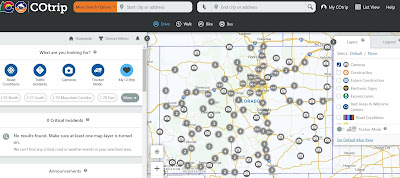
What is the Best Mobile App or Website To View CDOT Cameras Map?

What Is the best website or mobile app to view CDOT cameras Map? 

CDOT Cameras Map - on a browser or web app

Boulder's Photo Enforced Parking Program


The city of Boulder in Colorado had a Photo Enforced Parking Program in place. However, I may not have access to the most recent updates or changes to the program. It's important to consult the official website of the City of Boulder or contact the local authorities for the most up-to-date and accurate information regarding the Photo Enforced Parking Program in Boulder.

In general, a photo enforced parking program typically involves the use of automated cameras to monitor parking violations in specific areas. Here are some key points about photo enforced parking programs:

Automated Enforcement: Photo enforced parking programs use cameras to capture images of vehicles parked in violation of parking regulations. These cameras are typically equipped with optical character recognition (OCR) technology to read license plate numbers.

Violation Detection: The cameras monitor designated parking zones and can detect violations such as parking in no-parking zones, exceeding time limits, or parking in restricted areas. When a violation is detected, the camera captures images or videos as evidence.

Ticketing and Enforcement: Once a violation is recorded, the vehicle owner is typically issued a parking ticket or a citation. The ticket may be sent through the mail, or in some cases, it may be placed on the vehicle's windshield. The ticket usually includes information on how to pay the fine or contest the violation.

Accuracy and Review Process: Photo enforced parking systems strive for accuracy in identifying violations, but errors can occur. Therefore, there is often a review process in place where vehicle owners can contest the ticket if they believe it was issued incorrectly. This may involve submitting evidence or appearing in court to dispute the violation.

Benefits and Challenges: Photo enforced parking programs are often implemented to improve parking compliance, increase revenue, and free up parking spaces. They can help enforce parking regulations consistently and efficiently. However, such programs may face criticism or legal challenges related to privacy concerns, accuracy of the technology, or the potential for overzealous enforcement.

To obtain accurate and up-to-date information about Boulder's Photo Enforced Parking Program, I recommend visiting the official website of the City of Boulder or contacting the local authorities responsible for parking enforcement in Boulder. They will provide the most relevant details, including any changes or updates to the program since my knowledge cutoff.

Previous update Nov 8, 2010:

Boulder, Colorado's new photo-enforced parking program captures images of vehicles, and notes the exact time and place each image was recorded.  The city is using a technology called AutoVu made by a company Genetec based in Montreal, Canada.  The device is a vehicle-mounted camera that can recognize license plates as a parking officer is driving by without stopping. An integrated computer system compares the plates to a database of parking violations and can pick out vehicles that have been parked too long in pay-to-park or neighborhood parking zones. Boulder City officials plan to use the cameras to for criminal investigations as well. Boulder purchased the camera for $46,000.


Colorado Springs Gets 2 More Red Light Cameras

Colorado Springs red light camera

Two more red light cameras are going in at Colorado Springs intersections this week.   Here is a map of Colorado Springs's red light camera locations

Red light cameras capture drivers running red lights through intersections 24-hours a day. The goal of the program is to protect drivers, passengers, cyclists, and pedestrians from injuries or crashes caused by red-light running.

Two new cameras went live at Woodmen Road and Black Forest Road and at Barnes Road and Tutt Boulevard this week.

“We have seen a higher number of crashes, specifically side-impact crashes, injury crashes, and even in some cases fatal crashes,” said Lt. Steve Noblitt of CSPD. “We look for intersections that have high volume, intersections that have a higher number of crashes ... then we give more weight to an intersection that has a higher number of injury crashes.”

Beginning Monday, motorists captured by the cameras running a red light at the new intersections will be issued a written warning by mail for the next 30 days during a probationary phase.

Following that warning period, drivers who enter the intersections after the light has turned red will receive a $75 citation (no points will be assessed). CSPD said if someone is pulled over by an officer for running a red light, typically it is about a $165 fine and a few points assessed to your license.

“There’s kind of a halo effect if you will that occurs that when someone drives through an intersection that is controlled by either officers being there watching for red light violations, or a photo enforcement program, that people tend to change their driving behavior for miles after that. So, the next several intersections that you drive through, they will be in their mind that we need to be a little more careful at these intersections,” said Noblitt.

The first cameras were put into place three years ago in April 2019. CSPD plans to add more throughout the city this year.

DMV Driving Points & Fines


State Map

Red Light
Camera Fine $

Red Light
Camera Points

Speed Camera
Fine $

Speed Camera
Points

Alabama
$50

Arizona
$180 no Points $250-$250 2-3 Points


Arkansas
$50


California
$446 1 Point


Colorado
$90 4 Points $40-80 4 Points


Delaware
$75-$230

District of
Columbia
$75 2 Points $75 2 Points

Florida
$75-$125

Georgia
$70 3 Points

Hawaii
$77


Illinois
$100 20 Points $250 or 25
20 points

Indiana
$100

Iowa
$45-$150 $45-$150

Kansas
$100


Louisiana
$100-$140 No Points


Maryland
$100 2 Points $40 - $1,000
No Points


Michigan
$100


Minnesota
$130


Mississippi
$100


Missouri
$100

Nevada
$600-$1,000 4 Points

New
Jersey
$75 No Points

New
Mexico
$70-$250 $70-$250

New York
$50-$100 3 Points

North
Carolina
$75-$100 3 Points

Ohio
$100-$200 $100-$200


Oklahoma
$100

Oregon
$355 $355


Pennsylvania
$100 3 Points


Rhode Island
$85


South Dakota
$89 No Points


Tennessee
$50-$100 $50-$100

Texas
$75-$200 No Points $75-$200

Virginia
$100 - $200 4 Points


Washington
$124 $124


West Virginia


Wisconsin
$75

Please make suggested updates of information in the comments section below.

Blinding Flashes a Nuisance for Motorists


Red-light cameras have become a nuisance for some motorists in the area of Interstate 25 and Lincoln Avenue in Lone Tree, Colorado.

Lone Tree Voice By Chris Michlewicz, Published: 02.12.10

Authorities expect the devices to reduce accidents and traffic congestion. Those who drive along Lincoln Avenue near the I-25 interchange might have seen the bright flashes of light coming from bulbs mounted on light poles at Lincoln and Park Meadows Drive and Lincoln and the highway’s northbound off-ramp, known as San Luis Street. The intersections were identified in a study as problem areas: Lincoln and Park Meadows Drive for congestion, and Lincoln and San Luis for frequent crashes. Lone Tree officials decided to correct the problem by enlisting the services of American Traffic Solutions, which installed and maintains the cameras, prepares violation notices, provides the software for violation approval, and collects fines on behalf of the city’s police department.

Since the first set of cameras was placed at Lincoln and Park Meadows Drive in July 2008, Lone Tree has collected $218,000 in fines. That includes numbers from the second and third sets of cameras, which were installed in November. The cameras, however, have proven effective. There is less bottlenecking at the Lincoln and Park Meadows Drive intersection, an issue that caused major back-ups for eastbound and westbound traffic on Lincoln. Statistics on the number of accidents are not yet available, said Sgt. Scott Cavenah, traffic supervisor for the Lone Tree Police Department.

But some motorists are upset about what they call blinding flashes of light, even when there are no vehicles in the intersection. Parker resident David Wilson said he became aware of the cameras as he sat at a red light on westbound Lincoln last summer. While he applauds efforts to improve safety, Wilson believes the cameras could eventually end up causing an accident. “What I can’t understand is the random timing of the photos being taken,” he said. “I watched it flash twice when there was no one even violating the law.” A city spokesperson attributed the “random” flashes to the system “recalibrating” itself. Wilson said the flashes can be distracting to motorists, especially out-of-towners who might not be aware they are present.

The Lincoln and San Luis intersection was found to be a hotspot for regular violations. The study found a high accident rate, a large number of violations during the research period, and significant congestion. Furthermore, officers could not effectively work at the intersection because of its design. Cavenah has collected data on the intersection but said the numbers are too preliminary to determine whether the red-light cameras have been effective. “A better comparison can be made once we get at least one-year’s worth of data to review,” he said in an update sent via e-mail. The annual expense to Lone Tree for all three cameras is $180,000. The city ultimately hopes to gain voluntary compliance with the traffic laws and maintain better traffic flow in the area.

Wilson would prefer to see the cameras removed, but expects to see more of them in the Denver metro area in the coming years. “Unfortunately, I think things are going that way,” he said. “They are the cops. They can pretty much do whatever they want.”

Popular Articles (All Time)